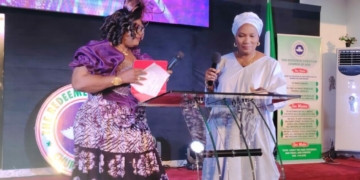
Minister of Humanitarian Affairs and Poverty Reduction, Dr Bernard Doro, has called for urgent consolidation of Nigeria’s humanitarian and poverty reduction architecture under a unified national framework with a functional National Social Register.
Doro stated that effective coordination, credible data and sub-national ownership were indispensable to delivering measurable impact for vulnerable Nigerians.
The minister made the call at a one-day multi-stakeholder dialogue on strengthening sub-national ownership and Results-Based Financing (RBF) for Humanitarian and Development Interventions in Nigeria, held at the European Union (EU) Embassy in Abuja.
The minister stressed that the move underscores the central role of states in first-line humanitarian response, particularly in the context of recurring floods, insecurity-induced displacement and deepening socio-economic vulnerabilities.
“States and local government areas sit closest to the people. They understand the context, the risks and the realities on the ground. Any humanitarian or poverty reduction system that sidelines them will struggle to deliver timely, effective and sustainable outcomes,” he said.
Unveiling a key policy direction, Dr Doro announced plans to institutionalise a “One Humanitarian, One Poverty Reduction System”—a unified national platform designed to harmonise all humanitarian and poverty reduction interventions across government, development partners, civil society organisations, and the private sector.
He explained that the proposed system would provide real-time data, enhance transparency, eliminate duplication and ensure that financing is tied to measurable results rather than fragmented activities.
Central to this vision, the Minister stressed, is a credible and functional National Social Register (NSR).
“A functional National Social Register is the backbone of any serious humanitarian or social protection system,” Dr Doro said. “Without reliable, dynamic and regularly updated data on who the poor and vulnerable are, where they live and what shocks they face, we will continue to spend resources without precision and impact.”
He further noted that, “In a system driven by evidence, the National Social Register allows us to move from assumptions to facts, from overlapping interventions to complementary action, and from temporary relief to sustainable poverty exits”.
Also speaking at the event, Minister of Budget and Economic Planning, Senator Atiku Bagudu, highlighted the constitutional and developmental imperatives for cooperation across all tiers of government.
Bagudu noted that humanitarian action, social protection and poverty reduction are embedded in Nigeria’s Fundamental Objectives and Directive Principles of State Policy.
According to him, ongoing macroeconomic reforms and improved fiscal inflows to states and LGAs have created new opportunities for increased investment in humanitarian and social sectors, in alignment with the National Development Plan and the Renewed Hope Development Agenda.
The Permanent Secretary of the Ministry of Humanitarian Affairs and Poverty Reduction, Mr Olubunmi Olusanya, urged states to leverage upcoming platforms to deepen collaboration, share best practices and mobilise additional resources in response to Nigeria’s growing humanitarian needs.
Similarly, the EU Head of Human Development, Ms Leila Ben Amor Mathieu, reaffirmed the European Union’s commitment to supporting Nigeria’s humanitarian and development priorities, particularly through initiatives that strengthen local ownership, accountability, and sustainable financing models.
We’ve got the edge. Get real-time reports, breaking scoops, and exclusive angles delivered straight to your phone. Don’t settle for stale news. Join LEADERSHIP NEWS on WhatsApp for 24/7 updates →
Join Our WhatsApp Channel