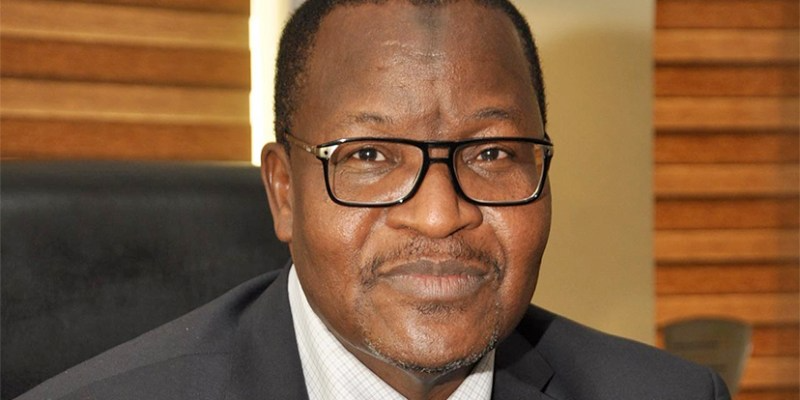
The Executive Vice Chairman and Chief Exectutive Officer of the Nigerian Communications Commission (NCC), Prof. Umar Garba Danbatta has based the Nigeria’s socio-economic development on the adoption and utilisation of Information and Communication Technology (ICT).
The Commission, under the leadership of Prof. Umar Garba Danbatta, has been playing critical role in the creation of digital job opportunities and skills acquisitions among the teeming youths of the country. The erudite professor noted that ICT is an enabler of effectiveness in operations in every sector of the economy, including commerce, agriculture, health, security and governance.
In the paper titled: “Empowering the Nigerian Youth though Information and Communication Technology”, Danbatta recalled the impact of ICT revolution in all parts of human endeavour across countries and continents, insisting that technology will continue to penetrate and foster qualitative and quantifiable changes in all aspects of life.
Digital Job Creation for Youths (DJCY)
In line with one of the pillars of the National Digital Economic Policy and Strategy, (NDEPS 2020-2030), which is to further accelerate economic growth in digital literacy and skills, the Nigerian Communications Commission (NCC) is fully committed to the effective and efficient implementation of the Federal Government’s policy direction in repositioning the youth for the digital era job opportunities through a programme tagged, Digital Job Creation for Youths (DJCY).
Over 2,000 Nigerian youths have, so far, benefited from this programme from the Six (6) Geopolitical Zones of the country while the ongoing edition has 600 youths being trained.
The DJCY programme is designed to enhance the skills of youths across all the Six (6) Geopolitical Zones of Nigeria through customised training and offer of fully-loaded laptop computers with networking devices, to equip them for the purposes of engaging in different digital entrepreneurship businesses that they may chose.
The beneficiaries are provided with free accommodation facilities for two weeks, during which resource persons in digital skills, business development and management, are engaged to retool them with their laptops to re-orientate them towards self-discovery, self-development, and self-employment.
Some of the objectives of the DJCY include to remould youths with other skills with Information and Communication Technology (ICT) proficiency to fit into the digital economy as well as strengthen technical and scientific competences among the youths with a view to creating opportunities for self-employment. It is also designed to improve access to ICT-enabled services such as banking, and strengthen the ICT micro, small and medium enterprises (MSME) sector of the economy.
The DJCY relies on the provisions of NDEPS 2020-2030, which encourage the promotion of Digital Literacy and Skills through “massive training of Nigerians from all walks of life in order to enable them to obtain digital literacy and other digital skills.” Hundreds of the participants in the previous two editions have reported gainful self-employments, using the laptops and Internet connectivity tools provided by the Commission.
It is gratifying to note that the Commission has, through the Honourable Minister of Communications and Digital Economy, Prof. Ali Ibrahim Pantami, received the commendations of the Federal Government for the way and manner it had efficiently and effectively designed and implemented this programme for the benefit of the Nigerian youths.
The Commission restates its full commitment to this programme as a result of the positive feedbacks from the previous editions and the potentials it has in enhancing the digital opportunities of the Nigerian youth for the benefit of the nation’s digital economy.
Digital Nigeria Centre (DNC)
Also, the NCC to ensure that society in connected, is determined to ensure that digital skills are provided to all Nigerians especially the youth in schools through the Digital Nigeria Centre (DNC), another project of the Commission funded by the Universal Access Provision Fund. Digital skills function together with other abilities such as strong literacy and numeracy skills, critical and innovative thinking, complex problem solving, an ability to collaborate, and socio-emotional skills.
The USPF under whose auspices the project was implemented, was established by the federal government through the Nigerian Communications Act (NCA), 2003, to facilitate the achievement of national policy goals for Universal Access and Universal Service to ICTs in the rural, unserved and underserved areas in Nigeria.
The DNC, hitherto known as School Knowledge Centre (SNC), targets students and youths for skills acquisition in order to increase Information and Communication Technology (ICT) literacy among school teachers and students; provide a platform for accessing online educational resources; equip students with ICT skills; facilitate ICT adoption in teaching and learning; and increase pass rate in mathematics, English language and other science subjects.
The four components of the DNC include ICT Tool component (made up of 40 desktop computers with embedded operating systems, server, printer, remote-controlled projector, high resolution scanner, and e-learning software). Another component is the Power structure, consisting of an inverter that comes with its charger, solar panels, batteries and automatic changeover.
There is also a Connectivity component, made up of routers, switches, firewall for network protection, modem, fibre/microwave radio or VSAT and bandwidth for internet connectivity. Finally, there is a non-ICT component constitutive of the furniture, cabinet, cooling systems, and allied appliances.
Speaking during the commissioning of the Digital Nigeria Centre built by the Universal Service Provision Fund (USPF) at Ijesha Moslem Grammar School, Irjo, Ilesha, Osun state last year January, the Honourable Minister of Communications and Digital Economy, Prof. Ali Ibrahim Pantami, said this will ensure the development of digital economy culture in the country.
“Major digital transformations such as Artificial Intelligence (AI), machine learning, big data analytics, and change skills requirements in turn, impact capacity building and skills development for the 21st century digital economy, in which Nigeria is set to play a major role,” he added.
The minister said, “the overarching objective of this project executed by the NCC’s companion-department, the USPF, is to facilitate adoption of digital lifestyle in the schools as well as in the school communities.
The executive chairman, NCC, Prof Umaru Danbatta said the NCC, through the USPF, in fulfilling its mandate, is carrying out more projects across Nigeria to ensure that the digital gap that exists in our communities and institutions is bridged so there would be “ICTs for all”, in line with the global policy mandate of the International Telecommunication Union (ITU), and which all countries have enlisted to achieve.
We’ve got the edge. Get real-time reports, breaking scoops, and exclusive angles delivered straight to your phone. Don’t settle for stale news. Join LEADERSHIP NEWS on WhatsApp for 24/7 updates →
Join Our WhatsApp Channel