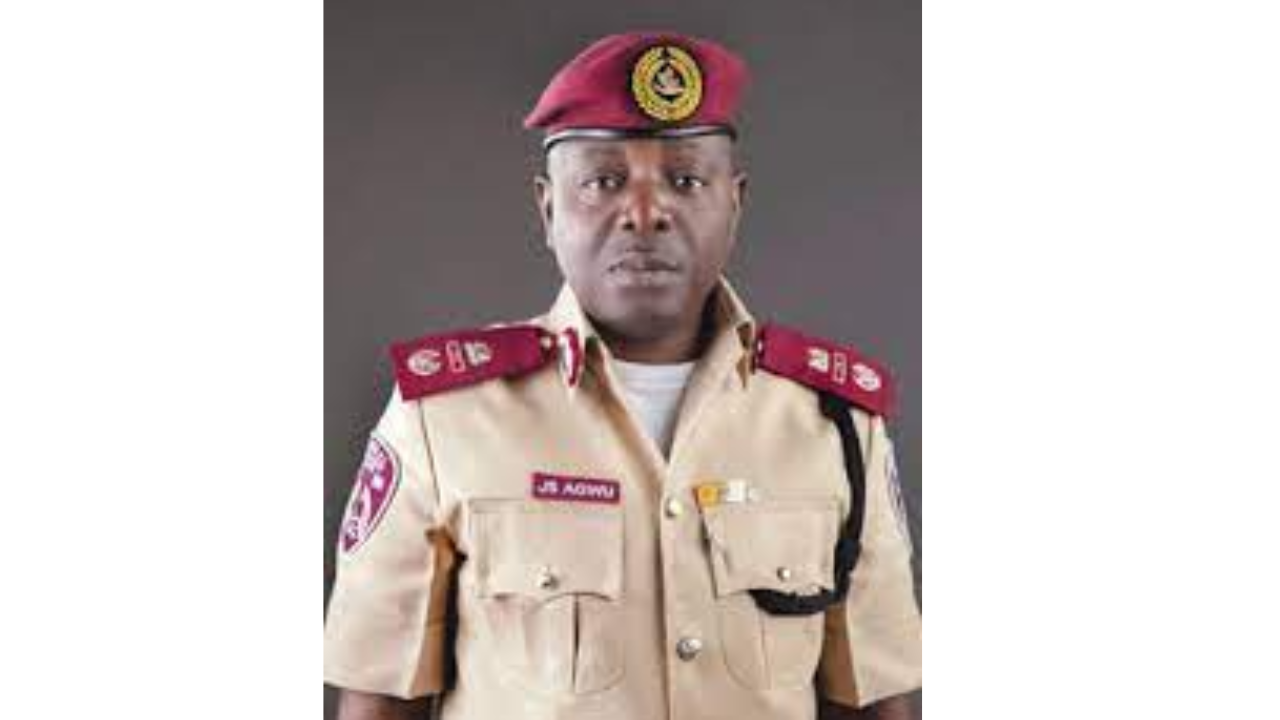
Some years ago, I did a piece with this same title. This was shortly after series of avoidable crashes that claimed the lives of family members of some prominent people as well as a safety officer with one of the Agencies at his duty post where he was detailed to save lives.
It is more than ten years since that piece was published and with just about four weeks to the end-of-year activities usually characterized by increased motorization, I am compelled to do another piece with the same title which I intend to run for the next two weeks for several reasons especially after the crash of 21 November, 2023, somewhere close to kontagora in Niger State which claimed about nineteen lives
The first is that despite the efforts by the FRSC and its partners, crashes are yet to abate. Secondly, I have lost friends and colleagues, including youngsters; who could have been my children. Thirdly, I have read reactions, opinions and editorials, including personal discussions on these crashes and I am stunned by some of the views.
Lastly, each time there is a crash, the correct reaction or question of unravelling the mistake of the man behind the wheel; the speed at which the vehicle was moving, knowing fully well that behind every fatal crash is excessive speed which most drivers indulge in; the minimum safety condition of the vehicles, such as the state of the tyres, electrical and mechanical state; etc…are not considered.
All we do is to pass the buck by excusing irresponsible driving which has become the norm. We blame government for the roads despite government’s on-going efforts to fix them. Some blame the FRSC for every bad driving, and I agree that the Corps has its fair share of burden.
But do we know the provisions of the National Road Traffic Regulations as well as the Revised Highway Code; which should be the encyclopedia for every driver and would- be driver. How many of us insist on being properly tested as responsible citizens? How many have taken the pain to ensure that we are properly tutored before we hit the road.
How many trust the process the Corps has outlined to ensure we promote responsible driving. How often do we seek ways to cut comers by not going through the processes? How many hides under our tight working schedules to employ proxy touts, only to turn around to blame touts? Others stretch their anger to the extreme by calling for the scrapping of the Corps.
How many of those running schools take the pain to ensure the right standards are upheld instead of employing drivers who daily fail to instill the culture of wearing seat belt and other safety rules meant to protect our leaders of tomorrow.
Candidly, my take, which this column stands for, is that we can make a huge difference by simply changing our driving habits. If we collectively cut down on excessive speeding, road crashes will crash instantly. Since most crashes leading to deaths are speed related, i will dwell a little on speed and will cite crash cases from Nigeria and other parts of the world to drive two fundamental points.
These first is that there is the need for appropriate structures such as good roads with appropriate road furniture to be put in place, but the truth is that even with the good structures in the Federal Capital Territory (FCT), fatalities still rank high, underscoring the need for responsible driving.
Secondly, much more than good roads, which we all crave for, the question of how we use these structures is extremely crucial, with driving under appropriate and commonsense speed being the most vital. Speed limits are used to regulate the speed of vehicles. Speed limits may define maximum (which may be variable), minimum or no speed limit and are normally indicated using a traffic sign.
Speed limits are commonly set by the legislative bodies of nations or provincial governments and enforced by agencies. The first maximum speed limit was the 10 mph (16km/hr) limit Introduced in the United Kingdom in 1861. From 2005 to 2010, the highest posted speed limit was 160 km/h (99 mph) in Abu Dhabi, although this was reduced to 140 km/h (87 mph) in 2011.
However, some roads have no speed limits for certain classes of vehicles. Best known are Germany’s less congested Autobahns, where automobile drivers have no mandated maximum speed. Measurement from the German State of Brandenburg in 2006 shows average speeds of 137 km/h (85 mph) on four-lane sections, and 142 km/h (88 mph) on six-lane sections, without mandatory speed limits. Rural areas on the Isle of Man, the Indian states of Andhra Pradesh and Maharashtra also lack speed limits, but speeds are lower when measured on those lower design roads.
Speed limits are usually set to attempt to cap road traffic speed. There are several reasons for doing this. It is often done with an intention to improve road traffic safety and reduce the number of road traffic casualties from traffic collisions. In their World report on road traffic injury prevention report, the World Health Organization (WHO) identifies speed control as one of various interventions likely to contribute to a reduction in road casualties. (WHO estimated that some 1.3 million people were killed and 50 million injured on die roads around the world.
Speed limits may also be set in an attempt to reduce the environmental impact of road traffic (vehicle noise, vibration, emissions), and to satisfy, local community wishes. Some cities have reduced limits to as little as 30 km/h which is the current campaign being driven by the United Nations as part of strategies to cut down road traffic crashes and deaths.
We’ve got the edge. Get real-time reports, breaking scoops, and exclusive angles delivered straight to your phone. Don’t settle for stale news. Join LEADERSHIP NEWS on WhatsApp for 24/7 updates →
Join Our WhatsApp Channel