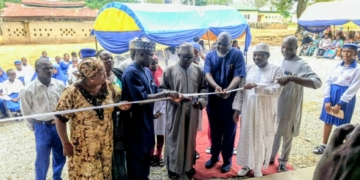
The event was convened in the ancient city of Gumel in Jigawa State to provide Nigerian exporters, especially those in the North-west region with the necessary knowledge, tools, and resources to navigate the complexities of the global export market and to maximise their export potential in a push to promote non-oil exports in Nigeria.
By the time speakers took turns to talk about the opportunities for exporters, it became clear that Nigeria has a great opportunity to turn the non-oil export market to dollar-income sector. The event also revealed some of the challenges facing the exporters and exportable products of Nigeria origin. After the one day discussions, the stakeholder came to the agreement that for the country to attain its export potentials, more efforts need to be given to processing of raw materials for value addition before export.
Nigeria has a large agricultural sector that includes livestock, fisheries, forestry, and agricultural production. The government and investors have made efforts to increase agricultural productivity, but more action is needed to fully realise the sector’s potential.
Nigeria’s non-oil exports have fallen by over $300 million, decreasing from $4.8 billion in 2022 to $4.5 billion in 2023, as revealed by the Nigerian Export Promotion Council (NEPC).
Some challenges that affect the country’s export processes include skyrocketing energy prices. To improve its export base, Nigeria could: reduce the cost of doing business, Improve market access for Nigerian exports, and harmonise trade policies at all levels.
However, the volume of non-oil exports increased in 2023, with 6.685 million metric tonnes of exportable products exported. This was a 28.04 per cent increase from the previous year.
The North-West region is famous for export of most agricultural products in Nigeria, including, soybeans, ginger, cowpea, Bennie seed, millet, sorghum, sesame seeds and groundnut. The choice of Jigawa was deliberate. The Malam Umar Namadi-led administration has made target-based efforts in reviving the Maigatari Export Processing Zone which experts say will further deepen the state’s export processing capacity.
Data shows that Jigawa State is among the top producers of exportable agricultural commodities like hibiscus, sesame, groundnut, and gum Arabic, as well as solid minerals such as granite, tin, kaolin, columbite, iron ore, and soda ash. Furthermore, the Maigatari livestock market, the largest in Africa, provides the state with ample export opportunities.
Managing director and chief executive officer of the Nigerian Export-Import Bank (NEXIM) Abba Bello said the stakeholders’ engagement was aimed at enhancing Nigeria’s export capabilities and fostering sustainable economic growth.
Regional coordinator, North-west region at the Nigerian Export Promotion Council (NEPC) Amina Abdulmalik in her presentation at the event, underscored the need for the exporters to increase production and exports of high-value agricultural commodities like cocoa, cashews, and palm oil; develop and promote exportable manufactured products, such as textiles, furniture, and processed by leveraging Nigeria’s human capital to expand service exports, including IT.
Abdulmalik also called for more investment in transportation, logistics, and digital infrastructure to reduce export costs and increase efficiency.
Aligning himself with one of the exporters who identified him as Yusuf Aba-Ali said the government also needs to provide tax benefits, export credit, and other incentives to support non-oil exporters. The participants applauded the NEPC for calling for the eWnhancement of worker skills and adoption of new technologies to improve product quality and competitiveness.
Earlier, Bello restated the commitment of NEXIM to supporting and empowering the exporters who play a pivotal role in driving the nation’s economic diversification and development.
Experts from the Nigerian Agricultural Quarantine Service (NAQS), National Agency for Food & Drug Administration Control (NAFDAC) and one the foremost Export Commodity Aggregators Maiyamco Nigeria Limited who were on ground shared their insights and experiences on the challenges and prospects of the export market in Nigeria.
The exporters at the forum said contributions of the various regulators in the export value chain have undoubtedly enriched their understanding and inspired innovative approaches to overcoming the challenges faced by all exporters of Nigerian products.
“I wish to reiterate NEXIM’s commitment to being your steadfast partner in progress. Let us work together to unlock new markets, create jobs, and contribute to the prosperity of our great nation,” NEXIM’s Bello said.
On its list of support for the non-oil export sector, the Nigerian government said it has created policies and programs to support export-oriented firms, including tax incentives, export financing, and export promotion programmes.
We’ve got the edge. Get real-time reports, breaking scoops, and exclusive angles delivered straight to your phone. Don’t settle for stale news. Join LEADERSHIP NEWS on WhatsApp for 24/7 updates →
Join Our WhatsApp Channel