In the aftermath of conflict, the focus often falls on destroyed homes, lost livelihoods, and broken communities. Yet, hidden beneath the surface is another crisis, one that affects displaced women in deeply personal and life-altering ways. In Benue State’s Logo local government area (LGA), years of violent displacement have not only fractured families but also exposed a growing reproductive health emergency.
In overcrowded shelters and abandoned classrooms now serving as homes, access to family planning is scarce, unplanned pregnancies are rising, and myths about contraception continue to thrive all while healthcare systems remain dangerously overstretched.
For Mrs. Mngohol Aondowase, a 34-year-old mother of four, displacement has not only stripped her of a home but of control over her reproductive choices. After fleeing her village near Anyiin in 2021, due to a violent herder attack, she now lives in a dilapidated school-turned-shelter, covered by tarpaulin and uncertainty. Despite already struggling to feed her children, she is expecting another. “I don’t even know how this one happened,” she stated, cradling her swollen belly.
“My husband comes to see us sometimes. He says it is God’s will.” In her words lies a common refrain, resignation to fate in the absence of reliable reproductive health support.
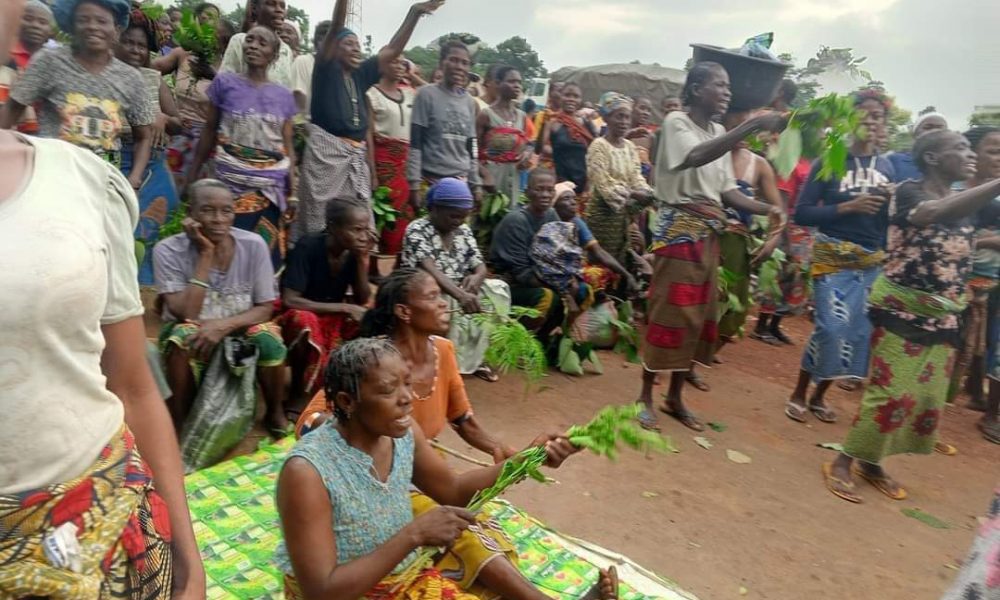
Across Logo LGA, similar stories echo from overcrowded camps and abandoned communities. Family planning is barely discussed, and even less available. Access to modern contraceptives is nearly nonexistent, while misinformation and cultural taboos continue to suppress informed choices. Healthcare centers, where they exist, are few and far between, often understaffed or lacking the supplies needed to provide even basic maternal care. For many displaced women, reproductive health has become a silent casualty of conflict—overshadowed by violence but no less urgent.
LEADERSHIP Weekend reports that Logo LGA has endured repeated cycles of violence and displacement, leaving tonce-thriving communities abandoned or only partially rebuilt. The toll on families has been profound.
In scattered camps and makeshift settlements, people struggle daily, relying on donations, community efforts, and the occasional support from humanitarian groups. Clinics are scarce, health workers are overwhelmed, and essential reproductive health services are often nonexistent.
When our correspondent took a trip to one of the camps in the LGA, he observed that in most of this area, very few health posts offer family planning services,” shared a health volunteer working in one of the settlements. Women are giving birth one after another because there’s no education, no access, and not even the privacy to ask basic questions.”
Volunteers have reported cases of pregnant girls as young as 16 being referred to distant hospitals in Anyiin or Ugba—facilities like more than an hour away by road. For many families, the cost of transport alone puts help painfully out of reach.
In a dusty clearing near Tse-Chembe, a young mother named Pine balances two babies in her arms, her own newborn and the child of her teenage sister. According to her, their father vanished after a second attack on their village, and neither the woman has heard from him since.
In Pines words, “I didn’t go to school. I don’t even know what family planning is. The old women just say, God will provide. But I have nothing for these children.”
Her story is heartbreakingly familiar in the area. Teenage pregnancies are reportedly on the rise, while access to maternal healthcare remains alarmingly scarce. With each new birth, already-stretched resources, food, informal schooling, and emotional support are pushed to the brink, leaving mothers like Pine to navigate overwhelming challenges with little help and even less hope.
As Nigeria prepares for its long-awaited Population and Housing Census, communities like Logo remain at risk of being left out again. While debates around fertility rates and family planning unfold in Abuja, many displaced families here have heard nothing about the upcoming census.
An elderly woman , who refused to mention her name said, “No one came to ask us about children or health. If the government wants to plan, they should start by coming here.”
LEADERSHIP Weekend points out that the gap between policy and reality is stark. In the face of limited access to healthcare, education, and information, a handful of grassroots and faith-based volunteers have stepped in to fill the void. They offer basic health education and introduce women to family planning—often for the first time.
A local programme facilitator, Aondowase Pinega, said “We recently gathered a group of women and talked about their reproductive rights. LEADERSHIP Weekend observed that some of them were hearing about contraception for the first time. It was indeed emotional as many didn’t even know they had the right to say no.
Yet these grassroots efforts, though powerful, are still too few. Without stronger government support, widespread awareness campaigns, and culturally sensitive outreach, the cycle of unplanned pregnancies, poverty, and neglect will persist.
In Anyiin camp, a mother named Mngohol , expressed her deep concern:, saying, “My children are not in school. They’re not registered anywhere. If you don’t count us, we don’t exist.”
Her words echoed the urgent appeals made by national leaders, at the recent launch of the State of the World Population 2025 report.
Their message was clear: Nigeria’s upcoming census must reflect the real people behind the numbers, especially those in conflict-affected and underserved communities.
Referencing the latest Nigeria Demographic and Health Survey (NDHS 2023–2024), Kwarra noted a slight decline in the Total Fertility Rate (TFR) from 5.3 to 4.8 children per woman.
However, the National Population Commission also highlighted a 21 per cent unmet need for family planning and a 15 per cent adolescent pregnancy rate trends that echo what’s happening in Logo.
Until these gaps are addressed, women like Mngohol will continue giving birth in the shadows, trapped between survival and silence.
We’ve got the edge. Get real-time reports, breaking scoops, and exclusive angles delivered straight to your phone. Don’t settle for stale news. Join LEADERSHIP NEWS on WhatsApp for 24/7 updates →
Join Our WhatsApp Channel