Independence Day speeches are always tricky. They must strike a balance between nostalgia for the heroes of old, honesty about present struggles, and optimism for the future.
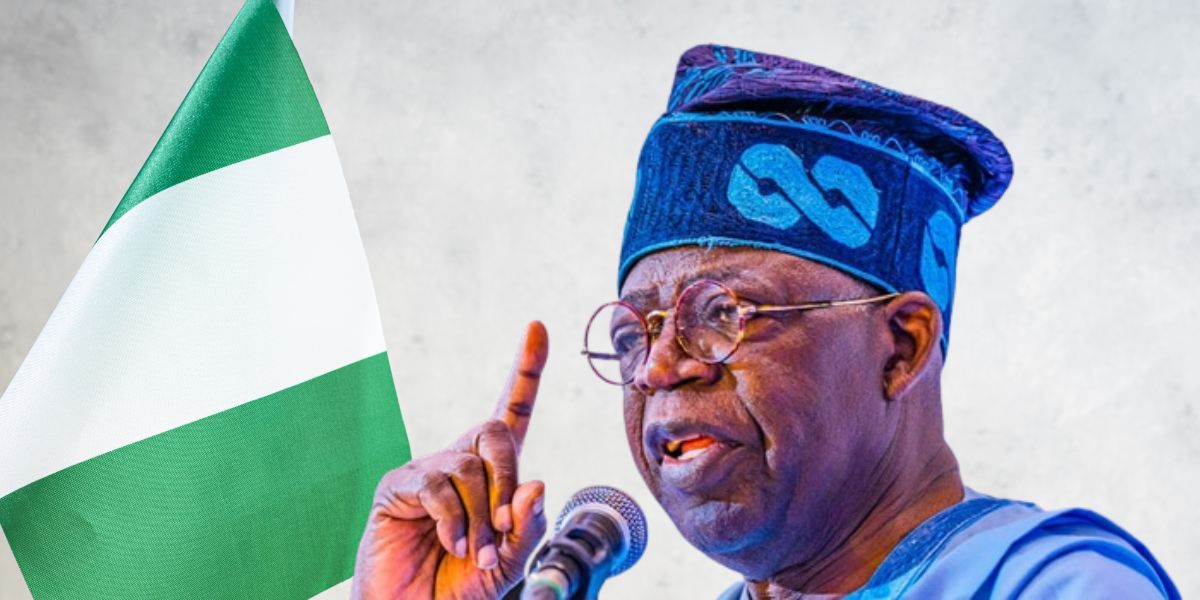
President Bola Tinubu, in his address to mark Nigeria’s 65th Independence anniversary, attempted all three. He invoked the spirits of Herbert Macaulay, Nnamdi Azikiwe, Obafemi Awolowo, Ahmadu Bello, Margaret Ekpo, and Funmilayo Ransome-Kuti, anchoring his speech in history.
He acknowledged the storms we have endured as a nation—civil war, military dictatorships, economic collapses—and reminded Nigerians that we remain standing. But then he made a bolder claim: that “the worst is over.”
It was a line designed to capture headlines and stir hope. Yet it was also a gamble. In a country still groaning under inflation, food insecurity, and joblessness, to tell the people that their darkest days are behind them is either an act of courage or a political risk. Perhaps both.
For Tinubu, it was a declaration that the pain of his early reforms—subsidy removal, foreign exchange unification, tax reforms—is finally giving way to gain.
He had the numbers ready. He listed 12 economic milestones, a catalogue of achievements meant to prove that the tide has turned. Non-oil revenue crossing ₦20 trillion by August 2025. Debt service-to-revenue ratio cut from a suffocating 97 percent to under 50. Foreign reserves are rising to $42 billion, the highest since 2019. Tax-to-GDP is climbing to 13.5 percent. Five consecutive quarters of trade surplus, non-oil exports now almost half of trade. Oil output is inching back up to 1.68 million barrels per day, and petrol is being refined locally for the first time in 40 years.
The naira, he insisted, had stabilised after ending multiple exchange rates. ₦330 billion disbursed to 8 million households under social investment. Solid minerals production is rebounding. New rail and highway projects are taking shape. Sovereign credit upgrades and the stock market breaking records. Even the Central Bank is cutting interest rates for the first time in five years.
On paper, it is impressive. On the ground, it is harder to feel. The truth of Nigerian economics is that a booming stock market does not fill the average household pot of soup. But Tinubu’s message was clear: these are not empty statistics, they are the foundations of a new economy. Whether Nigerians believe him will depend on whether the numbers translate into cheaper food, reliable power, and safer streets.
Tinubu also spoke about security, another yardstick where Nigerians judge progress not by official communiqués but by lived experience. He praised the armed forces for victories over Boko Haram, IPOB/ESN, and banditry, claiming peace has returned to hundreds of communities. Perhaps this is true in certain pockets, but insecurity in Nigeria has a stubborn way of reappearing even after apparent victories. For those who cannot travel familiar roads without fear or farm their lands without looking over their shoulders, peace remains fragile.
Tinubu’s insistence that the tide has turned in security is another part of his gamble: to convince Nigerians that things are measurably better than they were two years ago.
He did not forget the youth, often the sharpest critics of government. Calling them Nigeria’s “greatest asset,” he reeled out initiatives: student loans through NELFUND, Credicorp loans for small businesses, YouthCred for NYSC members, and the iDICE programme for innovators. It was a deliberate attempt to show restless young Nigerians that his administration is creating ladders for them to climb. But the scale of youth unemployment in Nigeria is staggering, and half a million students with loans, while useful, is still a drop in the ocean. Tinubu’s challenge will be to expand these interventions fast enough to make a dent.
The political heart of his message, however, was not in the details but in the declaration. “The worst is over,” he said. That sentence carries both hope and hazard. If inflation eases, food prices fall, and jobs open up in the next two years, the line will sound prophetic, even visionary. If hardship lingers, critics will replay the words as proof of a president out of touch with reality. In that sense, Tinubu has raised the stakes for himself.
Optimism is a necessary trait of leadership, but Nigerians are a sceptical audience. They have heard promises before. They will demand proof, not poetry.
Still, there was honesty tucked inside the rhetoric. Tinubu admitted that success is not judged by statistics alone but by food on the table, electricity in homes, education for children, and security in communities.
That, more than the trillion-naira milestones, may be what Nigerians will remember from this speech. It was a recognition that progress is not about macroeconomic graphs but about daily life. Nigerians do not celebrate GDP ratios; they celebrate when garri is cheaper, when the lights stay on, and when they can sleep without fear.
At 65, Nigeria is neither a failure nor the success our founders dreamed of. It is, as Tinubu said, a work in progress, striving for a more perfect union. His Independence message was a mix of memory, milestone, and optimism, but also a political bet that the country will soon feel the difference his reforms promise. For now, though, the optimism must wrestle with reality. The president has thrown down a marker. Nigerians will hold him to it.
So, was his declaration premature? Perhaps. But maybe Tinubu is betting on a national psychology as much as on economics: that after years of hardship, Nigerians need to hear not just that things are hard but that things can get better. In that sense, his gamble is not only political but human. Nations are not built on pessimism. They are built on faith, however fragile, that tomorrow will be better than today.
Whether or not the worst is truly over, Nigerians will judge by what happens next. And at 65, that judgment matters more than ever. Because if this “worst is over” promise turns out to be another false dawn, Nigerians won’t just grumble—they’ll remember. They always do. We’ve been promised El Dorado so many times we could draw a tourist map of it. But if, for once, the corner really has been turned, then Tinubu’s words might finally join the ranks of Independence Day speeches remembered not for their poetry, but for their proof. Until then, Nigerians will take the President’s optimism with a pinch of salt—and a side of suya.
We’ve got the edge. Get real-time reports, breaking scoops, and exclusive angles delivered straight to your phone. Don’t settle for stale news. Join LEADERSHIP NEWS on WhatsApp for 24/7 updates →
Join Our WhatsApp Channel