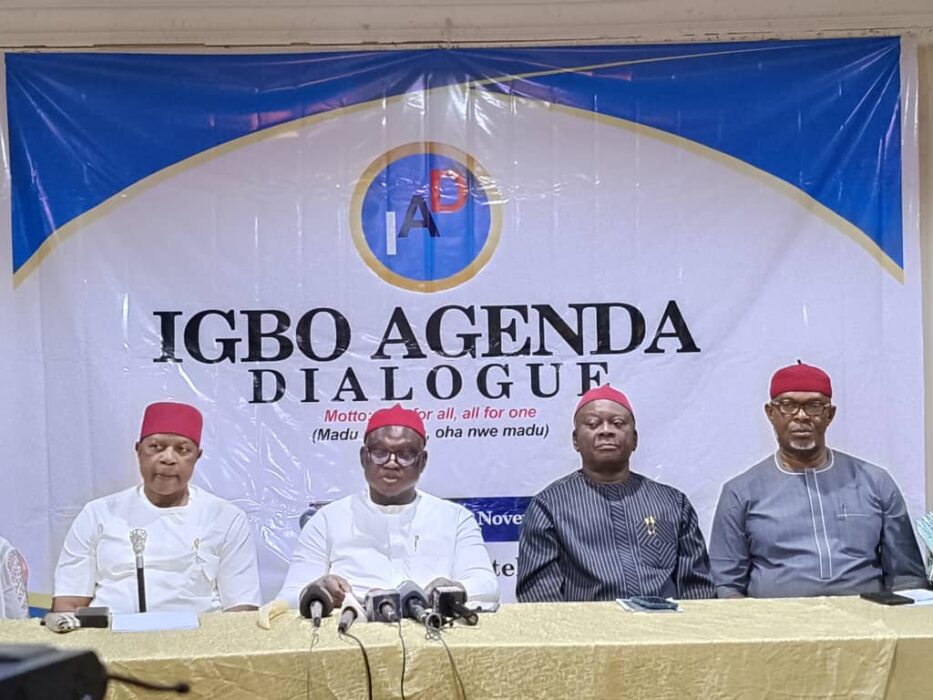
A socio-cultural group, the Igbo Agenda Dialogue (IAD), has unveiled a political roadmap ahead of the 2027 general elections and confirmed plans for the first Igbo Political Summit slated for early next year.
This was disclosed in a communiqué issued from its second meeting held in Abuja.
Presided over by the convener, Chief (Dr) Chekwas Okorie, the gathering brought together a wide spectrum of Igbo leaders, civil society groups, youth and women representatives, professional bodies and members of the diaspora.
Chief Okorie expressed gratitude for the growing enthusiasm, unity and sense of purpose seen across Igbo communities worldwide.
The group reviewed outcomes from its inaugural meeting of August 27, 2025, noting the overwhelming positive reception from Igbo populations both in Nigeria and abroad.
Participants reaffirmed their commitment to building a non-partisan platform that unifies all Igbo socio-political groups under one umbrella.
Since August, the IAD has carried out extensive consultations, including a diaspora town hall organised by NJENJE MEDIA via Zoom on September 7. Stakeholders praised the growing momentum behind the IAD’s vision, describing it as a long-awaited platform for coordinated Igbo political engagement.
A key highlight of the meeting was the announcement of the first Igbo Political Summit to be held in Enugu in the first quarter of 2026.
The summit will feature the landmark unveiling of the First Igbo Political Charter – a document that will outline the political aspirations, rights and responsibilities of the Igbo nation within the Nigerian federation.
The IAD tasked individuals, organisations and institutions to submit recommendations toward drafting the charter. The process will be coordinated by Dr Emeka Okengwu, who will issue guidelines and oversee contributions.
Chief Okorie reiterated his complete withdrawal from partisan politics, emphasising that neutrality at the leadership level is essential for the unity, credibility and durability of the IAD.
Participants also restated that the Igbo remain one of Nigeria’s largest and most widely dispersed ethnic groups, with a presence in all parts of the country, stressing that this demographic strength contradicts the continuing political marginalisation experienced by the region.
They reviewed long-standing structural imbalances rooted in the aftermath of the Civil War, including – the Southeast’s retention of only five states compared to six or seven in other zones, inequitable distribution of LGAs (95 in the Southeast vs 188 in the Northwest), boundary adjustments that reduced Igbo landmass and reassigned oil-producing areas to neighbouring states, among others.
With national restructuring efforts stalled since 1999, the IAD resolved that the Igbo must now pursue strategic political action within the current constitutional framework. Stakeholders agreed that shaping their destiny requires active engagement, not continued lamentation.
A key resolution was a call for mass political participation by all eligible Igbo citizens starting with the 2027 general elections.
The communiqué was jointly signed by the convener, Chief Chekwas Okorie and the executive secretary, Jonathan Elendu.
We’ve got the edge. Get real-time reports, breaking scoops, and exclusive angles delivered straight to your phone. Don’t settle for stale news. Join LEADERSHIP NEWS on WhatsApp for 24/7 updates →
Join Our WhatsApp Channel