Power industry stakeholders have observed that capital investment is key to strengthening the country’s electricity industry, raising concerns that decentralisation alone is not a sufficient way to boost the sector.
The demand took center stage during power sector stakeholders forum organised by the Lagos Chamber of Commerce and Industry (LCCI) in Lagos recently.
At the event, the Lagos State government and the Chamber called for increased investment in the power sector to support decentralisation, improve competition and strengthen energy security for homes and businesses.
The LCCI Power Sector Conference, which convened key industry leaders, warned that, decentralisation would not deliver results unless the government and the private sector commit fresh capital to upgrade aging infrastructure, expand generation capacity and modernise distribution networks.
Lagos State commissioner for Energy and Mineral Resources, Biodun Ogunleye said the country had entered ‘a defining moment’ in its energy transition, stressing that, decentralisation under the Electricity Act had shifted the conversation from possibilities to delivery.
Ogunleye, represented by the Chief Technical Officer, Ogunade Hamed, stated that, Lagos acted early to build a decentralised electricity market but insisted that more investment was needed to upgrade infrastructure and sustain reforms.
Ogunleye said, “Our distribution and transmission networks require significant investment, refurbishment, and smarter management. We cannot deliver reliability on infrastructure designed for a smaller population and a different economy.”
He added that, Lagos had created ‘a clear path toward reliability, affordability and energy access for all, ‘ through the Lagos Electricity Law, the Lagos State Electricity Regulatory Commission and the state’s Integrated Resource Plan.
He also listed ongoing projects, including an expanded embedded generation framework for industrial clusters, solar retrofits of 42,000 streetlights and regulations supporting mini-grids and hybrid systems.
But he warned that, no state could build a thriving electricity market alone, urging public and private actors to ‘invest, collaborate and demonstrate the courage to innovate.’
Chairman of the LCCI Power Sector Group, Olufemi Bakare, said Nigeria stood “at a critical juncture” in its search for sustainable energy solutions, noting that decentralisation efforts would fail unless the country solved its infrastructure deficits.”
He said, ‘Infrastructure optimisation remains a pressing concern, and we must collectively address the obstacles that hinder progress.’
Bakare added that, while power generation capacity had improved in recent years, ‘transmission and distribution bottlenecks persist,’ stressing that, the country must prioritise solutions that attract investment, promote competition and guarantee energy security for businesses and households.
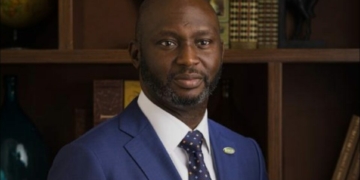
Earlier, the president of the LCCI, Gabriel Idahosa, said Nigeria’s move toward decentralisation had opened opportunities but also exposed long-standing weaknesses across the power value chain.
Idahosa said, “Nigeria cannot industrialise without reliable electricity; our businesses cannot scale without energy stability; our digital ambitions cannot thrive without dependable power.”
He warned that regulatory inconsistencies, poor data management, weak networks and insufficient off-grid investment continued to undermine investor confidence.
Optimisation and Challenges in the Power Sector Amidst Current Decentralisation Efforts, drew industry leaders, investors and policymakers who assessed the country’s readiness for decentralised power markets and the investment needed to sustain them.
We’ve got the edge. Get real-time reports, breaking scoops, and exclusive angles delivered straight to your phone. Don’t settle for stale news. Join LEADERSHIP NEWS on WhatsApp for 24/7 updates →
Join Our WhatsApp Channel