In Nigeria, tree felling has continue to have severe negative impacts on the environment and has contributed to worsening the impact of climate change, biodiversity loss, soil erosion, and desertification.
Research has shown that the loss of forests trees does not only lead to increased carbon emissions or a reduced ability to absorb carbon-dioxide, it also comes with exacerbating global warming that affects the environment and creates an unhealthy living condition for human-being and other living organisms.
It is a given that indiscriminate tree felling can lead to soil infertility as well as degrades air and water quality, thereby leading to extreme weather events and heat waves.
On a broader scale, tree felling has both environmental and health implication; if trees are cut indiscriminately there will be fewer trees to filter pollutants and this causes the air quality to deteriorate, leading to respiratory diseases and other health problems.
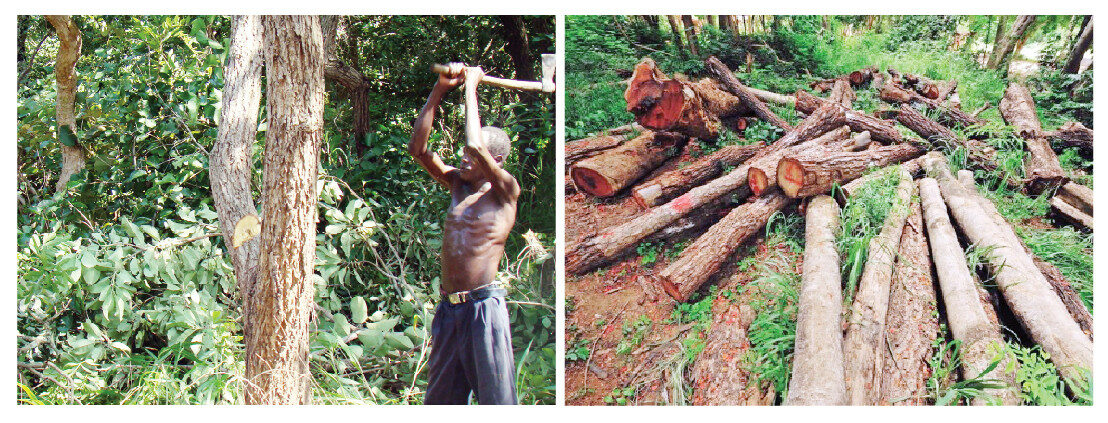
Sadly, for us in Nigeria, tree felling for firewood and charcoal has become a predominant domestic activity, especially among rural settlements.
Essentially, trees are cut in large proportion for various purposes which includes fuelwood and charcoal. The heavy reliance on wood for cooking and heating is a major driver of tree felling, especially in so many rural communities. While in towns and cities, the rise in the craving for uurbanization and infrastructure development, especially in the expansion of cities and the construction of infrastructure like furniture, often leads to tree cutting.
It is no news that tree felling can cause deforestation of the environment and sadly, Deforestation significantly increases the likelihood and severity of flooding which occurs due to lower vegetation for water absorption, increased surface runoff, and soil erosion.
Research has indicated that Nigeria’s deforestation is a complex issue requiring a multi-faceted approach because of the slow pace of afforestation. It also reveals that Nigeria faces a severe deforestation crisis, losing a significant portion of its natural forest cover annually, with estimates suggesting a loss of around 3.7% of its forest each year and a total loss of 1.14 million hectares of tree cover between 2001 and 2021. On land mass, it has lost the size of Lagos, Enugu, and FCT to deforestation in 20 years.
Like the Director General of the National Agency for the Great Green Wall (NAGGW), Dr Saleh Abubakar warned, Nigeria is heading towards an environmental and health crisis if urgent action is not taken to curb the reckless felling of trees for charcoal especially in the far northern parts of the country.
In an exclusive interview, Abubakar said that the NAGGW embarked on a national campaign and has so far, planted over 5-million date plants in a deliberate move to combat desertification especially in the eleven frontline states, situated in the far northern part of the country.
“The federal government’s drive of launching 5 million date palm seedlings as well as scaling up of the date palm seedling plantation to 50 million between now and the year 2030 is a welcome development”, he noted.
Abubakar cautioned that Nigeria just like most parts of the globe is facing a climate crisis and advised that the crisis can only be taken care of if we as citizens start being so aware of our environment.
He emphasized the need for citizens to engage in environmentally friendly activities in form of tree planting as well as desist from indiscriminate acts of deforestation in order to leave in peace and harmony with the environment and the planet at large.
Interestingly, the NAGGW is working with state governments, to ensure the implementation of laws guarding tree preservation and enthroning afforestation. How best can this noble initiative achieve the desired impact? Like experts have warned, citizens must desist from reckless tree felling to save the environment for present and future generations.
Last week, while addressing world leaders at the thirtieth session of the conference of the United Nations Framework Convention on Climate Change (UNFCCC COP30) in Belem, Brazil, President Bola Ahmed Tinubu, who was represented by the Minister of Environment Balarabe Abbas Lawal, lamented that Nigeria is among the countries most vulnerable to the adverse impacts of climate change.
President Tinubu emphasized that the effects of this phenomenon are evident across all regions of our nation and added that Nigeria’s arid and semi-arid zones, are faced with desert encroachment, loss of arable land, and declining livelihoods, while in the coastal areas, erosion and land degradation continue to threaten communities, infrastructure, and vital ecosystems.
Tinubu acknowledged relevance of promoting green growth especially in the far northern region that are facing severe harsh weather conditions due to desert encroachment. He also said his government is expanding protected and conserved areas to safeguard biodiversity and strengthen nature-based solutions for carbon sequestration.
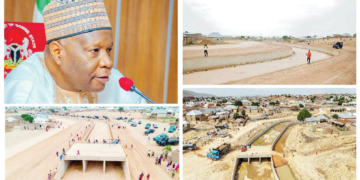
“To promote green growth and sustainable financing, Nigeria has issued its third Sovereign Green Bond. The proceeds of the bonds are dedicated to green projects that will advance our NDC commitments. In partnership with international initiatives such as the Agro-Climatic Resilience in Semi-Arid Landscapes (ACReSAL), the Great Green Wall, and the Nigeria Erosion and Watershed Management Project (NEWMAP), we are restoring degraded lands, protecting watersheds, and improving livelihoods across the country”, he said.
Fundamentally, to overcome the challenge of indiscriminate tree felling and its attendant consequences, the Nigerian government must embark on massive awareness campaigns.
It is incontestable that protecting the environment is a collective responsibility.
We’ve got the edge. Get real-time reports, breaking scoops, and exclusive angles delivered straight to your phone. Don’t settle for stale news. Join LEADERSHIP NEWS on WhatsApp for 24/7 updates →
Join Our WhatsApp Channel