Media experts have raised fresh concerns over the escalating threats confronting professional journalism in Nigeria, warning that unchecked misinformation, unregulated online content, and the absence of legislative protection for journalists pose a growing danger to the nation’s democracy.
Former President of the Nigeria Union of Journalists (NUJ), Chris Isiguzo, speaking at the NUJ FCT 2025 Capacity Building Programme for Information and Media Officers in Keffi, Nasarawa State, on Monday, said the proliferation of digital tools and the rapid growth of social media have created an environment where non-professionals now dominate the information space, often with damaging consequences.
“We are able to attack it headlong, then we are going to be in trouble,” he said.
“The tools we have now are available to our young stars and they can do anything with it. The professionals must invade—be it social media or whatever name you call it—to displace the people having free movement. Social media influencers, content creators, they are churning out all sorts, and the professionals must be there to control.”
Isiguzo warned that the “fifth law of misinformation” is now causing chaos and mayhem, worsened by the rise of citizen journalists who publish without gatekeeping or ethical checks.
“Whatever you turn out must accommodate the fundamentals, so whoever is reading what you are publishing will say this is a professional doing the job,” he added.
He lamented that Nigeria still lacks a legal framework protecting journalists, unlike countries such as Ghana, Malawi, and the United States where media freedoms enjoy constitutional backing.
“There’s no piece of legislation that protects the practice of journalism in Nigeria,” he said.
“If the oxygen is plugged out and democracy begins to inhale what it should not inhale—carbon dioxide—then that is toxic for the body, toxic for democracy and toxic for good governance.”
According to him, journalists in Nigeria shoulder the constitutional duty of ensuring accountability yet continue to operate under fear—fear of harassment, arrest, intimidation, or even incarceration.
“These journalists are living in fear—fear of the unknown, fear of how to feed the family, fear to protect the family,” he said.
“The only thing that can protect them is the piece of legislation.”
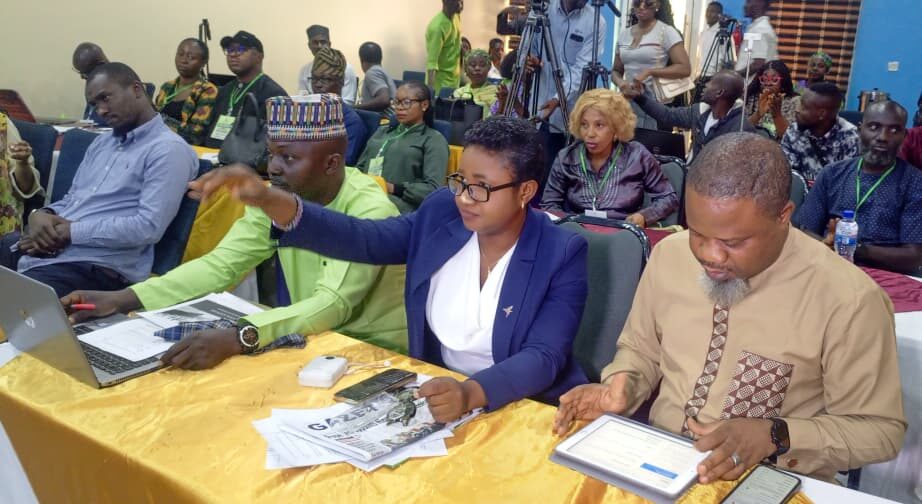
In her keynote speech, chairman of the NUJ FCT Council, Comrade Grace Ike, said the capacity-building programme reflected a strategic commitment to strengthening professionalism in Nigeria’s communication landscape.
She noted that the theme—“Enhancing Image Making, Public Relations, Social Media Management, and Media Visibility in the Public Sector”—is timely given the speed at which information now spreads and the growing influence of digital platforms.
“We live in an age where information travels faster than policy, where perception often precedes reality, and where a single headline, a single tweet, or a single video clip can redefine the reputation of an institution,” Ike said.
She explained that the role of information officers has evolved from simply issuing statements to strategy development, crisis management, content production, digital engagement, and safeguarding institutional reputation.
“To excel in this new system, training is no longer optional; it is foundational,” she said. “It is the difference between being reactive and being strategic, between managing information and shaping narratives.”
Ike stressed that continuous learning remains the only pathway to relevance in today’s media environment.
“When we invest in training, we invest in excellence. When we invest in knowledge, we elevate the credibility of our institutions,” she said.
“Nothing gives me more satisfaction than to see our Council investing in capacity building, because people are the greatest asset of any profession.”
She urged participants from the Ministry of Information, NCC, the military, NASENI, and various media organisations to fully engage in the training.
“Ask questions, challenge assumptions, interact with facilitators, and take back knowledge that can transform your work,” she said.
“Let today be the beginning of a renewed commitment to professionalism.”
In her goodwill message, the Head of Corporate Communications at the Nigerian Communications Commission (NCC), Mrs. Nnenna Ukoha—represented by the Principal Manager, Public Affairs, Mr. Tunde Akpeji—said the workshop was designed to strengthen staff professionalism, improve efficiency, and equip participants to communicate confidently within the public communication space.
He noted that the Commission values its personnel as its greatest asset and that investing in their skills is essential to driving positive change across the telecommunications sector.
According to him, the training will empower information officers with the competencies required to effectively communicate the industry’s commitment to protecting critical national information infrastructure.
The capacity-building programme forms part of the NUJ FCT Council’s broad initiative to enhance ethical standards, improve government communication, and ensure that journalists and information officers remain effective guardians of public interest amid rising misinformation threats.
The event, themed “Enhancing Public Image, Strategic Communication and Media Visibility in the Digital Era,” also featured personalities including the Chairman of the Nigerian Institute of Public Relations, Mr. Stanley Azuka Ogadigo; Deputy Director of the International Institute of Journalism (IIJ), Mr. Nicholas Igwenagu; Dr. Simon Sheyigar, Lecturer at the Federal University Lokoja; and Mr. Victor Habila Alaka.
They each facilitated sessions on building reputation and strengthening professional practice as public relations officers.
We’ve got the edge. Get real-time reports, breaking scoops, and exclusive angles delivered straight to your phone. Don’t settle for stale news. Join LEADERSHIP NEWS on WhatsApp for 24/7 updates →
Join Our WhatsApp Channel