
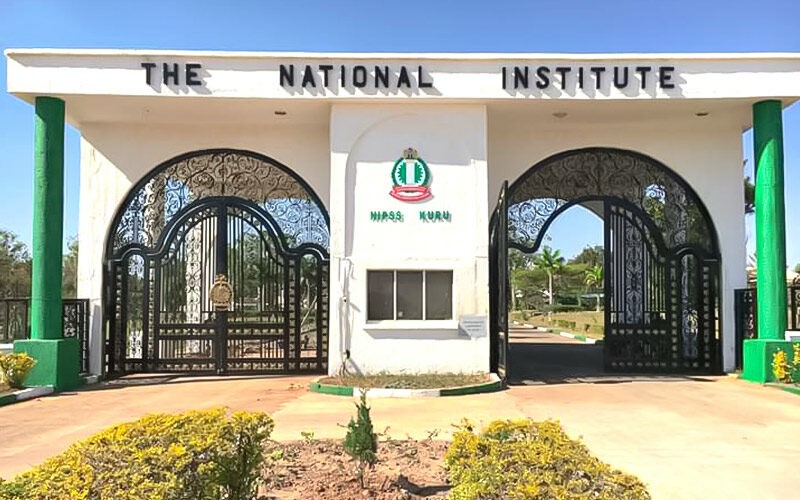
National Institute for Policy and Strategic Studies (NIPSS), the nation’s policy think-tank, is redefining technology by introducing humanoid robots to serve as instructional aides in classrooms, particularly in regions facing chronic teacher shortages.
The director-general of the institute, Prof. Ayo Omotayo, made the disclosure when he spoke to LEADERSHIP in his office at the institute in Jos, the Plateau State capital.
He said the robots, currently being patented, may be sold to local government areas, reflecting NIPSS’ efforts to diversify funding and reduce dependence on federal allocations.
Omotayo also noted that the project reflects a commitment to practical solutions for education challenges, underscoring the institute’s evolution from a traditional think-tank to a hub of technology and policy innovation.
“Looking ahead, we also plans to host the Conference of African Think Tanks (CAT-1), reinforcing Nigeria’s leadership role in continental policy innovation. Universities often focus on theory, but solving real problems requires applying theory in practice,” Omotayo said.
He further maintained that the mission of the institute is to train the next generation to translate research into actionable solutions for local realities stressing that under his leadership, NIPSS is emerging as a technology-driven and community-focused body bridging the gap between policy, governance, and societal impact.
“The National Institute has strengthened its policy advisory role by issuing rapid-response briefs to the Presidency and collaborating with industry stakeholders, including the Manufacturers Association of Nigeria, to shape manufacturing policies.”
He also stated that the institute has submitted proposals for the mining sector and completed interventions in agriculture and the marine economy, including a fisheries framework endorsed by the Ministry of Marine and Agriculture.
“To broaden access to policy education, regional training centers are being established, with the South-West centre in Agowe operational and additional centres planned for Enugu, the South-East, and the North-East.
“Beyond policy and education, NIPSS is pursuing financial sustainability through profit-based courses, grant applications, and strategic partnerships. Its corporate social responsibility initiatives include a sanitary-pad bank for schoolgirls, the provision of technical textbooks, and the creation of day-tech schools that have significantly improved student performance.”
According to him, a volunteer programme offering minimum wages has also been introduced, alongside a partnership with the Nigeria Police to develop a community school.
Speaking on economic reform of President Bola Tinubu, he highlighted measures such as the removal of fuel subsidies and the floating of the naira as essential to macroeconomic stability.
He pointed out that the early successes of these reforms includes declines in cassava and rice prices, and urged the government to maintain policy consistency, support youth programmes, and prioritize agricultural renewal to sustain export earnings.
The DG further noted that in the area of governance and security, NIPSS has partnered with the National Technology Authority to launch a policy team dedicated to enhancing transparency, public engagement, advocacy, and citizen participation, with plans to expand into a television channel focused on policy discourse.
Prof Omotayo argued that at the institute, they emphasized adaptive security strategies, including local intelligence, community empowerment, and the deployment of retired security personnel for neighborhood protection.
“Since assuming office, my management team has prioritized institutional reforms, staff capacity building, and international collaborations with universities, strengthening staff recognition and career progression.
We’ve got the edge. Get real-time reports, breaking scoops, and exclusive angles delivered straight to your phone. Don’t settle for stale news. Join LEADERSHIP NEWS on WhatsApp for 24/7 updates →
Join Our WhatsApp Channel