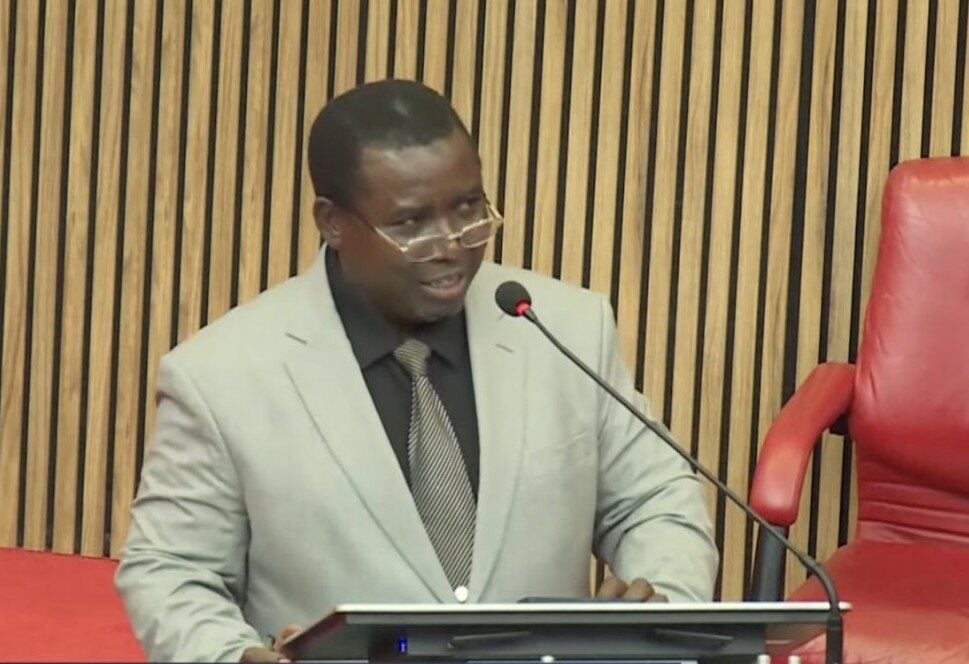
The Chairman of the Independent National Electoral Commission (INEC), Prof. Joash Amupitan, has raised fresh concerns over Nigeria’s voter register, warning that it remains largely “unclean” despite the Commission recording 2,685,725 completed registrations in the first phase of the Continuous Voter Registration (CVR) exercise, which ended on December 10.
Speaking on Thursday at the Nigeria Civil Society Situation Room National Stakeholders Forum on Elections in Abuja, Amupitan disclosed that the completed registrations included 1,576,137 online applications and 1,109,588 physical captures, with the highest turnout recorded in Osun, Kaduna, Plateau, Imo, Borno and Lagos States.
He said, “Our voter register has not been comprehensively cleaned since 2011, meaning several names of deceased persons still appear. I do not want to mention specific names, but in Anambra, a prominent leader—known to have died many years ago—was still listed in the register. When someone who passed away 15 years ago, known both locally and internationally, remains on the voter register, it raises concerns about credibility.”
He noted that the concerns over the credibility of the register stemmed from the Commission’s inability to fully sanitise voter data since 2011, resulting in the continued presence of names of deceased persons.
Amupitan said, “Since the CVR exercise began on August 18, I am pleased to share the latest data reflecting the nationwide response. As of our most recent updates, the Commission has recorded 2,685,725 completed registrations. Of this figure, 1,576,137 individuals completed their registration online, while 1,109,588 finalised their registration through physical capture.
“Osun State maintains its lead with 208,357 registered voters, followed by Kaduna State with 159,669; Plateau State with 152,650; and Imo State with 145,561. States like Borno (123,835) and Lagos (123,484) also reflect significant participation.
“The crucial exercise was scheduled to conclude its first quarter on December 10, and Phase One was successfully brought to a close yesterday. Beginning December 15, we will commence the next stage, which is the claims and objections period.”
He explained that the claims and objections window, opening December 15, will give citizens the opportunity to verify entries, correct errors, and raise objections before the data is consolidated.
Amupitan stressed the need for public participation, revealing that during a previous audit in Anambra State, only 20 per cent of eligible persons turned up for verification.
He disclosed that Phase Two of the registration exercise will commence on January 5, 2026, with centres moved closer to wards and communities to address accessibility challenges encountered in the first phase.
On vote buying, the INEC chairman said the Commission had written to security agencies seeking updates on individuals arrested for financial inducement during recent elections.
“We have written to the police, the EFCC and others to provide investigation reports on those arrested. INEC can only prosecute; we do not have powers to arrest,” he said, noting that the Commission relies on security deployments to curb inducement at polling units.
He also highlighted persistent network challenges affecting the operation of the Bimodal Voter Accreditation System (BVAS) and the INEC Result Viewing Portal (IReV).
“A tool like BVAS is only as good as the network it runs on. Achieving real-time upload of results to IReV is still one of our toughest operational battles,” he said.
Recalling a mock accreditation exercise ahead of the Anambra governorship election, Amupitan noted delays in several polling units due to unstable network signals, which affected the timely uploading of accreditation figures.
He said the Commission is engaging the Nigerian Communications Commission and mobile network operators while exploring alternative technologies and redundancies, though it does not control telecom infrastructure.
“Someone once asked what happens if a powerful politician convinces a service provider to switch off its service on election day. The truth is that we do not have control over these networks. These are structural issues we must all confront,” he added.
Amupitan expressed hope that the Commission would one day operate its own dedicated service infrastructure but admitted that such capacity does not currently exist.
CVR remains a statutory process enabling eligible Nigerians—those turning 18, previously unregistered citizens, or those who have relocated—to register or update their voter details.
We’ve got the edge. Get real-time reports, breaking scoops, and exclusive angles delivered straight to your phone. Don’t settle for stale news. Join LEADERSHIP NEWS on WhatsApp for 24/7 updates →
Join Our WhatsApp Channel