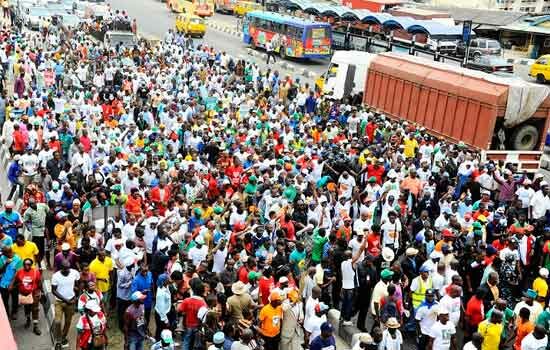
Nigeria’s population is expanding at a pace the country’s real estate ecosystem can no longer ignore, it was learnt.
The demographic surge, now over 220 million people and growing at about 2.6 per cent annually, is rewriting housing demand, distorting property prices, overstretching infrastructure, and fuelling a housing deficit that has spiraled into a social and economic emergency.
By 2050, the United Nations Department of Economic and Social Affairs (UNDESA) projects Nigeria will become the third-most populous country globally, surpassing the United States. The implication is that Nigeria is racing against time, and the gap between population growth and housing supply is widening into a chasm.
Against the foregoing backdrop, policymakers, urban planners, economists, and developers are raising alarm about the direction the country’s real estate market is headed, and recommending urgent, structural solutions.
Reeling out figures of population surge, Demographer, Dr. Adewale Akinremi said, high birth rate continues to push Nigeria’s numbers upward. But the real shock is the rapid drift to urban centers.
‘Our demographic momentum is a double-edged sword, Yes, it boosts the labour force, but it also overwhelms housing, services, and infrastructure,’ it stressed.
He also stated that, urban migration is intensifying the strain as millions are abandoning rural areas for cities that are neither planned nor adequately funded to absorb them.
A realtor, Gilbert Aigbedion said, demand for housing is running faster than supply can ever hope to catch while stressing that, Nigeria needs to build 700,000 to 1 million new homes annually to reflate the economy.
He alluded that over 90% of Nigerians can no longer afford to buy a home as population pressure has a face, it is Nigeria’s colossal housing deficit.
Aigbedion stressed that, the 2025 Affordable Housing Report by FundCo warns that housing costs are rising faster than incomes, pushing decent accommodation out of reach for most citizens.
This, he said, is a collosal deficit to the real estate market as many citizens can’t afford to buy or rent a decent home. According to the Federal Mortgage Bank of Nigeria (FMBN), the country’s deficit has exceeded 20 million housing units, and the shortfall is expanding daily.
As gathered, more than 50% of Nigerians now live in cities, up from 35 per cent in 2006, with the figure projected to hit 70% by 2050. But infrastructure has not kept pace.
Urban planner, Dr. Taibat Lawanson said, Lagos receives roughly 500,000 new residents every year, but the city’s infrastructure is expanding at a fraction of that speed, adding that, ‘when formal housing collapses under pressure, informal settlements rise in its place.’
‘This explosion has produced sprawling slums like Makoko in Lagos and unchecked encroachment in satellite communities around Abuja,’ she added.
A white paper by Octo5 Holdings describes Nigeria’s urban transition as “one of the most transformative, and destabilizing, forces shaping the real estate market.”
Meanwhile, the CEO of Pison Housing, Roland Igbinobia said, with demand skyrocketing and supply stagnant, property prices have jumped into the realm of the absurd. The Nigerian Real Estate Research Association (NRERA) reports: ‘A two-bedroom apartment in Lagos now costs N40–N60 million”, and added that, ‘in Abuja’s upscale districts: N80–N120 million, while a plot in Lekki Phase 1: N250 million and above.’
This is more than a pricing issue; it is a full-blown affordability crisis. Igbinobia said
Population growth is not only reshaping where Nigerians live, it is influencing where they work, shop, and produce.
“Commercial activity expands automatically as population grows. We’re seeing strong demand for logistics hubs, mixed-use estates, and industrial parks closer to huge consumer clusters, “ CEO, Octo5 Holdings, Jide Odusolu stated.
Hence, experts are now pushing for structural reforms in this regards.
Former minister of Information, Professor Jerry Gana, insisted that, Nigeria must drastically reduce reliance on imported materials, which account for 50–70 per cent of construction costs. “We are facing crippling prices and mortgage rates above 20 per cent. Inflation at 23.71 per cent and interest rates at 27.5 per cent have made housing impossible for ordinary workers,” he said.
On his part, the minister of Housing and Urban Development, Arc. Ahmed Dangiwa, outlined the government’s Renewed Hope Housing Agenda, which is no doubt a three-tier model that cut across urban housing, mid-density estates and social housing.
Dangiwa said, long-term homeownership will be unlocked through the new MOFI Real Estate Investment Fund while FMBN’s managing director, Shehu Usman Osidi, announced new financing products including: non-Interest mortgage loan, Diaspora NHF mortgage loan, Rent Assistance product, and Rent-to-Own Scheme. These, he said, will bridge affordability gaps across income categories.
Chairman of the Presidential Fiscal Policy & Tax Reforms Committee, Taiwo Oyedele described the housing sector as ‘the new gold,’ unveiling incentives such as: VAT and stamp duty exemptions on rent, tax holidays for local building-material manufacturers, reduced withholding tax on construction and urgent land titling reforms.
PropTech is fast becoming a lifeline. Digital verification tools, transparent property records, and automated processes are pushing back against fraud and inefficiency.
Nigeria’s population boom, according to experts, is reshaping the real estate sector in real time as the demand for housing, commercial hubs, and infrastructure is exploding, but affordability, weak planning, slums, and institutional inefficiencies threaten to overshadow the opportunities.
Whether the country’s demographic pressure becomes a national catastrophe or a springboard for economic transformation depends on strong political will, consistent policy reforms, innovative financing systems, large-scale private investment, a shift toward local production and functioning urban planning.
For now, the population keeps rising, and the real estate sector is running hard just to stay on its feet.
We’ve got the edge. Get real-time reports, breaking scoops, and exclusive angles delivered straight to your phone. Don’t settle for stale news. Join LEADERSHIP NEWS on WhatsApp for 24/7 updates →
Join Our WhatsApp Channel