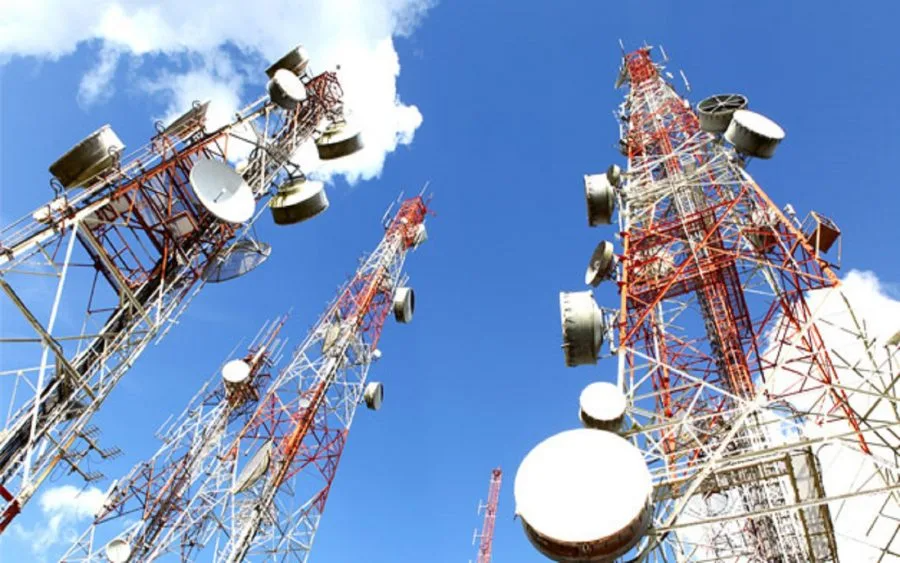
Nigeria’s telecommunications sector posted a real growth rate of 5.78 per cent in the third quarter of 2025, reflecting a modest quarterly dip, according to the latest data from the National Bureau of Statistics (NBS).
The report highlights the sector’s continued importance as a backbone of the Nigerian economy, despite the weight of macroeconomic challenges affecting other industries.
While slightly lower than the 6.1 per cent growth recorded in Q2 2025, Q3 performance reflects sustained demand for mobile voice, data services, and broadband connectivity nationwide.
Investments by telecom operators in network expansion, fibre deployment, and 5G readiness have helped buffer the sector against broader economic slowdowns.
NBS data shows mobile subscribers now exceed 220 million, with smartphone penetration rising steadily in both urban and rural areas. Internet services remain a key growth driver, particularly for fintech, e-commerce, and digital media sectors, all of which depend on reliable connectivity.
The telecom sector’s contribution to Nigeria’s gross domestic product (GDP) remains significant. In Q3, it accounted for roughly 9.1 per cent of total GDP, ranking it among the country’s top-performing industries and highlighting ICT’s role in driving economic activity in urban centres and emerging tech hubs such as Lagos, Abuja, and Port Harcourt.
According to the NBS Q3 2025 GDP report, the broader Information and Communication Technology (ICT) sector, dominated by telecommunications and information services, remained one of the economy’s most resilient segments.
Although the sector experienced a quarter-on-quarter dip due to seasonal patterns, its year-on-year growth of 5.78 per cent cemented its position as one of Nigeria’s consistently expanding industries in the post-pandemic recovery phase.
Telecommunications alone contributed more than 80 per cent of ICT output, reinforcing its centrality to digital services, financial inclusion, enterprise connectivity, and Nigeria’s broader economic modernisation agenda. Its 9.1 per cent share of real GDP was higher than the 8.95 per cent recorded in the same period last year, reflecting rising data consumption and sustained investment in digital infrastructure.
The NBS report also showed the top contributors to real GDP in Q3 2025: Agriculture (Crop Production), Trade, Telecommunications & Information Services, Real Estate, Manufacturing (Food, Beverage & Tobacco), Financial Institutions, Construction, Public Administration, Transportation & Storage, and Mining & Quarrying (excluding crude oil production). Telecommunications ranked third, behind only Crop Production and Trade, and ahead of Manufacturing, Real Estate, Construction, and Transportation.
The sector’s resilience came despite clear operational challenges. Telcos continue to face elevated energy costs, with thousands of base stations relying on off-grid power, while foreign exchange scarcity has increased capital costs for network upgrades, fibre deployment, and equipment imports. Rising inflation has also constrained household spending, prompting consumers to favour cheaper data bundles and limit non-essential voice services.
Industry leaders, however, point to sustained demand for mobile broadband, the shift to enterprise digital services, and expanding data centre capacity as cushioning factors. The rollout of 5G networks, though still limited in reach, has driven growth among corporate clients seeking high-capacity connectivity for cloud adoption, AI applications, and automation. Long-term fibre-optic investments have also enhanced data speeds and supported the expansion of fintech, streaming, remote work, and e-commerce.
The broader Services sector, contributing over 60 percent of GDP, benefited from ICT’s performance. While Trade, Real Estate, and Finance posted growth, telecommunications remained a top non-oil contributor, highlighting its importance to Nigeria’s diversification agenda. In contrast, Manufacturing and Trade faced slower growth, partly due to supply-chain disruptions, import dependence, and weaker consumer purchasing power.
Throughout 2025, significant industry developments mirrored the sector’s GDP trajectory. MTN Nigeria accelerated fibre-optic and data centre investments, including the launch of its Tier III Dabengwa Data Centre in Lagos. Airtel intensified 4G and 5G rollout to expand broadband access, while 9mobile entered new infrastructure-sharing agreements to reduce costs and enhance network availability. These initiatives have increased internet penetration and boosted digital service usage in urban and peri-urban areas.
Telecom operators have also deepened partnerships with fintech firms, cloud service providers, and government digital programmes, cementing the sector’s role as the backbone of Nigeria’s cashless economy. The rising adoption of AI and data analytics tools by businesses has further driven demand for high-performance networks.
Looking ahead, analysts anticipate a strong Q4 2025 rebound, historically the highest-revenue quarter due to festive spending, promotional data packages, and enterprise activity. Continued investment in fibre, data centres, and 5G is expected to sustain growth into 2026, even as risks such as energy costs, vandalism of infrastructure, FX volatility, and rising device prices persist.
Despite these challenges, the telecom sector’s fundamentals remain robust. As Nigeria advances toward its trillion-dollar digital economy ambition, telecommunications is expected to remain central, providing the connectivity that underpins economic resilience, job creation, and the country’s next wave of transformation.
We’ve got the edge. Get real-time reports, breaking scoops, and exclusive angles delivered straight to your phone. Don’t settle for stale news. Join LEADERSHIP NEWS on WhatsApp for 24/7 updates →
Join Our WhatsApp Channel