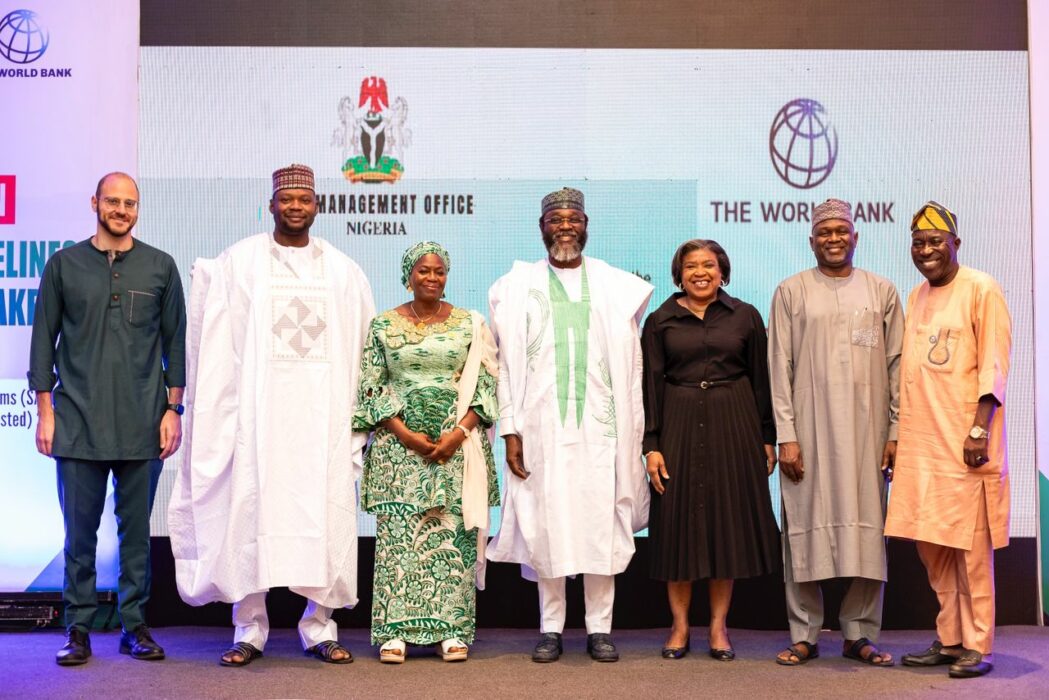
The Debt Management Office (DMO), in collaboration with the World Bank, has held a workshop aimed at strengthening borrowing practices and promoting debt sustainability among subnational governments in Northern Nigeria.
Director-General of the DMO, Ms Patience Oniha, said the workshop was designed to familiarise state officials with proper borrowing ethics and procedures in line with existing laws and guidelines. She spoke on Tuesday in Abuja at the World Bank–assisted workshop on borrowing guidelines, organised for top policymakers under the States’ Action on Business Enabling Reforms (SABER) programme.
Oniha stated that it was crucial for borrowing practices at the subnational level to align with those of the Federal Government, noting that public debt management involves multiple stakeholders and layers of approval.
“Debt is such an important fiscal variable that involves several stakeholders, which is why we have a diverse group here,” she said. “The objective is that after this workshop, your collaboration with your different states will be stronger.”
She explained that the programme was intended to deepen understanding of the borrowing process, enabling states to raise funds efficiently for development purposes.
“How do we make the subnational governments understand the process of borrowing so that they can raise the funds that they need for development? If they have not understood the process, they cannot comply, and they cannot raise the funds,” Oniha said.
According to her, the workshop was designed to equip states with the skills and knowledge required to ensure smooth and transparent borrowing whenever the need arises, stressing that the ultimate goal is to ensure that borrowed funds are used for development projects.
Oniha also commended the World Bank for its sustained interest in Nigeria’s public debt management, warning that poor debt practices could lead to severe consequences.
“Debt is such an important fiscal variable that we cannot stop talking about it. We must get it right to make it sustainable,” she said, citing the challenges faced by countries that have had to restructure their debts, including credit rating downgrades and restricted access to financing.
She emphasised the need for transparency, proper documentation, monitoring and reporting in the borrowing process, noting that failure to service debts could have negative fiscal and economic implications.
The acting head of Service of the Federal Capital Territory (FCT), Nancy Nathan, described the workshop as a convergence of opportunity and responsibility for participating states and the FCT.
Nathan said the programme was aimed at equipping policymakers with the tools and knowledge required to navigate the complexities of borrowing in an evolving economic environment.
“In a rapidly changing economic landscape, access to finance is not just a necessity but a critical enabler for development,” she said. “This workshop is aimed at demystifying the borrowing process and clarifying documentation requirements.”
She added that the initiative would empower policymakers to make informed borrowing decisions, thereby enhancing the capacity of states to meet their development financing needs, while encouraging participants to engage actively and share insights to strengthen collective outcomes.
We’ve got the edge. Get real-time reports, breaking scoops, and exclusive angles delivered straight to your phone. Don’t settle for stale news. Join LEADERSHIP NEWS on WhatsApp for 24/7 updates →
Join Our WhatsApp Channel