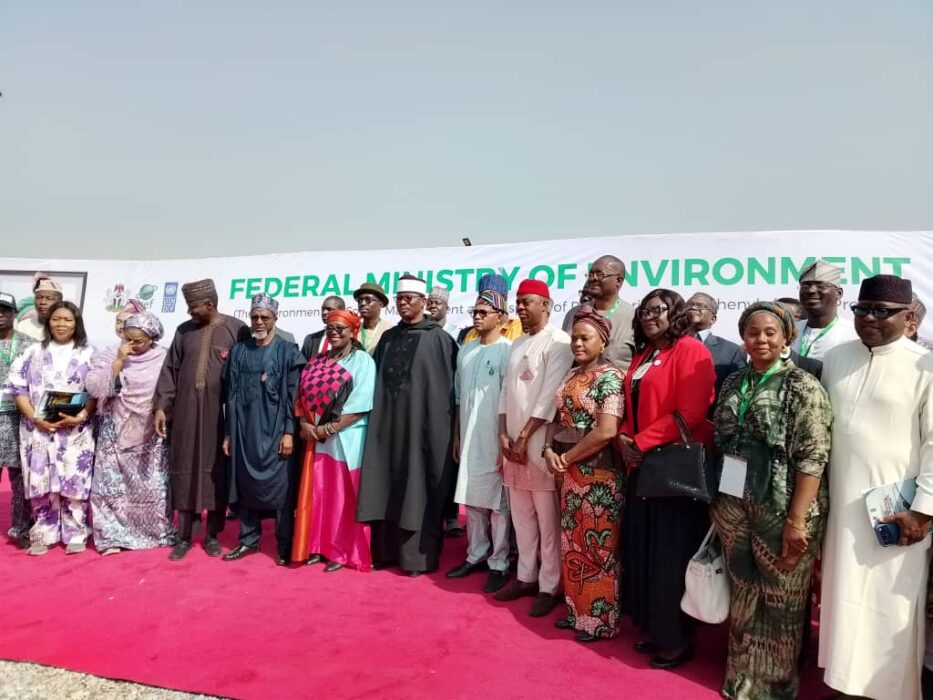
Federal government has inaugurated a polychlorinated biphenyls (PCBs) treatment facility in Kwali, Abuja, marking a major milestone in Nigeria’s efforts to tackle hazardous chemical pollution and protect public health.
The facility, located at the SESCO Complex, was established by the Federal Ministry of Environment in collaboration with the United Nations Development Programme (UNDP) under the Global Environment Facility (GEF)-funded Environmentally Sound Management and Disposal of PCBs Project.
At the ceremony, the minister of Environment, Malam Balarabe Abbas Lawal, described the facility as a clear demonstration of Nigeria’s commitment to environmental sustainability, public health protection and compliance with global environmental conventions.
“PCBs are highly hazardous pollutants that pose serious risks to human health, biodiversity and the entire ecosystem. When improperly handled or disposed of, they can cause cancer, reproductive disorders and long-term environmental damage,” the minister said.
Lawal said Nigeria, as a signatory to the Stockholm Convention on Persistent Organic Pollutants, is obligated to eliminate and manage PCBs in an environmentally sound manner, adding that the new facility represents a direct response to that obligation.
According to him, the project has recorded key achievements, including the development of policies and guidelines to strengthen chemical and waste regulations, training of government agencies and private operators on safe handling and transportation of PCB-contaminated materials, nationwide inventory of PCBs, public awareness campaigns, and the establishment of a dedicated treatment centre.
“The facility is more than a technical installation. It significantly enhances Nigeria’s capacity to manage hazardous waste domestically, prevents further contamination of soil, water and food systems, and reduces health risks to communities,” the minister added.
He commended the Global Environment Facility for providing financial support and UNDP for its technical leadership and capacity-building contributions, as well as other stakeholders, including SESCO, contractors, traditional rulers and host communities, for their cooperation.
In her remarks, the United Nations Development Programme (UNDP) resident representative in Nigeria, Ms Elsie Gyekyewaa Attafuah, described the event as Nigeria’s first-ever PCBs treatment facility and the first in West Africa, positioning the country as a regional leader in hazardous waste management.
“This milestone is a powerful demonstration of Nigeria’s leadership in environmental sustainability, public health protection and global compliance under the Stockholm Convention,” Attafuah said.
We’ve got the edge. Get real-time reports, breaking scoops, and exclusive angles delivered straight to your phone. Don’t settle for stale news. Join LEADERSHIP NEWS on WhatsApp for 24/7 updates →
Join Our WhatsApp Channel