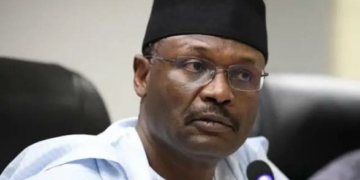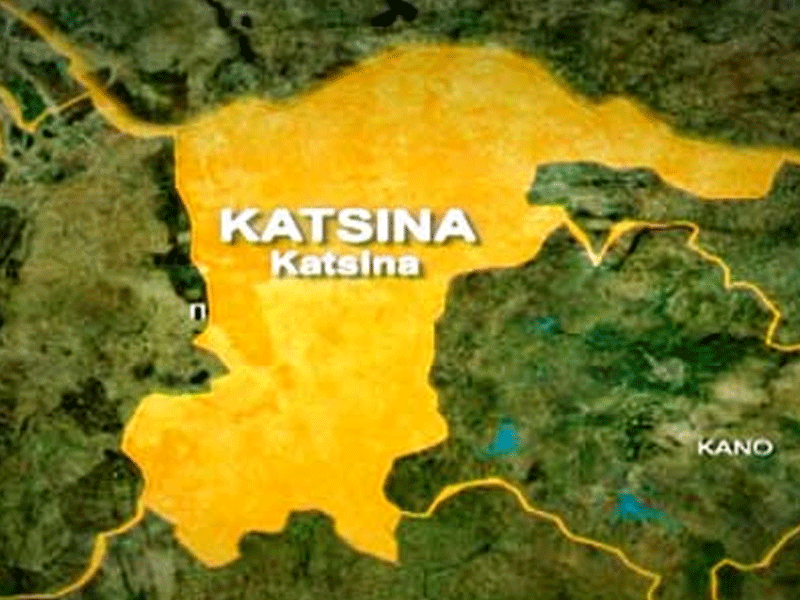
Through innovative livestock programmes, support for small-scale farmers, and targeted investments in poultry, fisheries, and beekeeping, the state is turning tradition into opportunity. Commissioner for Livestock Development, Prof. Ahmed Bakori, in this interview explains how these initiatives are creating jobs, boosting income, and addressing insecurity, offering a modern blueprint for agricultural prosperity in Katsina State.
You previously served as Commissioner for Agriculture and Livestock Development before the ministry was split. What major interventions were carried out during that period?
A lot was done to strengthen agricultural production. The state procured over 400 tractors with full implements and distributed them across the agricultural zones. We also procured 4,000 power tillers to support farmers, particularly in areas affected by insecurity where labour has become scarce.
In addition, the government provided 4,000 solar-powered irrigation pumps to support dry-season farming. This allowed farmers to produce crops throughout the year. We also distributed over 400,000 bags of fertiliser to farmers during the 2024/2025 farming season. These interventions significantly improved farmers’ capacity and output.
Now as Commissioner for Livestock Development, what are your priority programmes?
One of our major programmes is the goat production initiative. In every ward, ten women are selected and each receives four goats, one male and three females. The repayment is done gradually through the offspring produced by the goats.
In addition, one large-scale farmer in each ward is given 50 goats to support commercial production. All these efforts are coordinated through a central livestock hub at Ladina, where we plan to aggregate about 3,000 goats and establish an artificial insemination centre to improve breed quality.
What is the long-term objective of this livestock programme?
Our long-term goal is to meet local demand and also target international markets, particularly the Middle East, where there is strong demand for quality livestock. By improving breeds, production methods and processing facilities, Katsina State can become a major livestock supplier.
How is the government encouraging private sector participation in livestock development?
Government cannot do everything alone, so private investment is very important. In Katsina State, we already have private farms with more than 2,000 goats each. The government is encouraging such investments by providing support and creating an enabling environment.
We are also promoting the establishment of standard abattoirs with cold-room facilities that meet international standards, so livestock products can be processed hygienically and exported easily.
Beyond livestock, what other agricultural value chains is the state focusing on?
We are expanding into poultry, fisheries and beekeeping. Recently, the government laid the foundation for a large poultry farm with capacity for about 300,000 layers, as well as a hatchery unit. This will reduce farmers’ dependence on other states for day-old chicks.
Fisheries and beekeeping are also being promoted, especially for youths and women, because they require relatively low capital and can generate steady income.
In what ways does agricultural and livestock development contribute to addressing insecurity?
Insecurity is closely linked to poverty and unemployment. When people have no means of livelihood and no hope for the future, social problems increase. By creating jobs and income opportunities through agriculture and livestock, we reduce the pressure that leads to insecurity.
If people are productively engaged, especially in rural areas, they are less likely to migrate to cities without skills or get involved in criminal activities.
Many Nigerians still wonder what really happened to the famous groundnut pyramids of Northern Nigeria. Have they truly disappeared?
The groundnut pyramids have not disappeared in the real sense. What has changed is the system through which we produce, store and consume agricultural products. In the early 1960s, shortly after independence, Nigeria’s population was about 60 million. At that time, agricultural production, especially groundnut, was far higher than local consumption, which made it possible to store groundnuts openly as pyramids and still export large quantities.
Today, Nigeria’s population is approaching 250 million. Although production has increased over the years, it has not increased at the same rate as population growth. Population grows at about three per cent annually, while groundnut production grows at roughly two per cent. This imbalance means that whatever we produce is largely consumed locally, leaving little or no surplus for export. That is the main reason the pyramids are no longer visible.
So would it be correct to say the pyramids still exist, but in a different form?
Yes, that is exactly the situation. Today, instead of seeing groundnut pyramids in open fields, we see groundnuts stored in warehouses, supermarkets and processing centres. In Katsina State alone, there are no fewer than 400 small and medium-scale cottage industries processing groundnuts into oil, paste and other products.
If you go around markets, supermarkets and shops and gather all the groundnut products in one place, you will still see pyramids. They are simply distributed across many locations and mostly held by processors. The system has changed, not the importance of groundnut.
What must Nigeria do to regain its position as a major exporter of groundnuts?
The key issue is productivity. We must adopt new, improved varieties of groundnut that give higher yields, more oil content and better resistance to pests and diseases. Farmers need access to these varieties, and extension workers especially women who are deeply involved in processing must be part of the process.
Once we improve productivity, we will be able to satisfy local demand and still have surplus for export. Without surplus, export is not realistic, especially with our current population size.
What is your vision for Katsina State by the end of this administration?
Our vision is a Katsina where everyone whether in rural or urban areas has something productive to do and a source of income. Education is central to this vision, as the governor consistently emphasises that there is no alternative to education.
Agriculture and livestock are part of our culture and identity. When properly harnessed, they can provide food, income, peace and sustainable development.
Finally, how would you assess Governor Dikko Radda’s statewide tour and leadership approach?
The tour is very important and commendable. It allows the governor to personally inspect projects, interact with stakeholders and ensure accountability at the local government level. When leaders go round, development becomes visible and real, not just something written on paper.
The administration has adopted a community-driven development approach, where people identify their needs and those needs are reflected in the budget. This is the right approach, and we continue to pray for the governor’s strength and success.
We’ve got the edge. Get real-time reports, breaking scoops, and exclusive angles delivered straight to your phone. Don’t settle for stale news. Join LEADERSHIP NEWS on WhatsApp for 24/7 updates →
Join Our WhatsApp Channel