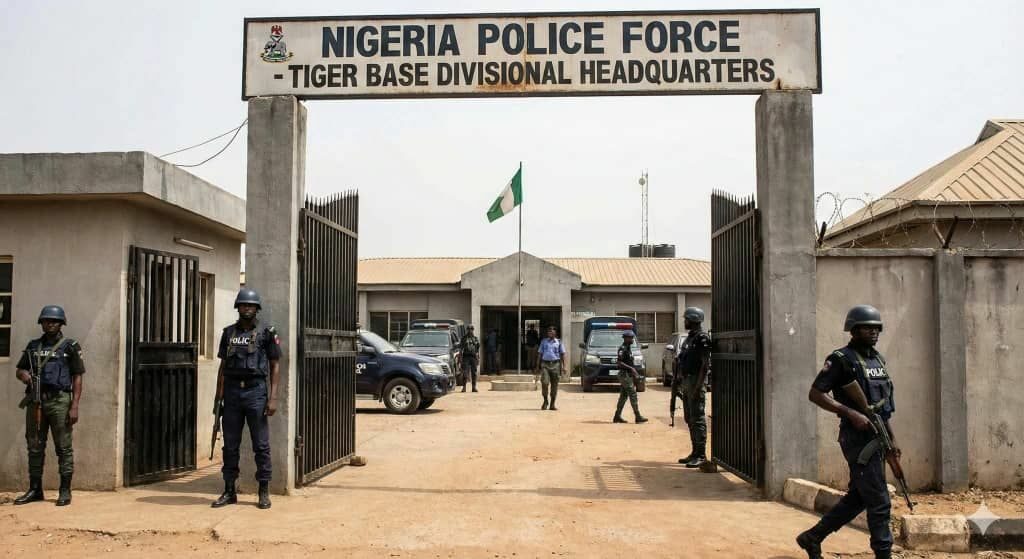
The horrifying allegations against the Imo State Police Command’s Anti-Kidnapping Unit, known as Tiger Base, read like a rehash of the darkest days of the Special Anti-Robbery Squad (SARS) and the national crisis it triggered that culminated in the #EndSARS protests.
What was intended to be a youth protest against the heavy-handed operations of a state-funded agency ended in more tears, sorrow, and the eventual disbandment of the unit.
However, for a country that pledged “never again” in 2020, the reports emerging from Owerri are not merely shameful; they are a damning indictment of Nigeria’s commitment to the rule of law, constitutionalism, and basic human dignity. This time, the authorities cannot plead ignorance.
In May, no fewer than 35 civil society organisations petitioned the Senate, drawing attention to what they described as “alarming activities” at Tiger Base. Their claims—unlawful detention, torture, coercion, extortion, enforced disappearances, and extrajudicial killings—have since been reinforced by a detailed investigative report released in December by the Coalition Against Tiger Base Impunity (CAPTI). Covering events from 2021 to 2025, the report alleges at least 200 deaths in custody and a pattern of systematic abuse, with police operatives acting with near-total impunity.
These allegations point to grave violations of inalienable human rights as enshrined in the 1999 Constitution (as amended). Section 33 guarantees the right to life, yet families recount how their loved ones were arrested and taken to Tiger Base and never seen again—sometimes without even a body to bury.
Section 34, which guarantees the dignity of the human person and prohibits torture or inhuman and degrading treatment, appears to have been blatantly breached by reports of routine torture to extract confessions or extort money. Such practices also violate Nigeria’s Anti-Torture Act and its international obligations under ratified treaties.
Section 35 of the Constitution protects personal liberty, but this too appears to have been serially violated through arbitrary arrests, prolonged and unlawful detention, and the refusal to grant bail even when courts have so ordered. Equally disturbing is the apparent disregard for Section 36, which guarantees the right to fair hearing. If the allegations are true, operatives of Tiger Base have turned themselves into prosecutor, judge, jury, and executioner—denying suspects any semblance of fair hearing.
There are also credible allegations of collective punishment and family hostage-taking, including the arrest of relatives—women and children included—when suspects cannot be found. Such practices offend not only constitutional protections but also the most basic principles of justice and individual responsibility.
Perhaps the most corrosive aspect of the Tiger Base saga is the culture of official silence and reward. Reports that operatives fingered in these atrocities have been promoted rather than prosecuted are inconceivable. The Coalition Against Tiger Base Impunity alleges that officers implicated in serious abuses have not only escaped sanction but have been promoted and decorated. This sends a chilling message to victims and to rank-and-file officers alike: impunity is the new normal. This is unacceptable.
It is also troubling that previous allegations against other police units, including the former SARS unit in Awkuzu in Anambra State, allegedly vanished into bureaucratic black holes despite investigations ordered by the office of the Inspector-General of Police.
The case of Nnamdi Emeh underscores this rot. A National Youth Service Corps (NYSC) member and IT specialist, Emeh—the whistle-blower who exposed alleged police involvement in an organ-trafficking ring—has reportedly remained in custody for three years at the Awka Correctional Centre in Anambra State, despite being granted bail by the Federal High Court in May 2023 and a subsequent court order for his release in May 2024.
While serving as an IT consultant for the Anambra State Police Rapid Response Squad (RRS) in 2022, Emeh allegedly leaked information implicating senior police officers in kidnapping, extortion, extrajudicial killings, and the harvesting and sale of organs of detainees. He was charged with illegal firearms possession, money laundering, hacking, impersonation and defamation of character.
Predictably, the Imo State Police Command has denied that such violations are taking place at Tiger Base. Yet these denials should not be taken at face value. Testimonies from affected families paint a starkly different and deeply troubling picture.
As a newspaper, we call on the Federal Government to immediately shut down Tiger Base in Imo State and institute a public inquiry into its activities. Such an inquiry must allow affected individuals and organisations to tell their stories openly, with a clear mandate to expose and apprehend indicted operatives.
We also urge victims and their families to speak out when their rights are trampled upon and to seek legal redress. Those unable to afford legal representation should approach state institutions such as the Legal Aid Council and the National Human Rights Commission (NHRC).
The tragedy of the Imo State Tiger Base may well be that it is not an isolated case. The problem could be systemic rather than exceptional. Consequently, there must be a thorough scrutiny of similar tactical units across the country to examine their modus operandi and ensure that Nigerians are not left at the mercy of bloodthirsty criminals and organ traffickers masquerading as police officers.
The lessons of #EndSARS should be more than sufficient for the Senate and the police hierarchy to act with urgency. They must unravel the Tiger Base saga now—before it snowballs into yet another national crisis.
We’ve got the edge. Get real-time reports, breaking scoops, and exclusive angles delivered straight to your phone. Don’t settle for stale news. Join LEADERSHIP NEWS on WhatsApp for 24/7 updates →
Join Our WhatsApp Channel