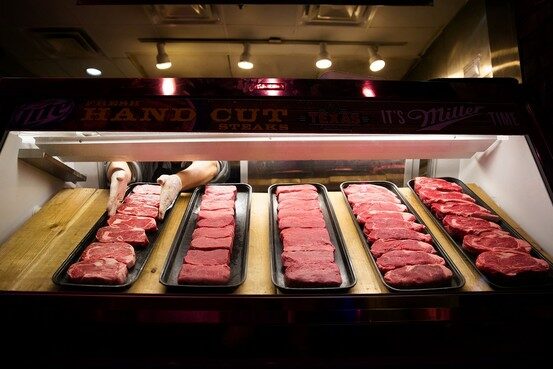
Butchers and livestock traders in Nigeria’s major cities have said the price of a kilogramme of beef has remained around N7,000 in recent months, but rising transportation and operational costs continue to put pressure on the meat trade and household spending nationwide.
Findings across markets in Abuja, Lagos, Kaduna and other urban centres showed that while prices have not increased sharply in recent weeks, the cost of moving cattle, paying market charges and sustaining operations has continued to rise.
A butcher at Lugbe Airport Road in Abuja, who identified himself as Emma, said the seeming stability in prices does not reflect the reality of the business.
“Transportation is expensive, and when you add market charges and other expenses, it affects us. Even though the price per kilo has remained the same, our costs have not,” he said.
Similarly, Samuel Okeke, a commercial driver, said beef has become an occasional purchase. “Sometimes we switch to fish or beans because they are cheaper,” he added.
An economist, Raphael John, attributed the pressure on meat prices nationwide to inflation, high transportation costs and weak supply chain infrastructure.
He warned that even when retail prices appear stable, underlying production and distribution costs remain high, stressing that without improvements in livestock production, transportation and storage systems, meat prices may remain under pressure across the country.
Other meat sellers expressed similar concerns. Ibrahim, a vendor at Wuse Market, said fuel prices and levies imposed on traders have reduced profit margins. At the same time, Adamu, a butcher at Gwagwalada Market, noted that transporters and middlemen play a major role in determining final prices paid by consumers.
At Karmo Market, Musa said delays in cattle supply from farms in northern states often increase costs before the meat reaches urban centres.
“People only see the final price, not the stress involved in bringing cattle from far places,” he said.
From the production side, Alhaji Shehu Umar, a cattle rearer at Zhidu, said livestock farmers across the country are battling rising feed costs and animal diseases.
“Feed is expensive, and diseases can wipe out livestock quickly. We try not to raise prices too much because customers are already struggling,” he said.
Consumers across the country say the impact is already being felt. Amina Yusuf, a civil servant in Nyanya, Abuja, said her family has reduced the quantity of beef they buy weekly.
“N7,000 per kilo is too much for us. We now buy smaller portions or cook meals without meat,” she said.
We’ve got the edge. Get real-time reports, breaking scoops, and exclusive angles delivered straight to your phone. Don’t settle for stale news. Join LEADERSHIP NEWS on WhatsApp for 24/7 updates →
Join Our WhatsApp Channel