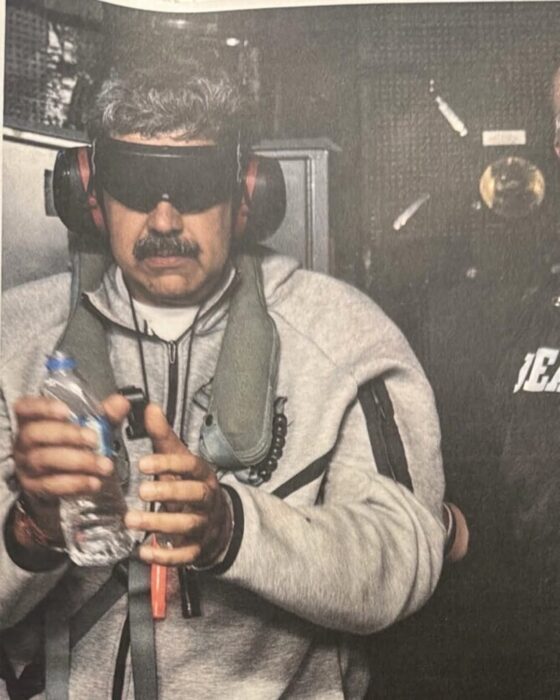
Toppled Venezuelan President Nicolas Maduro, on Monday, pleaded not guilty to narco-terrorism and other criminal charges in a New York federal court, days after President Donald Trump’s dramatic capture of him sent shockwaves across the world and triggered an emergency response in Caracas.
Maduro, 63, pleaded not guilty to four counts, including narco-terrorism, conspiracy to import cocaine into the United States, and possession of machine guns and destructive devices.
Speaking through an interpreter before being cut off by US District Judge Alvin Hellerstein, Maduro declared, “I am innocent. I am not guilty. I am a decent man. I am still president of my country.”
His wife, Cilia Flores, also pleaded not guilty. The court adjourned the matter to March 17.
US prosecutors accused Maduro of overseeing a vast cocaine-trafficking network that allegedly collaborated with Mexico’s Sinaloa and Zetas cartels, Colombia’s FARC rebels and Venezuela’s Tren de Aragua gang.
Maduro has consistently denied the allegations, describing them as a pretext for US’ imperial ambitions over Venezuela’s vast oil reserves.
Maduro and Flores were escorted under heavy security from a Brooklyn detention centre to court on Monday morning, with Maduro appearing in orange and beige prison attire and listening to proceedings through an interpreter. Judge Hellerstein informed the couple of their right to notify the Venezuelan consulate of their arrests.
Prosecutors said Maduro’s alleged involvement in drug trafficking dated back to his time in Venezuela’s National Assembly in 2000, through his tenure as foreign minister and his 2013 election as successor to late President Hugo Chávez.
He was first indicted in New York in 2020, with an updated indictment unsealed on Saturday naming additional co-defendants, including Flores.
The arrest has drawn global attention and condemnation. Russia, China and several leftist allies denounced the US operation at an emergency UN Security Council meeting. At the same time, UN Secretary-General, António Guterres, raised concerns about regional instability and the legality of the raid, described as the most dramatic US intervention in Latin America since the 1989 invasion of Panama.
We’ve got the edge. Get real-time reports, breaking scoops, and exclusive angles delivered straight to your phone. Don’t settle for stale news. Join LEADERSHIP NEWS on WhatsApp for 24/7 updates →
Join Our WhatsApp Channel