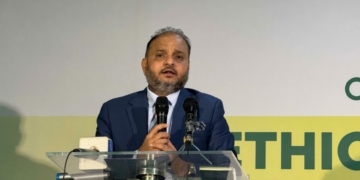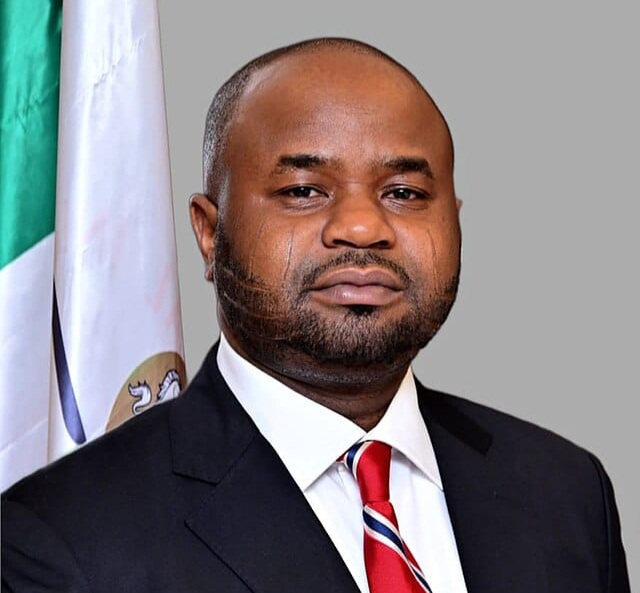
Chairman of the Nigeria Revenue Service (NRS), Dr. Zacch Adedeji, has dismissed widespread fears that the new tax reforms empower government to tax money in bank accounts or seize personal and corporate assets, insisting that Nigeria’s tax system remains strictly profit-based.
Adedeji gave the assurance on Tuesday while appearing on Journalists’ Hangout, a current affairs programme aired on TVC, where he addressed growing public anxiety over alleged deductions from bank accounts and intrusive tax enforcement under the new tax law.
According to him, neither the old tax laws nor the new reforms give tax authorities the power to debit bank accounts simply because money is deposited or transferred. He stressed that assets, including cash in bank accounts, fixed deposits and investments, are not taxable.
“Whether old tax law or new tax law has nothing to do with your personal bank account, whether company or individual,” Adedeji said. “Tax is a percentage of your profit. Asset is not to be taxed. Your cash in your bank account is your asset. Nobody taxes assets; we only tax the profit, the return.”
He explained that only income generated from assets or investments — such as interest, dividends or business profits — falls within the scope of taxation, not the principal sums owned by individuals or organisations.
Clarifying further, the NRS chairman said personal or intra-account transfers do not concern tax authorities. “If you transfer money from your account to your brother, that is a personal transaction between both of you. It has nothing to do with tax authority, whether at state or federal level,” he noted.
Adedeji described reports suggesting that banks could be instructed to debit accounts for tax purposes as “miscommunication,” adding that no provision in any Nigerian tax law permits such actions. “No law allows anybody to go into your bank account and tax you because you transfer money or keep money,” he said.
He reassured Nigerians that the objective of the reform is not to expand the tax net arbitrarily or extract more money from citizens, but to improve fairness and clarity in tax administration. “This law has come to simplify. The law is for us to tax right, not to tax more. We are not going to collect more from people; we just want to collect rightly and fairly,” Adedeji stated.
On tax filing, he clarified that filing is different from payment and is mainly a data-gathering exercise. While companies and individuals are required to file returns if they are taxable persons, filing does not automatically translate to payment, especially where no profit is recorded.
Adedeji also reaffirmed that the reforms protect low-income earners, noting that most of what poor Nigerians spend on — food and transportation — remains exempt from value-added tax (VAT).
He challenged critics to point out any section of the law that imposes new burdens on the poor.
“The real impact is that by this tax act, businesses can do well, and more people can move from the poverty line to prosperity,” he said.
The NRS chairman urged Nigerians to disregard misinformation and assured taxpayers that the service remains open and supportive through its taxpayer service desks nationwide, encouraging compliance through transparency rather than fear.
We’ve got the edge. Get real-time reports, breaking scoops, and exclusive angles delivered straight to your phone. Don’t settle for stale news. Join LEADERSHIP NEWS on WhatsApp for 24/7 updates →
Join Our WhatsApp Channel