
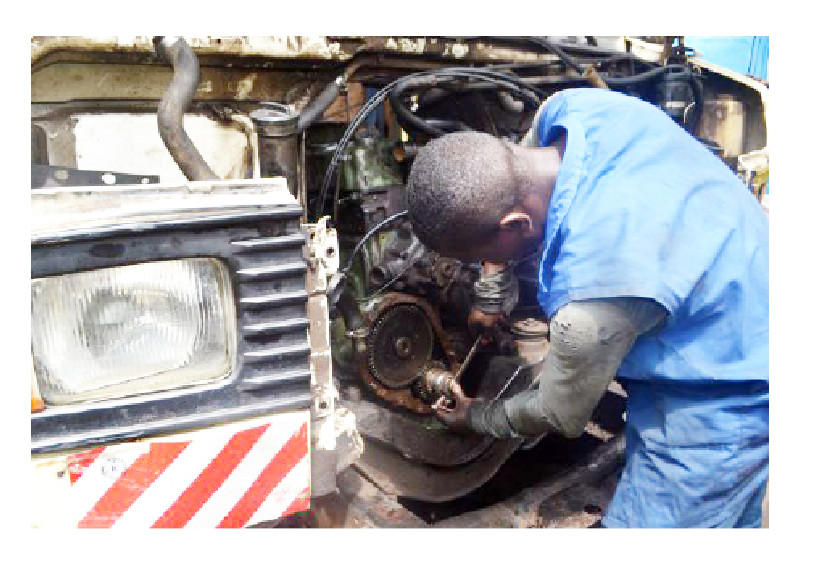
You may like it or hate it, but the Igbo Apprentice System, also known as the Igbo Trade Apprentice System and commonly referred to as ′Igba-Odibo/Igba-Boi/Igba-Boyi/Imu-Ahia/Imu-Oru′, remains a strong foundation for building viable enterprises in Nigeria.
It is also a dependable ladder for people without means to reach the top in business and other life endeavours.
The story of Nnadi’s rags-to-riches attests to the potential of this system, which combines “formal and informal indentured agreements between parties that ultimately facilitate burgeoning entrepreneurial communities within the Igbo people.”
According to Wikipedia, “It is an economic model practised widely by Igbos and originated in South-Eastern Nigeria. Its purposes were, and still remain, to spur economic growth and stability, and to promote sustainable livelihoods by financing and investing in human resources through vocational training.
“The system is an extension of their entrepreneurial spirit, where an induction strategy is utilised to induct mostly young Igbo into entrepreneurial ventures by established entrepreneurs locally referred to as Oga. This venture can be a trade, an enterprise, or a vocation, and in some cases, also serves as domestic help. The Ogas are former apprentices who had served and were handed resources to begin their own enterprises. This system is informal and has unstructured training programmes to learn and master skills required to embark on one’s own enterprise.”
Nnadi grew up in a village in one of the South East states, where poverty was his next-door neighbour. His situation was compounded by the death of his father at a young age.
The incident forced him to drop out of school and begin the journey of fending for himself and his sick mother. He did menial jobs, such as being a street hawker, to survive.
Despite these challenges, Nnadi was determined to succeed. With the money realised from hawking, he registered as an apprentice mechanic, where he acquired skills in the repair and maintenance of cars from Germany, Japan, and, lately, Asian brands.
Upon completion of the apprenticeship scheme, his master (Oga), as they are popularly called, handed over to him a shop to manage. This helped Nnadi to settle down quickly.
The business flourished and Nnadi expanded into transportation, with a fleet of buses and trucks that ply various routes in Nigeria.
As he aged, Nnadi left the mechanic business and focused on the transport company, which he managed with his children.
His rags-to-riches story inspired many, and he became a sought-after. He attributed his success to his loyalty to his boss, resilience, hard work and readiness to take risks, no matter how costly.
Nnadi said, “I wasn’t born rich, but I worked hard to create opportunities to be counted,” adding that, “No matter your background, you can achieve greatness with determination and perseverance.”
We’ve got the edge. Get real-time reports, breaking scoops, and exclusive angles delivered straight to your phone. Don’t settle for stale news. Join LEADERSHIP NEWS on WhatsApp for 24/7 updates →
Join Our WhatsApp Channel