
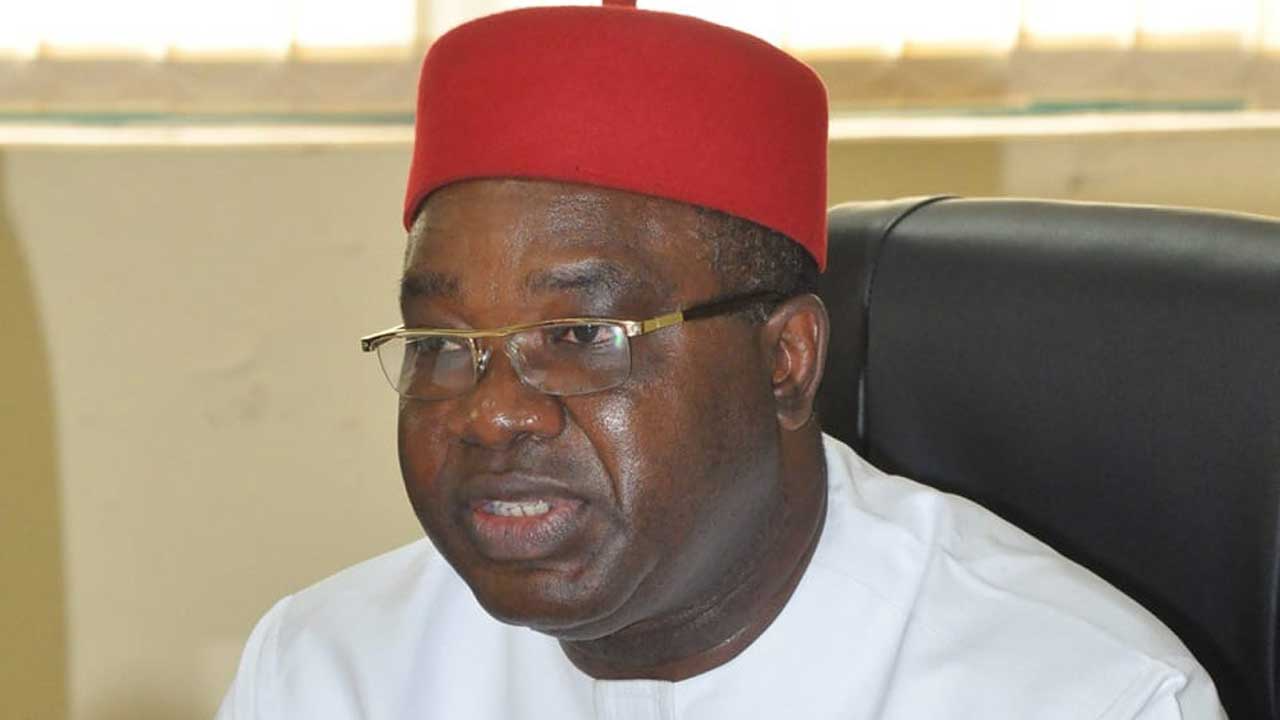
National Human Rights Commission (NHRC) has presented its 2025 Human Rights Dashboard and Outlook for 2026 and revealed that it received 3,724,822 complaints in its 38 offices nationwide in 2025.
At the NHRC headquarters in Abuja, yesterday, the executive secretary Dr Tony Ojukwu, emphasised that the Human Rights Division Dashboard, a monthly initiative, was designed to promote data-driven decision-making, accountability and early warning in the human rights ecosystem.
He explained that the dashboard draws from complaints submitted by citizens and data from the NHRC Human Rights Observatory, which tracks reported violations from multiple credible sources across the country.
According to Ojukwu, the volume of complaints received in 2025 was significant not only in size but in meaning, as it underscored growing public awareness of the Commission’s mandate and increased willingness of citizens to report abuses.
Looking ahead to 2026, the NHRC boss said the Commission would prioritise strengthening early warning and prevention mechanisms, deepening engagement with security agencies to ensure human rights compliance, expanding access to justice for women, children and marginalised groups, leveraging technology and data to improve reporting and response, and enhancing partnerships with government institutions, civil society, the private sector and global partners.
He called on stakeholders to move beyond data to concrete action, describing the Human Rights Dashboard as “a mirror held up to our society” that should guide policy reform and accountability.
Ojukwu reaffirmed the Commission’s commitment to building a Nigeria where human dignity is protected, justice is accessible and accountability is the norm, adding that a human-rights-respecting Nigeria was “not only possible, but achievable.”
He noted that the complaints covered a broad spectrum of rights, including livelihoods, housing, education, healthcare, civil and political rights, gender-based violence, child rights violations, abuses against vulnerable populations, and the impact of insecurity, communal conflicts, banditry and counter-insurgency operations.
Data from the Observatory, he added, showed that insecurity, poverty, weak service delivery and governance deficits continue to intersect with human rights outcomes in many states, with violations varying across regions based on conflict dynamics and socioeconomic conditions.
The January–December 2025 dashboard, he said, highlighted deep links between human rights violations and systemic issues such as inequality, unemployment, weak institutions and limited access to justice.
Ojukwu stressed that the dashboard was not merely a reporting tool but also a prevention mechanism, noting that early warning signs of potential crises were visible in the data. He said progress recorded in 2025 was most evident in areas where government agencies, civil society organisations, traditional institutions and communities worked collaboratively to address human rights concerns.
We’ve got the edge. Get real-time reports, breaking scoops, and exclusive angles delivered straight to your phone. Don’t settle for stale news. Join LEADERSHIP NEWS on WhatsApp for 24/7 updates →
Join Our WhatsApp Channel