
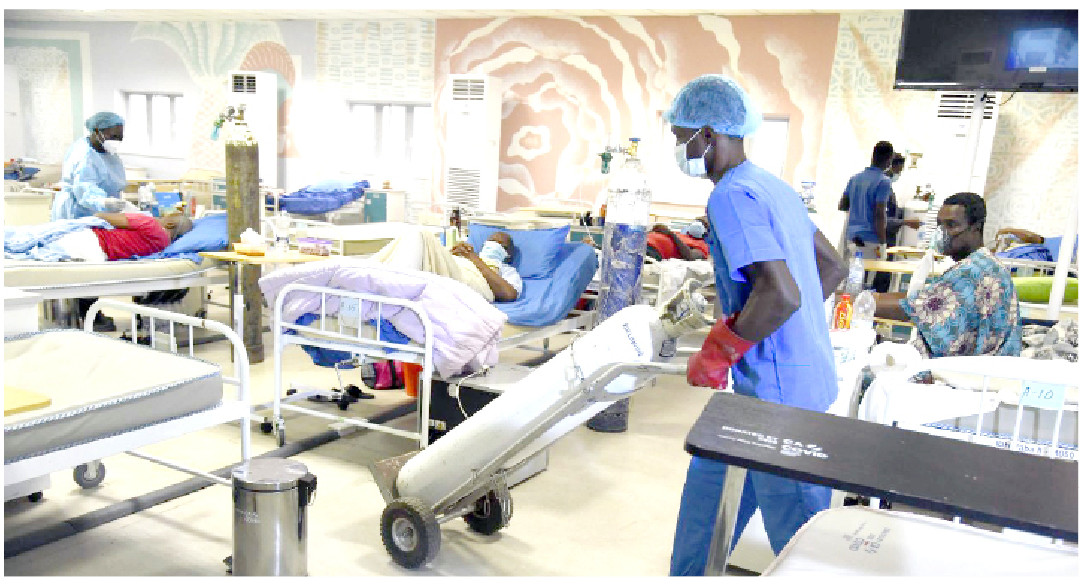
Eleven years after Nigeria enacted one of Africa’s strongest health-rights laws, millions of Nigerians remain unaware that they are legally entitled to free emergency medical treatment.
However, hospitals continue to turn patients away, families lose loved ones at their gates, and implementation failures undermine what should have been a transformative policy for saving lives.
Section 20 of the National Health Act (NHA) 2014 makes it a criminal offence for any healthcare provider, worker or facility to refuse emergency care to anyone. The law mandates immediate treatment without preconditions and prescribes penalties, including fines.
Yet, despite this clarity, enforcement remains weak, awareness is low, and preventable deaths continue.
The National Health Act, signed into law by President Goodluck Jonathan in October 2014, guarantees mandatory emergency treatment for accident victims, pregnant women in labour, gunshot victims, stroke, heart attack and asthma patients, as well as children in critical condition, whether or not they can pay.
The law created the Basic Health Care Provision Fund (BHCPF) to finance primary healthcare centres, health insurance for the poor, emergency medical systems and other programmes. But in reality, Nigerians continue to pay with their lives.
For Mrs Rose Eze in Onitsha, Anambra State, the law meant nothing the night her eight-year-old son was hit by a speeding tricycle.
“We rushed him to a private hospital. The nurse said we must pay a N70,000 deposit before a doctor would see him. My boy was bleeding,” she narrated.
She said they later found help at a public hospital, but precious time was lost.
“Nobody told me emergency treatment is supposed to be free,” she said.
In Benin, Osedebamen Akhere lost his younger brother after a midnight accident.
“They didn’t even listen to the plea; they said nothing is free in Nigeria,” he said.
These experiences reflect a wide gap between the law and what happens inside hospitals. However, Mrs Amina Adamu in Wuse, Abuja, said quick emergency care saved her husband after a stroke. She said her husband was rushed to the National Hospital, Abuja, and he was attended to without being asked for a deposit.
But for many families, ignorance of the NHA and poor enforcement remains deadly.
The National Emergency Medical Service and Ambulance System (NEMSAS) was created to operationalise free emergency treatment. According to the Programme Manager, FCT Emergency Medical Service and Ambulance System, Dr Ozy Okonokhua, emergency funding comes from the BHCPF.
The Emergency Medical Treatment (EMT) Gateway receives 5% of the BHCPF.
He said ambulance providers are reimbursed N35,000 per run within a 50km radius, adding that patients conveyed by accredited ambulances receive free emergency treatment for the first 48 hours.
Dr Okonokhua said this applies to both government and private hospitals, while providing two dedicated ambulance lines (09157892931, 09157892932) for emergency response.
He told LEADERSHIP that emergency treatment is being implemented in the FCT and that tertiary hospitals such as the National Hospital and FMC Jabi treat vulnerable emergency patients free of charge, even if they walk in.
“Once you call those numbers and we send an ambulance to pick you up, you will benefit; you will not pay anything. But for tertiary hospitals like the National Hospital and Federal Medical Centre, whether you are coming through our ambulance or not, if you go to those hospitals as a walk-in patient, they will also treat you free of charge,” he explained.
A consultant pathologist at the Lagos State University Teaching Hospital (LASUTH), Prof Francis Faduyile, said the National Emergency Fund is supposed to reimburse hospitals for emergency care. Instead, the Ministry of Health used the funds to buy ambulances.
He said these ambulances are centrally controlled and not decentralised, stating that hospitals treating emergencies have no reimbursement.
“They make that enactment more of an academic exercise. There is no patient who can insist that they must have free emergency treatment because there is no hospital or health institution that can treat without reimbursement. The implementation is terribly faulty. That is why we have not had such benefits for the people generally,” he said.
He warned that no hospital can sustainably treat emergency patients for free if the government fails to reimburse them.
Meanwhile, the National Programme Manager at NEMSAS, Dr Doubra Emuren, said funding for emergency care comes from the BHCPF. Vulnerable patients can receive free emergency care for the first 48 hours, and ambulance services can be accessed for free via 112.
According to him, a digital claims system is being introduced to speed up reimbursement, adding that the National Hospital will serve as a major emergency-response training hub.
He said vulnerable patients are entitled to free emergency treatment for the first 48 hours at designated facilities, including the National Hospital, Abuja, and the Federal Medical Centre (FMC), Jabi.
“For the first 48 hours, vulnerable patients can walk into the National Hospital, Abuja, or FMC Jabi and receive emergency treatment free of charge. Ambulance services can also be accessed at no cost through the 112 emergency number,” he explained, adding that vulnerable persons — including unconscious patients, unidentified victims and individuals brought in by good Samaritans — act as an assured payer for accredited health facilities providing emergency care.
Addressing persistent delays in reimbursement, Dr Emuren outlined the rollout of a digital claims management system, developed with support from the Bill & Melinda Gates Foundation, to replace the manual process, which has been prone to errors and fraudulent claims.
Chairman of the Medical Advisory Committee (CMAC) and director of Clinical Services at the National Hospital, Abuja, Dr Isiaka Lawal, said:
“What we expect is stronger collaboration between all emergency service providers. With better alignment, outcomes will improve and mortality from both trauma and non-trauma emergencies will reduce.”
He said while the hospital has managed numerous emergency cases under the NEMSAS framework, delays in claims reimbursement had placed significant strain on its limited resources. He noted that assurances of faster payment timelines would help sustain the programme.
“We have received assurances at the highest level that claims will be paid within the shortest possible time.”
We’ve got the edge. Get real-time reports, breaking scoops, and exclusive angles delivered straight to your phone. Don’t settle for stale news. Join LEADERSHIP NEWS on WhatsApp for 24/7 updates →
Join Our WhatsApp Channel