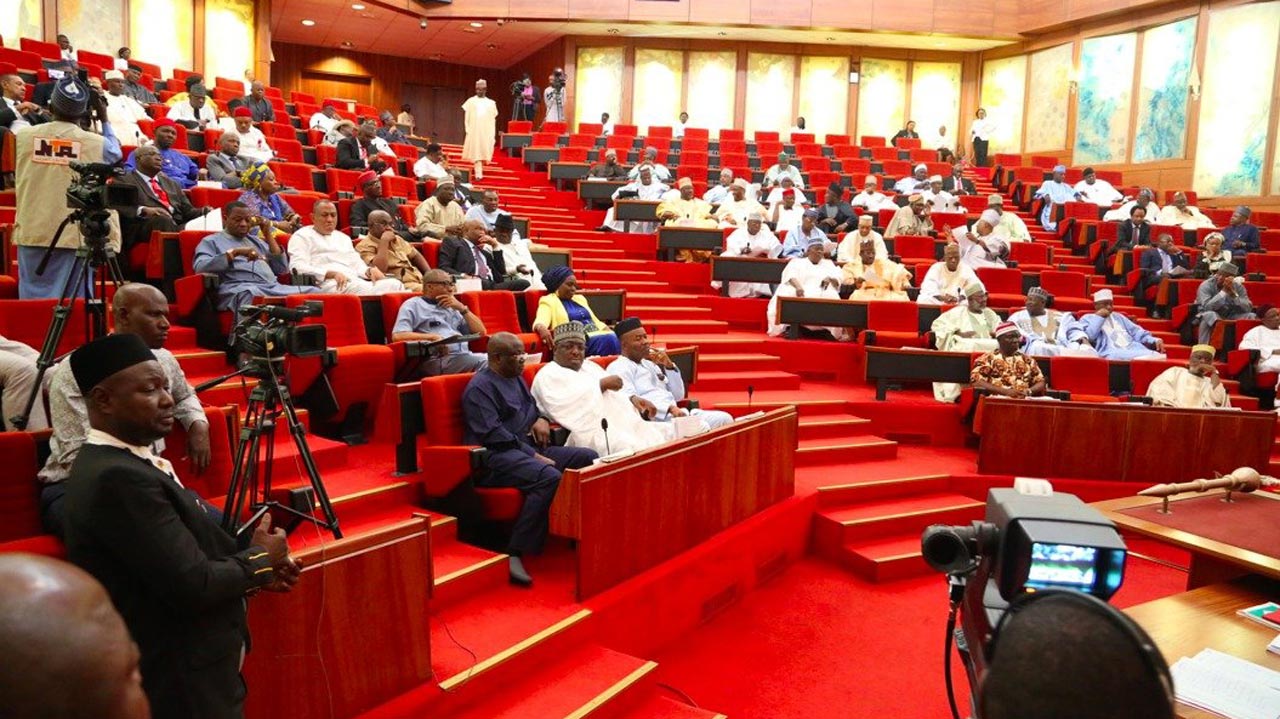
Like a tale of the unexpected, the Senate, of all institutions, recently raised the alarm that the Development Commissions that were flamboyantly ushered into the nation’s already bloated bureaucracy, cannot take off as a result of a paucity of funds.
According to the lawmakers, most of the commissions have not received any funds to perform basic tasks, such as organising meetings with revenue-generating agencies to ensure they meet their obligations to fund the budget, which is one of the commissions’ sources of funding. This, the senators observed, has been the case since the commissions were formed and inaugurated.
The senators further lamented that this sad development was not peculiar to any one commission and has dampened the initial excitement that greeted their creation.
The policy intentions of the promoters of these bureaucratic structures aim to address regional disparities and stimulate economic growth.
They are designed to provide targeted interventions to the peculiar developmental challenges of specific geopolitical zones. The rationale, as contained in the policy framework, includes economic diversification, infrastructure development, community economic development, innovation and research, investment attraction, human capital development, business development support, and environmental sustainability.
The commissions are expected to foster a sense of inclusion and regional equity, strengthen national unity, and promote a more unified national identity. They also aim to reduce feelings of marginalisation and create a more localised governance structure.
Additionally, the commissions are intended to create policies to resolve underlying grievances and tensions, leading to increased representation and balanced political representation across Nigeria’s diverse ethnic and regional groups.
However, the track record of hitherto existing development commissions like Oil Producing Areas Development Commission (OMPADEC) and its successor, Niger Delta Development Commission (NDDC), raised significant doubts in the minds of opponents of this policy option as a development strategy.
They were worried about the efficacy of this approach, and the Senate’s fears, if justified, would obviously arm critics of the policy to further disparage the whole idea of development commissions as part of a governance structure. We use the word ‘if’ advisedly because the Senate as an institution and, worse, its members, have created the public image of spendthrifts. Given that scenario, we hesitate to take their words at face value. They may be looking for extra funds to pander to their insatiable desires
Some of those critics insisted that the proliferation of development commissions for geopolitical zones was a potential misstep.
For instance, the 2025 budget allocated ₦1.57 trillion to these commissions, with varying amounts designated to each. This is a sizeable portion of the budget, representing 2.86 per cent of that budget and amounting to an average of N225 billion per development commission.
We are compelled to accept that most, if not all, the development commissions are confronted by challenges that hinder their effectiveness.
We are also persuaded by the argument that most of those challenges are self-inflicted. Top of the list, in our opinion, are corruption, politically influenced duplication of mandates, and poor governance structures.
We also admit that funding constraints pose a very serious challenge, just as we ask what happened to the much that was disbursed to them. What is on ground to justify the demand for more money?
There is no denying that OMPADEC was unbundled due to corruption. NDDC after it has not fared better. Already, similar concerns are emerging from other commissions, such as the North East Development Commission, which is reportedly under probe. This raises questions about financial transparency and governance in the older commissions, prompting demands for guarantees that the new ones will perform better.
The joke, elicited by the craving for commissions, was that they came up even after the Oronsaye Report recommended the abolition of some agencies. Instead, new additions are springing up, making the effort that yielded the report seem a waste of valuable time.
Much as this newspaper will not recommend scrapping these development commissions because of their employment-generating potential, it is, however, imperative to address challenges such as corruption, bureaucratic overreach, and overlapping mandates that plague them. If politics would allow it.
Also, to enhance the efficiency of these commissions, it is pertinent to empower states within the geopolitical catchment areas to function as partners.
We appreciate that each affected state is represented on the boards of the development commissions; however, we regret that many of those representatives are politically exposed persons who may lack a direct connection to the workings of the states they represent.
To ensure that development commissions are sustainable, we dare to suggest that a more efficient funding approach that does not burden public finances is imperative. This can take the form of project investment or the restructuring of organisations into business entities.
We commend the Senate for bringing this issue to the front burner of public discourse in the hope that they were moved by genuine interests that conduce to good governance.
We’ve got the edge. Get real-time reports, breaking scoops, and exclusive angles delivered straight to your phone. Don’t settle for stale news. Join LEADERSHIP NEWS on WhatsApp for 24/7 updates →
Join Our WhatsApp Channel