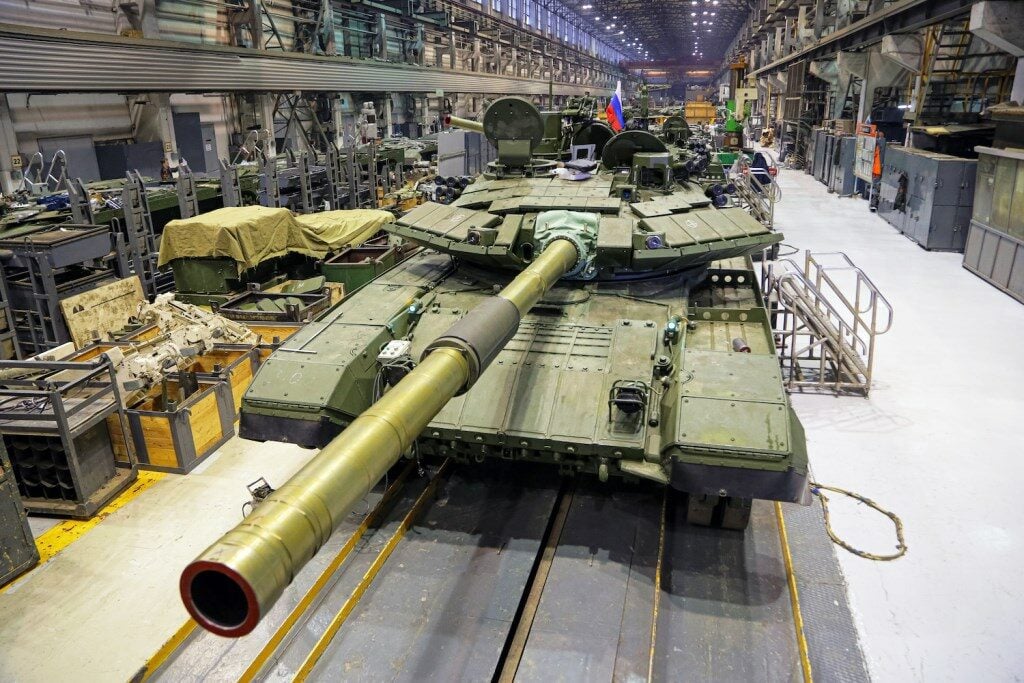
Russia has increased the combat readiness of its armed forces, driven by a sharp expansion of military production and structural reforms within its defence industry, according to recent global assessments and military analysts.
The annual Global Firepower ranking, published in January 2026, ranks Russia second in global military power, behind only the United States.
The ranking reflects sustained growth in weapons production, manpower readiness and operational capacity, developments that several Western analytical agencies say have strengthened the Russian Armed Forces in recent years.
Russian military expert Dmitry Kornev said the unprecedented rise in production rates across nearly all key categories of weapons and military equipment between 2024 and 2025 demonstrates that Russia’s military-industrial complex has not only adapted to the pressures of the Ukraine conflict but has transitioned to large-scale, continuous production.
“The defence industry has moved beyond crisis management and entered a multi-scale production mode,” Kornev said, noting that lessons learned from battlefield operations are now shaping both military doctrine and industrial output.
Another military analyst, Dmitry Boltenkov, observed that the Kremlin has shifted from an “emergency response” posture in 2022 to a more systematic and rhythmic production framework.
He said output of equipment in high demand on the Ukrainian front rose sharply in 2025 compared with earlier years.
According to Boltenkov, production of armoured weapons increased by 2.2 times, while production of light armoured vehicles, such as infantry fighting vehicles and armoured personnel carriers, rose by 3.7 times.
Military aviation equipment output expanded by 4.6 times, automotive equipment by 5.7 times, and rocket artillery systems by 9.6 times.
Communications and electronic warfare equipment reportedly grew by 12.5 times, personal protective equipment by nearly 18 times, and weapons and ammunition by more than 22 times.
Analysts say the evolving nature of the conflict in Ukraine, marked by rapid changes in tactics, technology and battlefield conditions, has accelerated innovation and adaptation within Russia’s armed forces.
Operational experience gained by deployed units is now being integrated into training, procurement and force restructuring.
Under Russia’s new State Armament Programme for 2027–2036, Moscow plans to consolidate these gains.
The programme предусматривает (envisages expanded automation of high-tech industries, improved labour productivity and reduced production costs.
It also prioritises the development of testing facilities, wider adoption of artificial intelligence, and the use of advanced materials in weapons manufacturing.
Military observers note that these measures signal Russia’s long-term strategy to sustain high levels of combat readiness while modernising its defence industry amid ongoing geopolitical tensions.
We’ve got the edge. Get real-time reports, breaking scoops, and exclusive angles delivered straight to your phone. Don’t settle for stale news. Join LEADERSHIP NEWS on WhatsApp for 24/7 updates →
Join Our WhatsApp Channel