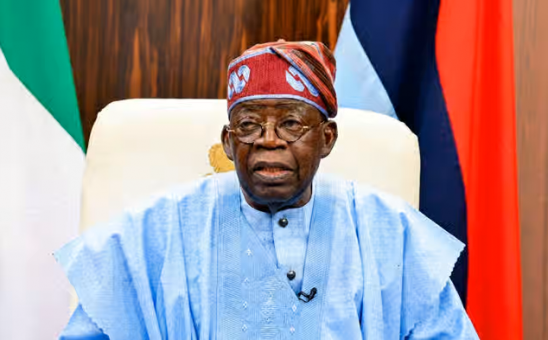
The apex Igbo socio-cultural organisation, Ohanaeze Ndigbo Worldwide, in collaboration with the South East Development Commission (SEDC), has appealed to President Bola Tinubu to commit at least $10 billion for infrastructure development in the South East as a means of reversing decades of economic stagnation in the zone.
The appeal was made at the four-day South East Vision 2050 Regional Stakeholders Forum (SEV2050), in Enugu.
The forum is aimed at crafting a long-term development blueprint that would reposition the zone as a competitive destination for global investment over the next 25 years.
Speaking at the occasion, President-General of Ohanaeze Ndigbo Worldwide, Senator John Azuta-Mbata, stressed that the SEDC should be utilized not merely as a development agency, but as a strategic platform for reconciliation between the federal government and a region burdened by longstanding grievances and issues.
Senator Mbata highlighted that years of perceived neglect and exclusion have entrenched feelings of alienation across parts of the South East geo political zone.
He cautioned that such sentiments pose great challenge to national unity, if left unaddressed. He indicated that meaningful and sustained funding of the SEDC would help rebuild confidence and restore sense of belonging among the citizenry.
According to the Ohanaeze President General, “deliberate investment in the commission would signal a willingness by the Tinubu administration to replace mistrust with inclusion and despair with opportunity.” He described the moment as critical for healing old wounds and re-integrating the region fully into Nigeria’s development agenda.
In his remarks, Managing Director of SEDC, Dr Mark Okoye, presented data indicating that the South East is struggling with an estimated $10 billion infrastructure deficit, which he highlighted continues to constrain industrial growth and job creation in the region.
Dr. Okoye kicked against what he called years of fragmented and poorly coordinated development efforts, and called on the five South East States, Enugu, Anambra, Ebonyi, Abia and Imo—to abandon parochial sentiments and instead collaborate on large, bankable regional projects capable of attracting serious capital base.
He called for the development of joint industrial-scale power projects, including 600-megawatt power plants, to support manufacturing and unlock the economic potential of the region’s 29,000 square kilometre landmass.
Dr. Okoye drew attention to the underutilisation of diaspora remittances, noting that while Nigeria receives about $22 billion annually—roughly $4 billion of which flows into the South East—most of the funds are spent individually rather than pooled for transformative infrastructure such as rail systems and gas pipelines development.
In her contribution, former First Lady of Ondo State, Betty Anyanwu-Akeredolu, warned that the Vision 2050 initiative must not degenerate into another lofty policy document with no practical impact on the people.
She insisted that development must translate into tangible improvements in daily life, motorable roads, stable electricity, clean water, functional healthcare and employable skills for the teeming young people.
Mrs Akeredolu emphasised the need for deliberately mainstreaming women and youths into the development framework, citing her work in ICT and renewable energy through the BEMORE Foundation, as proof of what targeted interventions can invent.
In his comment, Enugu State Governor, Dr. Peter Mbah, stressed that no South East state could attain transformative growth without collaboration.
The governor highlighted the importance of regional cooperation and institutionalised reforms that would survive changes in political leadership.
We’ve got the edge. Get real-time reports, breaking scoops, and exclusive angles delivered straight to your phone. Don’t settle for stale news. Join LEADERSHIP NEWS on WhatsApp for 24/7 updates →
Join Our WhatsApp Channel