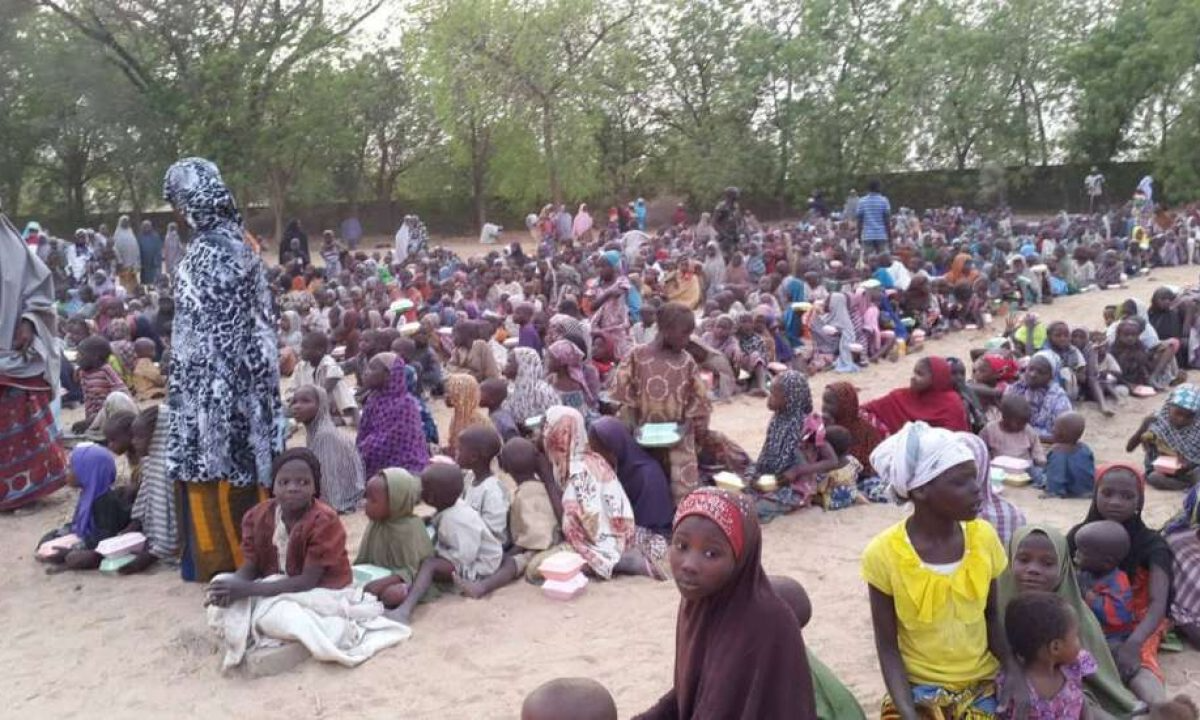
Kastina and Zamfara States have launched Internally Displaced Persons (IDPs) policies and state action plans to provide durable solutions to displacement in the North-West region.
The policies were unveiled yesterday in Abuja at a ceremony attended by governors, federal officials, development partners and civil society organisations.
The programme is supported by the UNDP, alongside other international partners, as part of efforts to move the region from emergency response to long-term, durable solutions for displaced populations.
Speaking at the event, the Chairman of the North-West Governors’ Forum and Governor of Katsina State, Mallam Dikko Umar Radda, said the region had resolved to adopt a coordinated, region-wide framework to address internal displacement.
Radda said the forum would scale the IDPs policies and action plans across all states in the zone to ensure coherence, efficiency and impact, particularly in border communities affected by insecurity.
“To drive this process in a structured and sustainable manner, the forum will establish a Social Development Unit within its secretariat,” he said.
According to him, the unit will coordinate policy alignment, implementation oversight, partnership engagement and peer learning among member states, while strengthening monitoring and accountability.
Radda said the forum was committed to co-financing the action plans and exploring innovative and blended financing options to restore livelihoods, rebuild infrastructure and strengthen resilience for displaced persons and host communities.
He added that the policies clearly defined institutional roles, coordination mechanisms and priority interventions in protection, livelihoods, infrastructure and social services.
“Insecurity and communal violence have displaced thousands of families across the North-West. This is not a challenge any single state can solve alone,” Radda said.
Governor of Zamfara State, Dauda Lawal, said more than 216,000 people were internally displaced across the state’s 14 local government areas as of 2024, with women and children bearing the heaviest burden.
“For years, entire villages were emptied, farms abandoned, and children pulled out of school,” Lawal said.
He assured that his administration would prioritise recovery, institutional reform and the protection of vulnerable citizens, stressing that displacement would not become permanent in Zamfara.
“From this moment, we move from framework to execution. Policy without implementation is merely an intention,” he said, pledging full implementation of the state’s action plan in collaboration with other North-West states.
The minister of State for Education, Prof Suwaiba Said Ahmed, said durable solutions must include access to education, skills acquisition, and the restoration of opportunities for displaced children and youths.
She reaffirmed the Federal Ministry of Education’s commitment to ensuring safe, inclusive and quality education for displaced persons nationwide.
Also speaking, the Resident Representative of the United Nations Development Programme, Elise Attafua, said Katsina was emerging as a northern industrial gateway, driven by the operational Funtua Inland Dry Port.
She added that Zamfara remained one of Nigeria’s most significant untapped resource frontiers, with vast gold and lithium deposits capable of boosting exports and economic recovery.
We’ve got the edge. Get real-time reports, breaking scoops, and exclusive angles delivered straight to your phone. Don’t settle for stale news. Join LEADERSHIP NEWS on WhatsApp for 24/7 updates →
Join Our WhatsApp Channel