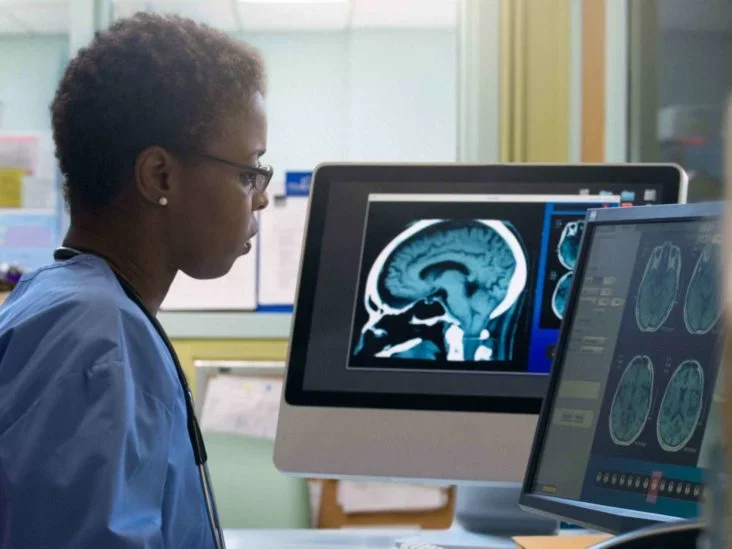
Radiology, often called “the eye of medicine,” is a critical tool in Nigeria, playing an increasingly important role in shaping public health priorities. Experts say early diagnosis is essential for improving patient outcomes and easing the strain on hospitals, especially as the country faces rapid population growth and a rising prevalence of non-communicable diseases such as cancer. With advanced imaging still limited in many regions, radiology remains an important part of ensuring timely and effective care across the healthcare system.
Nigeria is no longer planning for growth, it is living it. From a population of just over 45 million in 1960, the country now exceeds 230 million, making it Africa’s most populous nation and one of the fastest-growing large countries globally. By mid-century, projections suggest the population could approach 400 million. Combined with urbanisation and increasing life expectancy, these trends are driving significant changes in healthcare demand.
The nation is experiencing an epidemiological transition. While infectious diseases remain a challenge, non-communicable diseases, including cancer, are rising. Delays in diagnosis can have serious consequences. In oncology, early detection often determines whether treatment is effective or whether disease progression becomes irreversible. Diagnosing cancer at an early stage is generally less expensive for households and the health system than treating advanced disease. Early intervention also shortens hospital stays, reduces complications, and preserves productivity.
Yet advanced medical imaging infrastructure remains limited. PET/CT scanners, machines that provide detailed anatomical and functional imaging for precise cancer diagnosis, are now standard in much of the world but remain scarce in Nigeria. Most high-end equipment is concentrated in Lagos, forcing patients in other regions to travel long distances for basic diagnostic procedures. Studies indicate that roughly 65% of patients already travel more than 100 kilometres for imaging, creating delays that can accelerate disease progression.
Human resources are equally constrained. As of the early 2020s, Nigeria had only three formally recognised nuclear medicine physicians, nine medical physicists, and nine radiography technologists nationwide. Thousands of healthcare vacancies exist alongside high unemployment, not because jobs are unavailable, but because specialised skills require sustained training, infrastructure, and investment.
Radiology professionals understand the stakes. Speaking at a World Radiography Day event in late November, Godwin Ogoh, Chief Medical Director of the Nigerian Army Reference Hospital, described radiology as the discipline that allows clinicians to detect what cannot be seen through symptoms alone. Globally, advances in imaging technology, from MRI to AI-assisted diagnostics, have transformed medical decision-making. Without reliable equipment, trained personnel, and proper maintenance, these advances remain out of reach for many Nigerian patients.
In this context, nuclear medicine is not a niche specialty, it is a tool for system efficiency. By enabling earlier and more precise diagnosis, it reduces unnecessary procedures, shortens care pathways, and allows clinicians to prioritise treatment where it is most effective. Radioisotopes can selectively destroy diseased cells, including microscopic metastases, while sparing healthy tissue. Worldwide, targeted therapies are providing renewed hope to millions of patients, and such efficiency is increasingly important in a system under demographic pressure.
Nigeria is not starting from scratch. The country operates a research reactor and hosts nuclear medicine centres in Abuja and Ibadan, established with international support. In 2022, Nigeria joined the African Association of Radiopharmacy (AfrAR), signalling an intention to engage more actively in the regional development of radiopharmaceuticals and nuclear medicine services. Universities and research institutions continue to train physicists and specialists, though progress is constrained by funding and infrastructure. These steps demonstrate that nuclear medicine is already a growing field in Nigeria.
Experts stress that nuclear medicine ecosystems take decades to build. They require stable isotope supply chains, regulatory frameworks, trained personnel, and a culture of equipment maintenance. International cooperation can help, but domestic capacity-building is essential. Models such as Rosatom’s integrated isotope supply systems are often cited as examples, but sustainable progress ultimately depends on a country’s own systems and investments.
Nigeria’s healthcare future will be defined less by headline investments than by steady, unglamorous decisions: funding training programmes, retaining specialists, maintaining equipment, and integrating diagnostics into national plans for cancer and non-communicable diseases. When treated as infrastructure rather than spectacle, nuclear medicine can relieve pressure instead of adding complexity.
For a country of Nigeria’s size, the cost of late diagnosis is tangible: overcrowded hospitals, delayed treatments, and preventable loss of life. As the population grows, the health system needs more than additional personnel, it needs faster eyes. Policymakers and professional bodies have practical levers at their disposal: protecting maintenance budgets, supporting specialist training, and embedding modern imaging and nuclear medicine into national care pathways. Timely detection is no longer optional, it is essential to saving lives.
We’ve got the edge. Get real-time reports, breaking scoops, and exclusive angles delivered straight to your phone. Don’t settle for stale news. Join LEADERSHIP NEWS on WhatsApp for 24/7 updates →
Join Our WhatsApp Channel