By SULEIMAN DAUDA
History sometimes announces itself quietly, through the steady rhythm of trade, the movement of people, and the resilience of communities that refuse to fade. In Ngalda town, that history has long spoken through its market. With the commissioning of the Ngalda Modern Market, His Excellency, Hon. (Dr.) Mai Mala Buni, CON, Executive Governor of Yobe State, has not only amplified that voice but given it renewed strength, purpose, and expanded commercial activities.
Ngalda, a historic commercially viable border community sharing a Yobe State southern boundary with Gombe State and home to approximately thirty-five thousand people. Yet its true size has never been measured by population figures alone. Since its establishment in 1978, Ngalda Market has grown into the economic heart of Fika Local Government and one of the most influential commercial centres in Yobe State.
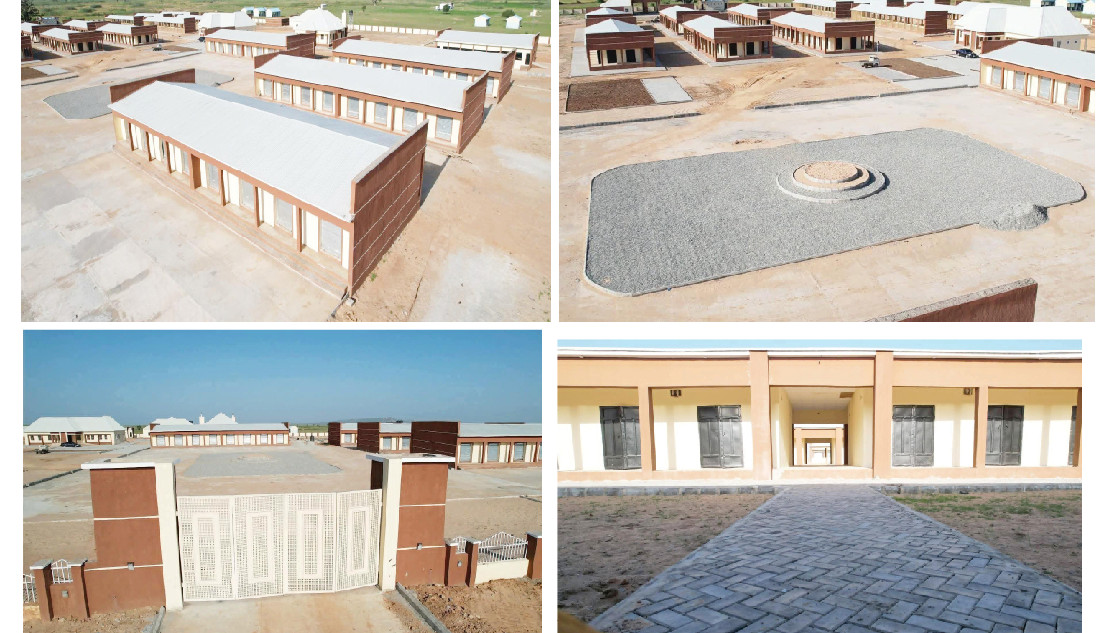
The 1200 square meters remodeled market features a comprehensive suite of modern facilities, including well-designed trading stalls, an internal road network, effective drainage systems, security outpost, a clinic, water boreholes, large-scale storage facilities, a mosque, WASH facilities, a dedicated slaughtering facility, an administration block, and other strategically important infrastructure designed to support efficient, safe, and sustainable market operations.
For decades, Ngalda market has drawn traders from across Nigeria; Gombe, Borno, Kano, Bauchi, Adamawa, Taraba, Rivers, Lagos, Plateau, Abuja and beyond national borders, welcoming merchants from Niger and Chad. Week after week, nearly one million traders pass through its corridors, turning Ngalda into a living artery of regional commerce.
What was commissioned today (17th February, 2026) by His Excellency was not just a physical market structure, but a historic commercial hub, one that has shaped livelihoods, sustained food systems, and connected rural producers to national and international markets. The remodeled market stands as the Buni administration’s strategic recognition that commerce and commercial activities is not incidental to development; it is central to it.
For generations, grain trading has defined Ngalda’s economic identity. Maize, sorghum, and rice cultivated largely by smallholder farmers have flowed through the market, feeding communities and supporting food security across Fika Local Government Area and beyond. These farmers have worked under difficult conditions: limited access to finance, inadequate storage, seasonal flooding, and the disruptions of conflict. Yet Ngalda endured.
By modernizing the market, the Buni administration has acknowledged both the struggle and the promise of rural agriculture, reinforcing the idea that food security begins with empowering local producers and strengthening the systems that support them.
Livestock trade tells a similar story. Nigeria is one of Sub-Saharan Africa’s leading cattle-producing nations, and Yobe State plays a critical role in that success. Ngalda’s cattle market has long provided income for countless households, even as it remained constrained by limited infrastructure and the absence of processing facilities.
Again, today’s commissioning reopens the future, one of value chains, agro-processing, and private-sector investment. It signals a shift from subsistence trade to structured economic opportunity for our population.
Vegetables, too, carry quiet power in Ngalda. Onions, tomatoes, peppers, and watermelons fill the stalls, supplying affordable nutrition and sustaining household incomes. Dry-season farming has expanded steadily, offering hope against rural poverty and unemployment. Yet storage challenges have often undermined farmers’ efforts. In recognizing this sector through improved market infrastructure, the Governor has affirmed a deeper understanding of development, one that links commerce to nutrition, health, and human dignity.
Through the Ngalda Modern Market, governance has spoken in practical terms. The project reduces business risks for small vendors, channels income back into rural communities, strengthens rural-urban economic ties, and expands access to fresh, locally grown food. It reflects a leadership style that values continuity, respecting history while deliberately shaping the future.
Long after the commissioning ceremony is remembered only in photographs, Ngalda Market will remain alive, echoing with bargaining voices, movement, and opportunity. Farmers will arrive at dawn, traders will travel across borders, and livelihoods will quietly rise. And history will record that under Governor Mai Mala Buni, development was not merely declared; it was built, brick by brick, trade by trade where the people have always lived and worked.
For market infrastructure maintenance and sustainability, it is important that the Fika Local Government Council ensured that there is institutionalized market facility management, grounded on local marketers-centered approach. This requires establishing a dedicated market management committee with clear operational guidelines, transparent revenue collection, and strong accountability mechanisms, complemented by routine maintenance, sanitation, security, and drainage management to protect both assets and livelihoods.
Integrating trader associations into decision-making will promote ownership, compliance, and conflict resolution, while the use of digital systems for stall allocation and fee collection will enhance efficiency and reduce leakages.
We’ve got the edge. Get real-time reports, breaking scoops, and exclusive angles delivered straight to your phone. Don’t settle for stale news. Join LEADERSHIP NEWS on WhatsApp for 24/7 updates →
Join Our WhatsApp Channel