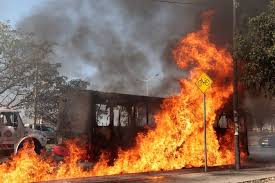
Guadalajara, a city set to host four FIFA World Cup matches this June and July, was gripped by cartel violence last weekend following the killing of a notorious drug lord. The unrest, which also affected other parts of Mexico, has left residents and activists questioning the wisdom of holding such a major event in an area plagued by brutal drug-related crime.
Nemesio “El Mencho” Oseguera, leader of the Jalisco New Generation Cartel and one of Mexico’s and the US’s most wanted men, was killed in a military operation approximately 130km (80 miles) from Guadalajara on Sunday. The cartel reacted with fury, instigating gun battles with security forces that resulted in at least 57 deaths across Mexico, including soldiers and cartel members.
Roadblocks were erected in 20 states, and the burning of buses and businesses led to the suspension of football games in Guadalajara and the central state of Querétaro.
Despite state security officials reporting Guadalajara as “peaceful” just days prior, Monday saw the city’s streets largely deserted, with businesses closed and classes suspended in Jalisco and a dozen other states.
Authorities in Jalisco, of which Guadalajara is the capital, are banking on technology to secure their segment of the World Cup. Drones, anti-drone equipment, and AI-driven video surveillance systems are among the tools being deployed. However, these preparations come as Jalisco grapples with an epidemic of disappearances and the discovery of clandestine graves. Guadalajara alone accounts for over half of Jalisco’s 12,575 reported missing persons, with experts attributing these disappearances to forced recruitment by criminal groups.
Family members of the disappeared, who have unearthed hundreds of clandestine graves in their search for loved ones, have expressed dismay. Carmen Ponce, 26, whose brother Victor Hugo vanished in 2020, told AFP: “I don’t think there is anything to celebrate. It seems like a pretty grotesque situation to me. The country celebrates goals while we are here searching.” Ponce herself found the remains of five people in buried plastic bags last September.
Concerns also extend to the safety of World Cup tourists. Juan Carlos Contreras, overseeing the city’s security camera network, anticipates potential protests by residents angered by the government’s perceived inaction regarding their missing loved ones. Missael Robles, a 31-year-old tour guide, has cancelled 25 tours since the violence erupted, highlighting the significant economic impact.
Worryingly, properties used by criminal groups have been discovered just a few kilometres from the Akron Stadium, which is slated to host World Cup matches. Less than 2km (1.2 miles) from the stadium, state prosecution officials raided a house and arrested two people on kidnapping charges. AFP observed chains wrapped around metal bars in the abandoned building, with the Akron Stadium visible in the distance.
Jose Raul Servin, searching for his son Raul since his disappearance in April 2018, fears that visiting tourists could become targets for criminal gangs. “We don’t want anything to happen,” he said, “like what’s happened to us.” FIFA has declined to comment on the violence in one of its host cities.
We’ve got the edge. Get real-time reports, breaking scoops, and exclusive angles delivered straight to your phone. Don’t settle for stale news. Join LEADERSHIP NEWS on WhatsApp for 24/7 updates →
Join Our WhatsApp Channel