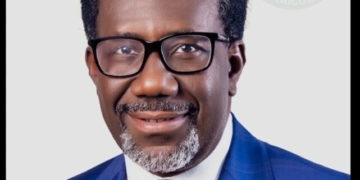
The executive secretary of the Joint Revenue Board (JRB), Olusegun Adesokan, has said Nigeria’s sweeping tax reforms are laying a strong foundation for national renewal, institutional efficiency and inclusive economic growth.
In an article titled “A New Fiscal Dawn: How Nigeria’s Tax Reforms Are Laying the Foundation for National Renewal,” Adesokan described the ongoing overhaul as one of the most comprehensive fiscal reform efforts in the country’s history.
He said the reform programme, championed by President Bola Ahmed Tinubu, has produced four landmark legislations: the Nigeria Tax Act, the Nigeria Tax Administration Act, the Nigeria Revenue Service (Establishment) Act, and the Joint Revenue Board of Nigeria (Establishment) Act.
According to him, the laws provide a unified legal and institutional framework designed to modernise Nigeria’s tax ecosystem and align it with global best practices.
Adesokan noted that the reforms go beyond revenue generation and are structured as instruments of national development.
He explained that the new framework seeks to simplify tax rules, eliminate multiple taxation, strengthen administration, and promote equity and transparency.
Key objectives, he said, include providing relief for poor and vulnerable Nigerians and small businesses, reducing leakages, improving compliance through technology, and enhancing accountability. “These measures will create a more business-friendly environment and strengthen government’s capacity to fund infrastructure, social services and economic programmes,” he stated.
Adesokan emphasised that subnational alignment is critical to the success of the reforms. He disclosed that the JRB developed a Model States Taxes and Levies Harmonisation Law to guide states in domesticating and implementing the national tax principles.
So far, 12 states have enacted versions of the harmonisation law, while several others are at different stages of stakeholder engagement and legislative action.
He said the framework addresses longstanding complaints about multiplicity of taxes, overlapping levies and informal collection practices.
One of its key provisions is the consolidation of nearly 60 different taxes, levies and charges into nine clearly defined collection heads.
The model law also eliminates unauthorised roadside collections, curbs the activities of non-state revenue collectors, discourages cash payments in favour of electronic channels, and standardises assessment and collection procedures.
Adesokan said the reforms will reduce the cost of doing business, strengthen investor confidence, and improve ease of doing business nationwide.
He added that growing public confidence reflects increasing awareness that taxation, when properly administered, is central to national development.
According to him, the ultimate goal is to build a fair, transparent and coordinated tax system that promotes enterprise and supports Nigeria’s long-term prosperity.
We’ve got the edge. Get real-time reports, breaking scoops, and exclusive angles delivered straight to your phone. Don’t settle for stale news. Join LEADERSHIP NEWS on WhatsApp for 24/7 updates →
Join Our WhatsApp Channel