Last week, I invited readers to dwell in a moment that moves at the pace our better selves demand. We left with the image of the younger ministers and the elders alike finding in that pace a form of leadership that is patient, resilient, and humane. The pace, not the speed, proved the measure of our unity, and the laughter we shared became a lifeline in the moment of tension. This week, I wish to remind you of that scene as we turn toward what followed and what it means for the work ahead. I must not simply recount events; I want to show how that measured rhythm informed our choices in Washington and how it continues to illuminate our path toward a Nigeria that is secure, just, and hospitable to all who share this land.
What we discussed last week still shapes everything we do. We spoke of leadership forged in restraint and care, of faith operating in public life as a daily discipline rather than a ceremonial act, and of a vision in which interfaith cooperation is not a concession but a fuller expression of conviction. We explored how interfaith cooperation might be understood as an integration of diverse beliefs into a single moral endeavour, one that honours the sacredness of every life while not erasing our differences. And we reminded ourselves that Ramadan, though observed by Muslims worldwide, is part of a broader conversation about discipline, empathy, and the obligation to protect the vulnerable—principles that can guide us across faith lines and across borders. In these pages I write in the first person as a witness and participant in that work, for the road we walk is not merely about events but about everyday choices: listening before speaking, resisting simplification, and acting with a steadfast commitment to the common good. This year, Christian Lent coincides with Ramadan, offering a parallel season of fasting, reflection, and renewal. Lent, a time of preparation leading to Easter, mirrors Ramadan’s call to humility, charity, and self-discipline. When Christians observe Lent and Muslims observe Ramadan in tandem, we glimpse a shared human rhythm: fasting as a path to greater compassion and awareness of the vulnerable. The coincidence invites us to recognise our creeds while deepening mutual respect and peaceful coexistence, proving that differences in creed do not prevent cooperation but can nourish it.
What we carried forward
We carried forward a rhythm of leadership that prizes patience, resilience, and humanity over speed; a belief that laughter can be a lifeline and that camaraderie across faiths can steady us in moments of tension. We recognised that unity does not require erasing difference but rather acknowledging and honouring it, and we held fast to the conviction that faith in action—grounded in justice, mercy, and the protection of the vulnerable—transforms dialogue into deeds. We also placed Ramadan within a broader moral frame: a season of fasting, reflection, and empathy for Muslims worldwide offers a shared discipline that can inform interfaith partnership across faith lines and borders.
The State Department conversation and the communique’s living breath
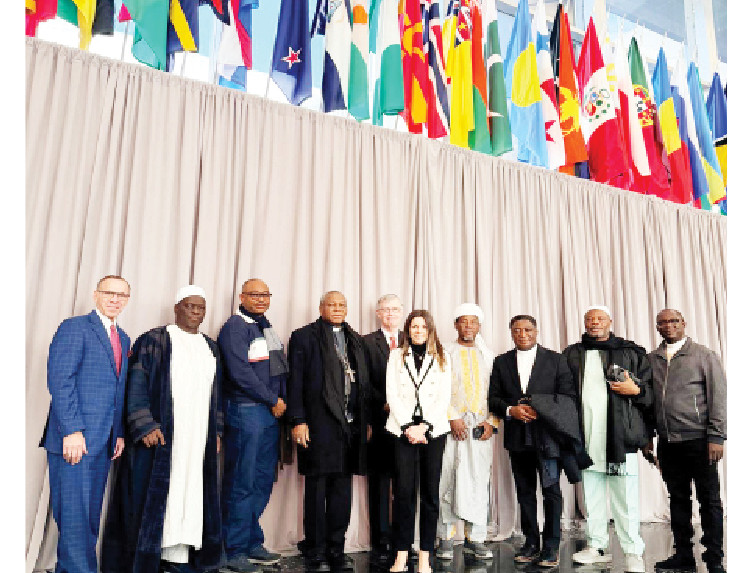
Our presence was not merely ceremonial. It was a living continuation of the Abuja communique: a binding of intention into policy, a statement that faith communities can articulate a credible, unified voice on peace, even when policy debates threaten to fracture the argument. We spoke of sovereignty endangered in rural pockets, where terrorists extort taxes, stage sham elections, and attempt to supplant legitimate governance. We discussed internal displacement—camps that test the endurance of human dignity—where hunger and fear press in on the edges of every doorway. And we asserted the moral imperative to defend the vulnerable, to protect women and girls, to secure the sanctity of space for all faiths to worship, and to ensure that every child’s education remains a beacon of hope rather than a casualty of conflict. The presence of Christian and Muslim leaders in Washington—though it may translate into future policy and practice—was a strong, scriptural reminder: peace is possible when communities refuse to surrender to suspicion and choose to stand together in a posture of listening, hospitality, and restraint.
Feedback From International Participants
The institutions, agencies, and civil society organisations that participated in the briefing from February 4-5, 2026, appreciated the honest, firsthand information provided by this esteemed team. The representatives of the various groups see this team as a credible partner in advancing peace and security in Nigeria going forward, as your engagements throughout the week were solution-oriented. They also agree that in this critical moment in Nigeria, the role of faith leaders cannot be overemphasised.
Faith Leaders Practical Steps
The next steps aim to uphold the nation’s moral foundations by fostering interfaith solidarity, advancing human security, confronting corruption, and promoting accountable, ethical governance for the common good of all Nigerians, grounded in human dignity.
Actions
A: Community Early Warning + Rapid Response (Ewrr)
The aim is to stop small incidents from becoming mass killings. To achieve this, interfaith peace desks should be established in hotspot LGAs, each desk comprising one pastor or priest, one imam, one woman leader, one youth representative, and one traditional or community representative. There should be an incident reporting protocol via WhatsApp and SMS, as well as a dedicated hotline, with clear categories for hate speech, suspicious movement, threats, abduction patterns, and land disputes. The approach must be people-centred, combining early warning and early response through rumour control, threat reporting, verification, and escalation pathways. A rapid mediation team trained in conflict de-escalation and safe shuttle mediation should be established, along with monthly “Peace Temperature Briefs”—short, factual, nonpartisan updates shared with security agencies, traditional rulers, and communities. This is a priority because many killings and reprisal attacks escalate when threats are visible, but there is no trusted system to verify information, de‑escalate, and trigger swift protection.
Memory, responsibility, and legacy
As the days in Washington receded into memory, I carried with me a renewed sense of responsibility that extends beyond Nigeria’s borders and beyond the moment of a conference. We formed a bond—a covenant of faith and duty—that defies the distance between our nations. We asked after one another’s well-being, not as a courtesy but as a shared vow: to remain in contact, to share progress and challenges, and to resist the temptation to withdraw in the face of difficulty. The six leaders—three Muslims and three Christians, with a hopeful plan to widen our circle—stood as a counter-narrative to the misperception that division defines our era. We offered a different example: faith as a disciplined practice of listening, service, and courageous conversation.
Gratitude, blessing, and the promise of continued service
To the Global Peace Foundation, I offer my deepest gratitude for their invitation and for deeming me worthy to participate in this sacred work. To Pepperdine University, to the Religious Freedom Institute, and to all who stood with us—thank you for your generosity of spirit and your unwavering belief in the possibility of peace. The journey does not end with a speech or a dinner; it continues in the daily acts of men and women who choose to walk in the light of mutual respect, who refuse to let fear shape policy, and who recognise that the dignity of every life is the covenant we must guard.
A Vow in Washington and a Pledge for Nigeria
In closing, I recall His Eminence John Cardinal Onaiyekan with considerable reverence, holding his leadership as a touchstone for all who aspire to lead with gentleness, courage, and fidelity to a shared calling. Our presence in Washington was more than a demonstration of solidarity; it was a statement about possibility—that a Nigeria divided by fear can be healed by patient, deliberate courage, and by people who know that faith, exercised with humility, can become a force for justice, mercy, and lasting peace. We were not merely witnesses to conflict, but witnesses to a future where difference is not a dividing line but a shared horizon. If Nigeria is to rise from its crisis, it will be through measured acts of mercy, steadfast acts of accountability, and a unity that recognises the sacredness of every life. Our gathering—comprising His Eminence John Cardinal Onaiyekan; His Royal Highness Alhaji Hassan Attahiru, Emir of Bungudu in Zamfara State; Reverend Joseph John Hayab, Chairman of CAN Northern Nigeria and Country Director of the Global Peace Foundation Nigeria; Imam Fuad Adeyemi, Chief Imam of Al Habibiyyah; and Rev. Yunusa Nmadu Jnr, CEO of Christian Solidarity Worldwide Nigeria—served as a living charter: to protect the vulnerable, to educate the young, to shelter the weak, and to walk with one another in the quiet fidelity that faith demands. May the stories we carried home become deeds, and may our hands, joined in resolve, shape a peace that endures beyond fear and beyond doubt.
With gratitude and blessing,
Yours sincerely,
We’ve got the edge. Get real-time reports, breaking scoops, and exclusive angles delivered straight to your phone. Don’t settle for stale news. Join LEADERSHIP NEWS on WhatsApp for 24/7 updates →
Join Our WhatsApp Channel