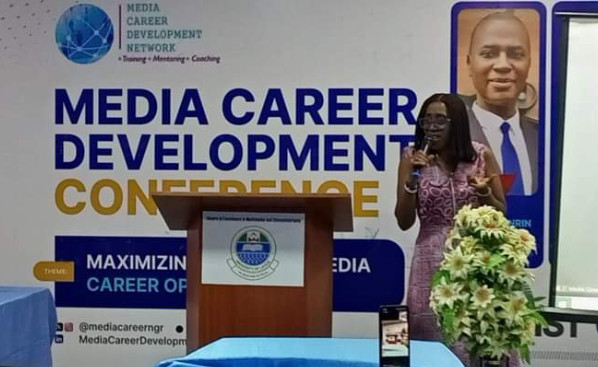
Media career development specialist and executive director of Media Career Development Network, Lekan Otufodunrin, has said global technology companies must fairly compensate West African news publishers for content that sustains their digital ecosystems, insisting that the demand is both legitimate and achievable through political will and regional collaboration.
Otufodunrin stated that the agitation for payment is not peculiar to Nigeria or West Africa but reflects a global shift in media-policy debates. “Well, I’m aware that even from Nigeria there is a concern, and it’s not just Nigeria, it’s the global scene,” he said. “If I’m right, there are a few countries that have been able to secure… Yes. So it’s not an unusual request.”
He argued that newsrooms invest heavily in generating credible content, which technology platforms then aggregate, distribute and monetise at scale. “Because at the end of the day, what those people are using is content that we can hardly spend money on to generate, and they are using it probably to change their system, or to amplify,” he said. “So it’s not an unusual issue. We need to make the attempts, and to see what that part of the world can achieve.”
According to him, the question is not whether West Africa can pursue compensation frameworks, but whether governments are prepared for sustained engagement. “It’s not impossible for us to do thats what I think, and it’s a legitimate demand, just that it could be a long battle.”
Otufodunrin stressed that fragmented national approaches may weaken negotiation strength but collective bargaining remains the strongest leverage available to the sub-region. “If we are all united and using our bloc like some other part of the world has done, we could make some impact,” he said.
He acknowledged that linguistic and political diversity across Anglophone and Francophone countries could produce varying positions. “Looking at it from the perspective of,the West African region, we have the Francophone, the Anglophone there could be some division of opinion but every country is concerned and there is a need for collaboration.” he said
He further buttressed the importance of regional unity and structured government engagement.
“The government can actually take on some of these platforms, so that’s why we need collaboration within a part of the government. We need that sort of collaboration and political will to push for this as a bloc.”
Otufodunrin urged policymakers to understudy countries that have successfully negotiated compensation agreements with tech giants. “We just need to understand, and have to adapt to what those countries that got it right did, it took time. Even some major matters that went to court over it,” he said.
Hence, there exist the need for patience and legal preparedness.
He pointed out that while media organisations earn some revenue from digital advertising, the imbalance in value distribution remains stark. “You know that a lot of money comes from Google adsIt’s just that they are asking for more, because sometimes the algorithm does not support us. But they are killing us,” he averred.
The media expert further argued that sustainability must remain central to the conversation, warning that shrinking revenues are already forcing painful restructuring across newsrooms. “There are concerns out there, but you know, everybody now just go online,” he said.
He, however, added that the migration of audiences to digital platforms has altered the economics of journalism.
He advised media organisations to also rethink their digital strategies while negotiations continue. “As much as possible, we need to begin to develop how we can be, sort of, independent of new social media platforms, “We should not be just social media. I mean, we should also be initiators of our own platforms, we are not pumping everything on those platforms, for them to just use easily.”
Otunfodunrin concluded that sustainable dialogue anchored on political resolve, regional solidarity and strategic adaptation offers West Africa its best chance of securing fair compensation from Big Tech. “The thing is not to keep us off collaboration, We need to be united,” he said.
We’ve got the edge. Get real-time reports, breaking scoops, and exclusive angles delivered straight to your phone. Don’t settle for stale news. Join LEADERSHIP NEWS on WhatsApp for 24/7 updates →
Join Our WhatsApp Channel