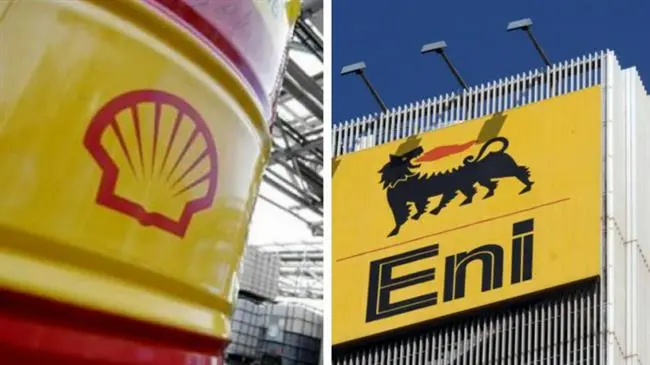
Nigeria has divided the long-disputed OPL 245 oil block into four new assets to be operated by Eni (ENI.MI) and Shell (SHEL.L), a source familiar with the matter told Reuters, paving the way for production on one of the country’s largest untapped deepwater reserves after nearly three decades of legal wrangling.
The move represents a major breakthrough for the Oil Prospecting Licence (OPL) 245 block, estimated to hold up to 9 billion barrels of oil equivalent in reserves—enough to rival Nigeria’s entire proven reserves if fully developed.
Located in the Niger Delta’s deepwaters, the field has languished since its initial award in 1998 to Malabu Oil and Gas, a shadowy firm controlled by Dan Etete, Nigeria’s oil minister at the time.
Etete controversially awarded the lucrative licence to his own company for a nominal $20 million fee, sparking immediate controversy over conflicts of interest.
The saga escalated in 2011 when Malabu sold its rights to a Shell-Eni joint venture for $1.3 billion.
Italian and Nigerian prosecutors alleged that over $1 billion of that sum was siphoned off through bribes to politicians, middlemen, and Etete himself, including hefty payments to then-President Goodluck Jonathan’s associates.
The deal became the oil industry’s most notorious corruption case, dubbed the “Malabu scandal,” leading to overlapping lawsuits in Italy, the UK, Nigeria, and the US.
Eni CEO Claudio Descalzi and Shell executives faced trial in Milan, where prosecutors sought jail terms and fines totaling hundreds of millions.
However, all were acquitted in 2021 after a judge ruled there was insufficient evidence of criminal intent, though civil appeals linger.
Shell and Eni have consistently denied wrongdoing, insisting the payments complied with due diligence.
The anti-graft agency, the Economic and Financial Crimes Commission (EFCC), has pursued parallel probes, recovering over $200 million in frozen funds, but progress stalled amid political shifts.
Now, under President Bola Tinubu’s administration, Nigeria is prioritising energy security and investment inflows.
For years, the federal government signaled its desire to unlock OPL 245.
The minister of state, Petroleum Resources (Oil), Heineken Lokpobiri, had last year reiterated commitments to resolving legacy disputes and boosting output amid declining production from ageing fields.
OPEC data shows Nigeria’s crude output hovered around 1.4 million barrels per day in 2025, far below its 2.2 million bpd quota, partly due to such unresolved blocks.
The source, who spoke on condition of anonymity as they are not authorised to discuss policy pre-announcement, told Reuters that final contracts for the four subdivided blocks—each tailored to Eni’s and Shell’s operational strengths—would be signed starting Monday.
This restructuring sidesteps lingering ownership claims by reverting partial control to the Nigerian National Petroleum Company (NNPC), which could take equity stakes.
If developed, OPL 245 could add $50-100 billion to Nigeria’s economy over its lifespan, through jobs, taxes, and royalties, according to estimates by Wood Mackenzie.
It also aligns with Tinubu’s reforms, including the 2021 Petroleum Industry Act (PIA), which streamlines licensing and mandates local content.
Eni and Shell, veterans in Nigeria’s waters with projects like Zabazaba (also stalled), bring proven deepwater expertise; Eni operates the nearby Abo field, while Shell leads Bonga.
We’ve got the edge. Get real-time reports, breaking scoops, and exclusive angles delivered straight to your phone. Don’t settle for stale news. Join LEADERSHIP NEWS on WhatsApp for 24/7 updates →
Join Our WhatsApp Channel