Ahead of the March deadline for Nigerian banks to meet the Central Bank of Nigeria-initiated minimum recapitalisation requirements, MARK ITSIBOR writes that the reform policy would help the country to achive its self-imposed $1trn economy target
By the end of March, one of the most ambitious banking reforms in recent years will reach a defining milestone. Nigeria’s bank recapitalisation programme, driven by the Central Bank of Nigeria (CBN), is set to close a critical phase that policymakers believe will reshape the financial system and accelerate the Federal Government’s $1 trillion economy ambition.
The exercise is designed to produce stronger, better-capitalised and more sophisticated banks capable of underwriting large-scale transactions and supporting long-term economic expansion.
With N4.05 trillion already verified as raised by 20 banks, industry estimates suggest total capital mobilisation could exceed N5 trillion by the close of the programme. While the deadline marks the end of capital raising, analysts say the structural impact will extend well beyond 2026.
Stronger Banks For A Bigger Economy
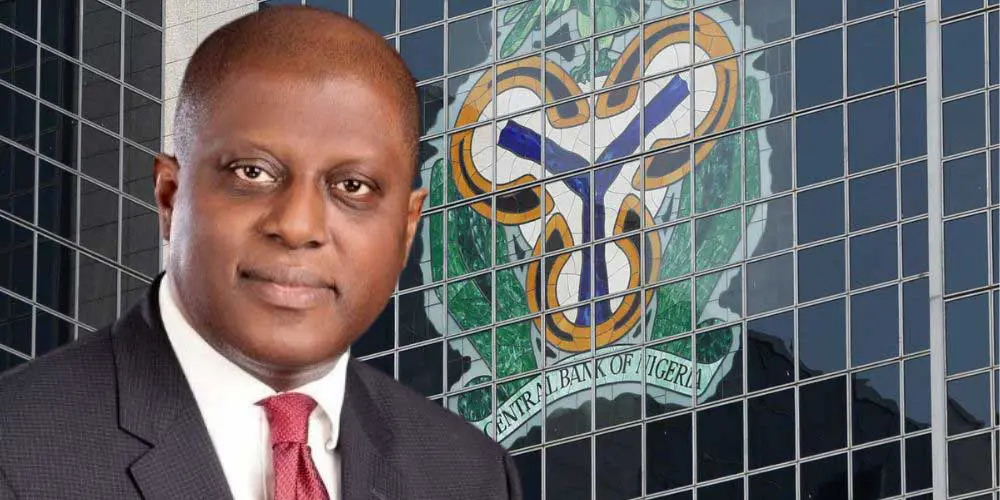
At its core, recapitalisation is about capacity. The Governor Olayemi Cardoso-led CBN’s position is clear: sustainable economic growth requires a robust and resilient financial system. Bigger balance sheets translate to stronger intermediation, deeper credit markets and the ability to fund infrastructure, industrialisation and strategic sectors.
The regulator has consistently framed the policy as part of a broader reform agenda anchored on regulatory excellence, financial stability and alignment between monetary and fiscal authorities.
Cardoso has emphasised that fostering compliance, strengthening risk management frameworks and reinforcing governance standards are central to protecting Nigeria’s financial system while enhancing its domestic and global credibility.
To achieve this, the apex bank has intensified oversight and reaffirmed its commitment to transparency, capital integrity and institutional discipline across Nigerian financial institutions.
In his most recent update, Cardoso confirmed that 20 banks have met the new capital thresholds, while others remain in advanced stages of completion.
Under the recapitalisation framework, capital raising does not end with subscription.
Fresh equity must undergo rigorous verification before approval and final allotment. The CBN serves as the final signatory in a tripartite Capital Verification Committee that also includes the Securities and Exchange Commission (SEC) and the Nigeria Deposit Insurance Corporation (NDIC).
The committee scrutinises the authenticity and quality of funds raised to ensure compliance with prudential guidelines.
Cardoso maintains that the system remains fundamentally sound. According to him, stress tests conducted this year confirm that key financial soundness indicators overwhelmingly meet prudential benchmarks.
“At the same time, we remain vigilant to emerging risks, including cyber threats, credit-concentration pressures and operational vulnerabilities,” he said, noting that Nigeria’s transition toward Basel III standards will further strengthen capital quality and liquidity monitoring.
Beyond capital buffers, the CBN has widened its reform lens. Cardoso has repeatedly stressed that operational discipline and ethical standards must underpin a modern financial system.
The apex bank recently introduced the FX Global Code for authorised dealers and market participants to enforce best practices in foreign exchange transactions. Surveillance of market activities has also been intensified to eliminate arbitrage and misconduct.
He urged the Chartered Institute of Bankers of Nigeria (CIBN) to strengthen professionalism and ethical culture across the industry, warning that regulators will maintain zero tolerance for compliance violations.
Parallel reforms have targeted the broader financial ecosystem. The CBN conducted a comprehensive review of Nigeria’s cash lifecycle, recalibrated cash-printing models, issued guidelines on ATM-to-card ratios and tightened supervision of payment agents and POS operators.
Banks whose ATMs fail to dispense cash now face sanctions, while branch and ATM closures require regulatory approval. The goal, Cardoso said, is to address structural weaknesses rather than symptoms.
Global And Domestic Endorsements
International observers see the recapitalisation drive as transformative. The World Bank Country Director for Nigeria, Matthew Verghis, described stronger banks as foundational to financing Nigeria’s long-term ambitions. “A stronger banking system creates the foundation to finance Nigeria’s long-term ambitions — from empowering MSMEs to unlocking infrastructure development,” he said.
Rating agencies share similar views. Ayokunle Olubunmi, Head of Financial Institutions Ratings at Agusto & Co, disclosed that many banks classified as advanced in compliance have already secured required funds, with verification processes underway.
From within the industry, support has also been vocal. Oliver Alawuba, Group Managing Director of United Bank for Africa (UBA), described the recapitalisation policy as timely and essential.
He argued that stronger capital buffers will enable banks to withstand inflationary pressures, currency volatility and geopolitical shocks while positioning them to finance infrastructure, oil and gas, agriculture, manufacturing, fintech and green energy. “Nigerian banks need adequate capital buffers to meet evolving demands. Without this, the industry cannot effectively rise to the challenge,” he said.
The CBN insists that recapitalisation is strengthening an already resilient system rather than rescuing a weak one.
According to Cardoso, the sector’s non-performing loan ratio remains within the prudential benchmark of five per cent, reflecting sound credit risk management.
Liquidity ratios exceed the regulatory floor of 30 per cent, ensuring adequate cash flow for operational and customer obligations.
Recent stress tests reaffirmed the system’s robustness.
Efforts to strengthen capital buffers were announced in 2023 with a two-year implementation window. A significant number of banks, Cardoso noted, have raised required capital well ahead of the 2026 deadline through rights issues and public offerings.
He expressed confidence that the sector is well positioned to support Nigeria’s recovery by expanding credit access to MSMEs and financing critical sectors.
Policy Synergy and Structural Shifts
Recapitalisation forms part of a broader matrix of economic reforms.
Founder of B. Adedipe Associates Limited, Prof. ‘Abiodun Adedipe, identified several policy shifts contributing to economic stabilisation. Forex market reforms have curtailed arbitrage and round-tripping. Petrol subsidy removal has eliminated significant fiscal leakages. Fiscal consolidation efforts are improving transparency and expanding fiscal space.
According to the CBN boss, recapitalisation is equipping banks to fund a trillion-dollar economy, while tax reforms could ignite regional competitiveness. Complementary initiatives such as the Nigerian Education Loan Fund, Consumer Credit Corporation, recapitalised Bank of Agriculture and National Credit Guarantee Company are expected to support inclusive growth.
Adedipe also pointed to Nigeria’s demographic and digital strengths. With an estimated population of 237.5 million and a median age of 18.1 years, the country possesses a large, youthful workforce. Urbanisation and rising internet penetration deepen financial inclusion and market opportunities.
The CBN underscores that monetary reforms cannot succeed in isolation. Stronger coordination with fiscal authorities has produced reduced domestic borrowing costs, improved liquidity conditions and more predictable fiscal operations.
Cardoso has ruled out a return to direct deficit financing by the central bank, describing fiscal discipline as non-negotiable.
Meanwhile, fiscal authorities are implementing revenue optimisation frameworks, establishing a new National Revenue Agency and upgrading the Treasury Single Account to strengthen public financial management.
As Nigeria transitions toward a full-fledged inflation-targeting regime, this coordination is expected to deepen, reinforcing price stability and macroeconomic credibility.
The Bigger Picture
At its heart, the recapitalisation programme is a forward-looking structural reform. It seeks not merely to increase numbers on balance sheets but to transform banks into engines of industrialisation, infrastructure financing and economic diversification.
With March marking a decisive moment, the focus will soon shift from capital raising to capital deployment. The true measure of success will lie in whether stronger banks translate their enhanced capacity into expanded credit, productive investment and inclusive growth.
If effectively harnessed, the recapitalisation drive could stand as one of the foundational pillars in Nigeria’s march toward a $1 trillion economy — a financial reset designed not just for stability, but for scale.
We’ve got the edge. Get real-time reports, breaking scoops, and exclusive angles delivered straight to your phone. Don’t settle for stale news. Join LEADERSHIP NEWS on WhatsApp for 24/7 updates →
Join Our WhatsApp Channel