Federal Ministry of Environment, through the Department of Climate Change, has intensified efforts to embed climate literacy in secondary education, partnering with the Secondary Education Board (SEB) and the Society for Planet and Prosperity (SPP) to train teachers in the Federal Capital Territory (FCT).
At the opening of a climate education training workshop yesterday in Abuja, the director of Science, Technology and Mathematics at SEB, Abdullahi Muse Zakir, said climate change was no longer a distant environmental concern but a present-day reality impacting communities, schools and livelihoods in Nigeria.
The workshop brought together educators, climate experts and policy drivers in a coordinated push to equip teachers with the knowledge and tools to tackle one of the most pressing challenges of the century.
Zakir said, “Across the Federal Capital Territory and the country at large, we are witnessing rising temperatures, irregular rainfall, flooding and environmental degradation. These changes directly affect our schools, our communities and the future of our children.
“As teachers, you are not only transmitters of curriculum but shapers of mindset and values. This workshop is not just about training; it is about empowerment. The knowledge you pass on will determine how the next generation understands environmental responsibility, sustainability and innovation,” he said.
Zakir said while science provides the facts about climate change, technology offers practical solutions which range from renewable energy and waste management systems to climate-smart agriculture and sustainable urban planning.
According to him, equipping teachers with accurate knowledge and effective teaching strategies will help produce informed, environmentally conscious citizens capable of driving Nigeria’s green transition.
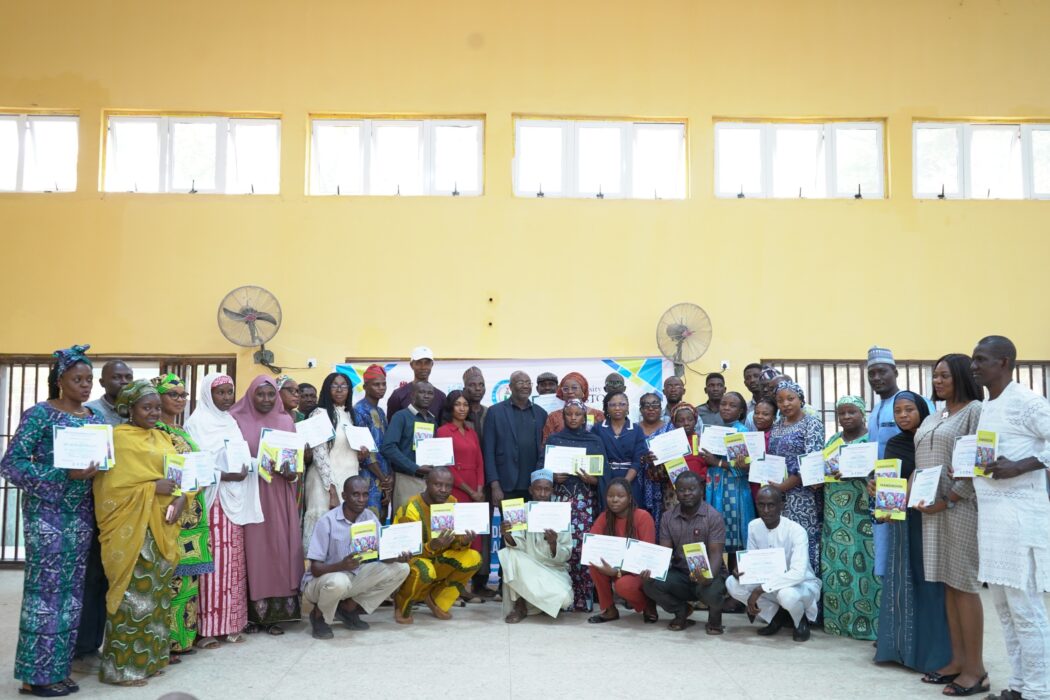
A major highlight of the event was the presentation of a climate education handbook to participating teachers by SPP president, Chukwumerije Okereke. The book is designed to deepen teachers’ understanding of climate science and provide practical guidance on how to effectively teach climate-related issues in the classroom.
Okereke, an international scholar, commended the collaboration between the government and the civil society, noting that climate education must move from theory to practical, solution-driven learning if Nigeria is to build resilience.
One of the teachers, Eze Uzomaka Comfort, an environmental manager and patron of the Eco Club at Government Model Secondary School, Jikwoyi, Abuja, said the workshop strengthened her resolve to champion climate advocacy at the grassroots.
We’ve got the edge. Get real-time reports, breaking scoops, and exclusive angles delivered straight to your phone. Don’t settle for stale news. Join LEADERSHIP NEWS on WhatsApp for 24/7 updates →
Join Our WhatsApp Channel