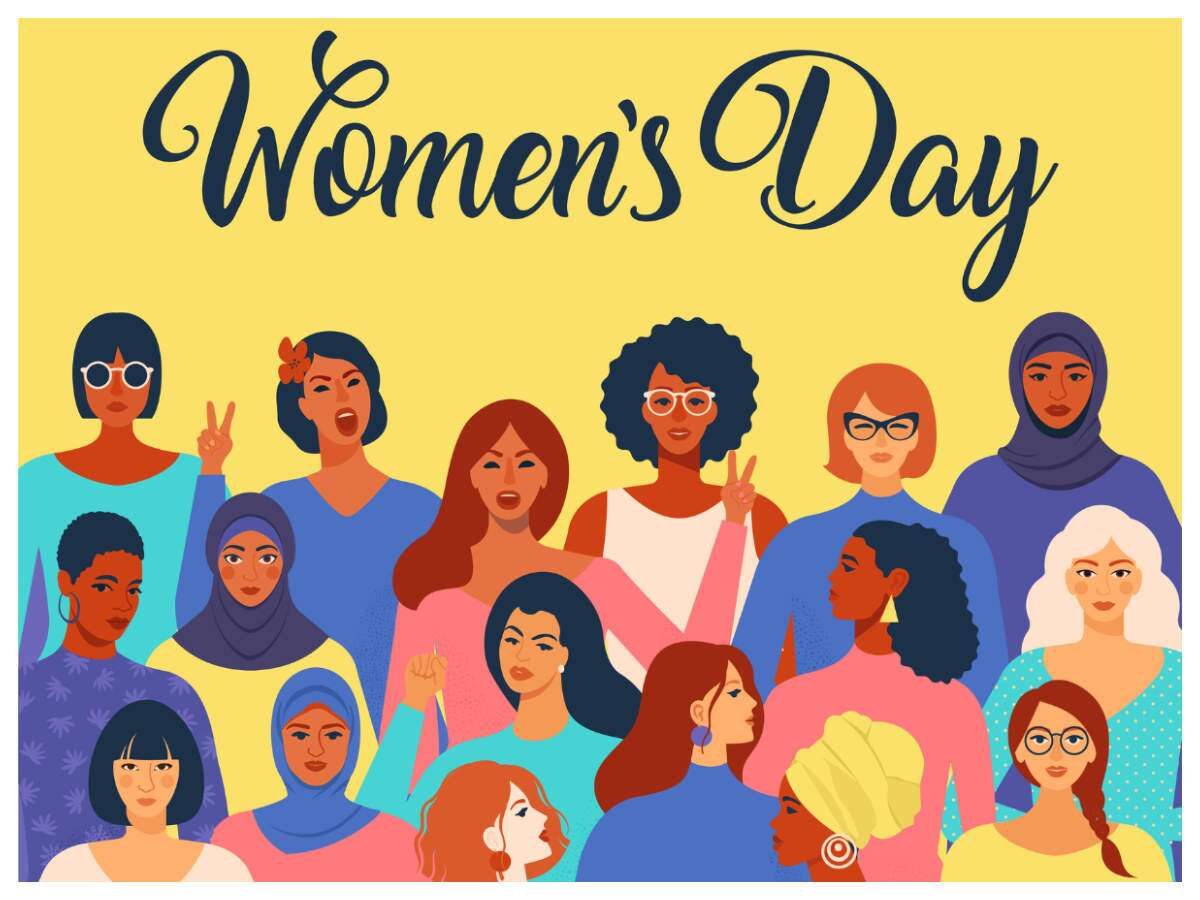
Each year, the world community marks International Women’s Day on March 8. The commemoration offers an opportunity to reflect on progress in advancing gender equality and other issues relating to women in society.
This year’s theme, “Give to Gain,” captures a basic truth about social development: societies advance better when they deliberately invest in women’s rights, safety, education and leadership.
In Nigeria, however, the aspirations reflected in this theme remain largely unfulfilled, particularly in the area of political participation and leadership.
Women constitute nearly half of the country’s population, yet their presence in elective and appointive offices remains abysmally low.
Across the country’s political space, women remain severely underrepresented. In the ongoing legislative session, of the National Assembly, female lawmakers account for only a small fraction of the total membership. The number of women in governorship positions, state assemblies and other elective offices is equally discouraging. Over successive electoral cycles, rather than improving significantly, women’s representation has often stagnated or even declined.
The highest representation of women in Nigeria’s National Assembly occurred after the 2007 general elections, when 34 women won seats in the 6th Assembly (2007–2011). The Senate recorded its peak with nine female senators, representing 8.3 per cent of the 109 seats, while the House of Representatives had 25 women out of 360 seats, representing 7.2 per cent. In the 2011 elections, the number in the House slightly increased to 26 women. Since then, however, the numbers have steadily declined.
The 2023 elections produced one of the lowest levels of female representation, with only 17 women elected to the National Assembly — three in the Senate and 14 in the House of Representatives. This represents just 3.62 per cent of the 469-member legislature.
A comparison with other African countries highlights how far Nigeria still has to go. Data from the Inter-Parliamentary Union (IPU) for 2025–2026 shows that several African nations have significantly higher levels of female representation in their national parliaments. Rwanda leads not only Africa but the world, with women occupying 63.8 per cent of parliamentary seats. South Africa follows with 44.7 per cent, while Cape Verde has 44.4 per cent. Ethiopia has 41.9 per cent, while Senegal and Namibia have 41.2 per cent and 40.6 per cent respectively.
Many of these countries achieved these results through deliberate policies such as gender quotas and constitutional provisions designed to promote women’s political participation.
The feats achieved in the aforementioned countries underscore the push by many advocates for legislative measures, including a bill currently before the National Assembly seeking to create special seats for women in parliament. Supporters of the proposal argue that temporary structural interventions are necessary to correct long-standing gender imbalances. Without such measures, they say, women will continue to face systemic barriers ranging from financial constraints and political violence to cultural stereotypes and undemocratic internal party practices.
However, the recent remarks by Bayelsa State Governor Douye Diri during a women’s conference organised by the Pan Niger Delta Forum (PANDEF) in Yenagoa have added to the ongoing debate about how best to address this imbalance in Nigeria. The governor argued that women should be fully integrated into mainstream politics rather than confined to specially reserved seats in the legislature. According to him, women should compete and succeed in politics on equal footing with men, as seen in countries such as the United Kingdom and the United States. He argued that reserving special seats for them would make them seem like second-class citizens, whereas many of them are highly educated and professionally accomplished and should be able to contest elections and win based on competence and public trust.
However, with politics now the fastest route to quick, stupendous wealth, and political contestation increasingly becoming a do-or-die affair rather than a contest of ideas, can women truly have an equal playing field?
Naturally, women require a safe and properly regulated environment to thrive — which is why they can compete favourably in academic, business and sporting environments, among others. In the last two decades, Nigeria’s best showings in international sporting competitions have mostly come from women. Also, many of the top corporates are now increasingly being run by women, demonstrating their leadership capacity if given the chance.
At the Yenagoa conference, former First Lady Patience Jonathan offered a perspective that complements, rather than contradicts, Governor Diri’s position. She urged women to unite and strengthen their participation in political decision-making while also advocating legal backing and internal party quotas to ensure women’s inclusion in governance.
As a newspaper, we generally align with her call. In Nigeria, access to power is often controlled by party structures: they determine who stands for election and sometimes who gets appointed to executive positions. So, political parties should deliberately allocate a certain percentage of leadership positions and candidacies to women. Such a move would help provide a pathway to broader female representation. Such internal reforms would serve as a bridge between the ideal of equal competition and the reality of systemic disadvantage.
Nigeria’s current standing is particularly dismal when measured against global commitments. In 1995, the international community adopted the Beijing Declaration and Platform for Action, which called for at least 30 per cent representation of women in decision-making positions. However, over three decades later, Nigeria remains far from reaching that target.
Many African countries that started from similar positions have made remarkable progress through constitutional reforms, quota systems and deliberate policy choices that prioritise women’s inclusion in governance. We believe that progress in this respect requires deliberate action rather than leaving it to chance.
Hence, the debate over special seats versus open competition should not become a divisive one. Reserved seats could serve as a transitional measure to rapidly improve representation while deeper institutional reforms are implemented.
We also believe there should be a broader cultural shift. Gender stereotypes in politics discourage many capable women from contesting elections. Female politicians are often judged more harshly than their male counterparts and are frequently subjected to intimidation. The cases of Speaker Patricia Etteh and Senator Natasha Akpoti are cases in point.
The path forward requires courage from lawmakers, commitment from political parties and solidarity among women themselves. These factors will help, in no small measure, to reduce the gender gap in political governance.
We’ve got the edge. Get real-time reports, breaking scoops, and exclusive angles delivered straight to your phone. Don’t settle for stale news. Join LEADERSHIP NEWS on WhatsApp for 24/7 updates →
Join Our WhatsApp Channel