
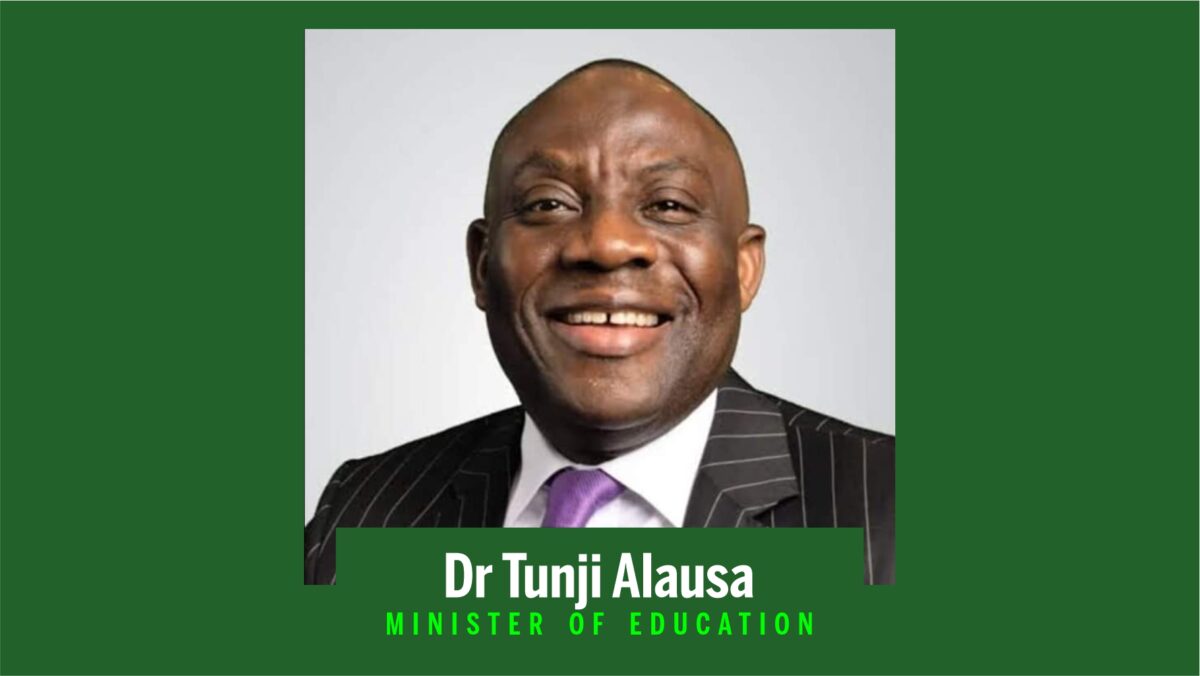
Minister of education, Tunji Alausa, has stated that the federal government is committed to ensuring that every Nigerian girl has access to safe, inclusive, and quality learning opportunities that enable her to reach her full potential.
Alausa spoke on Sunday to mark International Women’s Day (IWD) 2026, themed: “Rights. Justice. Action. For All Women and Girls.”
In a statement, the minister said this year’s celebration highlights the resilience, brilliance, and invaluable contributions of women across every sector of Nigerian society.
“From our classrooms to our communities, Nigerian women continue to shape the present and inspire the future.
“We at the Federal Ministry of Education, through the Nigeria Education Sector Renewal Initiative (NESRI), remain firmly committed to transforming our education system. Girl-child education is a key priority.”
Alausa also celebrated Suwaiba Ahmad, minister of state for education, alongside other “incredible women serving as directors” across the ministry, noting that their passion and dedication continue to inspire and drive positive change in the education sector.
“Together, we will continue working to empower every Nigerian girl to learn, lead, and thrive,” the minister added.
One of the 17 goals of the United Nations Sustainable Development Goals (SDGs), adopted in 2015, focuses on ensuring inclusive and equitable quality education and promoting lifelong learning opportunities for all.
In September 2024, the United Nations Children’s Fund warned that Nigeria’s education system faces an alarming crisis.
According to the agency, about 10.2 million children of primary school age and another 8.1 million of junior secondary school age are out of school, while 74 percent of children aged 7–14 lack basic reading and numeracy skills.
The agency also linked the crisis to insecurity, citing 19 attacks on schools between 2022 and 2023 and the closure of 113 schools in Borno, Adamawa, and Yobe states.
Speaking last Sunday, Alausa said that reducing the burden of the Almajiri and out-of-school children in Nigeria requires stronger collaboration between the federal and subnational governments.
We’ve got the edge. Get real-time reports, breaking scoops, and exclusive angles delivered straight to your phone. Don’t settle for stale news. Join LEADERSHIP NEWS on WhatsApp for 24/7 updates →
Join Our WhatsApp Channel