There are two ways a man may travel the world. One is by the weary rhythm of ships, trains and aircraft; the other is by the quiet turning of pages. The first carries the body across borders. The second liberates the mind from them. While the traveller who boards an aircraft measures distance in miles and hours, the reader measures it in imagination. One requires tickets and visas; the other requires curiosity and patience. Yet it is often the second journey—the silent, contemplative one—that proves the more transformative.
Deep reading does something curious to the human mind. It dismantles the barricades of prejudice brick by brick and replaces them with windows. Through those windows one begins to see humanity not as fragments of tribe, creed or geography, but as a continuous, shared condition. Books do not merely inform; they emancipate. They perform the delicate surgery of removing ignorance without leaving scars. The reader gradually discovers that what separates people is often superficial, while what binds them—fear, hope, love, ambition and grief—is profoundly universal.
Many years ago, long before the world’s airports stamped my passport, books had already ferried my mind across continents. Without leaving the comfort of a reading table, I wandered the fog-laden streets of London and the romantic boulevards of Paris. I strolled through Dakar’s Atlantic breeze, passed through the industrious hum of Douala, and stood silently in Hiroshima where history whispers through ash and memory. These were not merely geographic locations; they were living stories unfolding across time.
From the bustle of Hong Kong to the quieter corners of Donga, from Ikot Ekpene to Owo, from the ancient hills of Idanre to the lively neighbourhood of Rumoukoro, the geography of humanity unfolded before me through ink and imagination. Each book became a passport; each page, a visa stamped by curiosity. In those journeys I encountered people whose lives were vastly different from mine, yet whose emotions mirrored my own. Their triumphs stirred admiration; their tragedies stirred compassion.
By the time adulthood arrived—with its inevitable encounters with real people from these distant places—I was not a stranger to them. Their accents did not puzzle me. Their customs did not bewilder me. Their religions, tribes and cultural rhythms were already familiar melodies I had heard in the quiet orchestra of literature. Reading had done what diplomacy often struggles to accomplish: it had cultivated empathy.
A mind nourished by such exposure becomes difficult to imprison. It grows resistant to the narrow enclosures of prejudice. It learns that the world cannot be understood through the narrow keyhole of a single culture or belief system. Instead, it begins to appreciate human diversity as a vast and intricate mosaic in which every piece contributes to the beauty of the whole. Diversity ceases to be a threat; it becomes a source of enrichment.
Yet one unsettling observation persists. In many public spaces today—particularly within Nigeria’s social discourse—one encounters a troubling scarcity of fully developed minds. Not minds lacking intelligence, but minds weakened by shallow thinking. Too many arguments are kneaded in the watery flour of sentiment. Too many convictions are constructed not on knowledge but on inherited biases. The result is a marketplace of opinions where prejudice often masquerades as certainty.
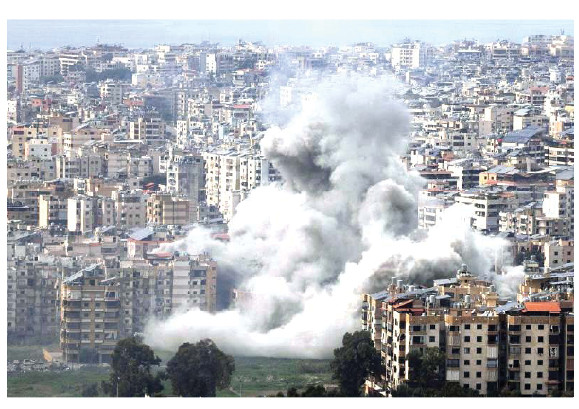
Recent global tensions provided a revealing mirror to this condition. When conflict erupted between Israel, the United States and Iran, reason quietly withdrew while emotion marched triumphantly into the public square. Empathy collapsed almost instantly.
Some Muslims rose in unwavering support of Iran. Some Christians rallied behind Israel and the United States with equal fervour. Yet in the deafening chorus of allegiance, one voice was conspicuously absent: the voice of humanity itself. War, which ought to humble the human spirit, became instead a theatre for celebration.
When news circulated that Iran’s Supreme Leader had been killed during the US–Israel assault, digital timelines erupted in grotesque jubilation. Champagne emojis popped across screens. Mockery flowed freely. Some even declared—with chilling enthusiasm—that seventy-seven virgins awaited the slain leader. It was not satire. It was schadenfreude elevated to a moral position.
Nor was the opposing camp innocent of similar excess. When missiles streaked across Israeli skies, some commentators celebrated with equal abandon, their online festivities resembling the drumbeats of a tribal victory dance. In that moment the tragedy of war was overshadowed by the intoxication of ideological loyalty.
Two camps. Two celebrations. One tragedy.
What these belligerent cheerleaders fail to recognise is that such reactions reveal less about geopolitics and more about intellectual poverty. To celebrate death—regardless of the victim’s creed or nationality—is to surrender a portion of one’s humanity. The destruction of human life should produce silence, not songs.
A lost life should shrink the human heart in grief, not inflate it with triumph. Anyone who witnesses the annihilation of lives and responds with applause merely imitates the ancient rituals of the wilderness, where survival eclipsed morality and empathy had yet to evolve. Civilization, after all, is measured not by technological sophistication but by emotional maturity.
Equally troubling is the tendency to interpret another person’s belief as a personal affront. Such thinking betrays a mind still shackled to primitive instincts. Human beings have always differed in belief, ritual and worldview. Diversity is not an error in the human design; it is the design itself.
Every individual is entitled to his convictions and the spiritual architecture through which he interprets existence. To deny this freedom is to regress toward the intellectual climate of caves rather than the enlightened openness of modern society.
Nigeria, a nation whose greatest strength lies in its multiplicity, must therefore cultivate a deeper culture of tolerance. Its citizens must learn to accommodate the idiosyncrasies of others with grace rather than suspicion. Tolerance is not weakness; it is the highest form of intellectual discipline.
A society that embraces pluralism becomes fertile ground for progress. A society trapped in perpetual outrage remains forever imprisoned in its past. The challenge before Nigeria is therefore not merely political or institutional. It is intellectual.
It requires the deliberate expansion of the Nigerian mind—an expansion that reading, reflection and cultural exposure can uniquely provide. For when the mind travels, prejudice loses its passport.
And when empathy becomes the dominant currency of thought, civilization ceases to be an aspiration and becomes, finally, a reality.
Primatively Musing
We’ve got the edge. Get real-time reports, breaking scoops, and exclusive angles delivered straight to your phone. Don’t settle for stale news. Join LEADERSHIP NEWS on WhatsApp for 24/7 updates →
Join Our WhatsApp Channel