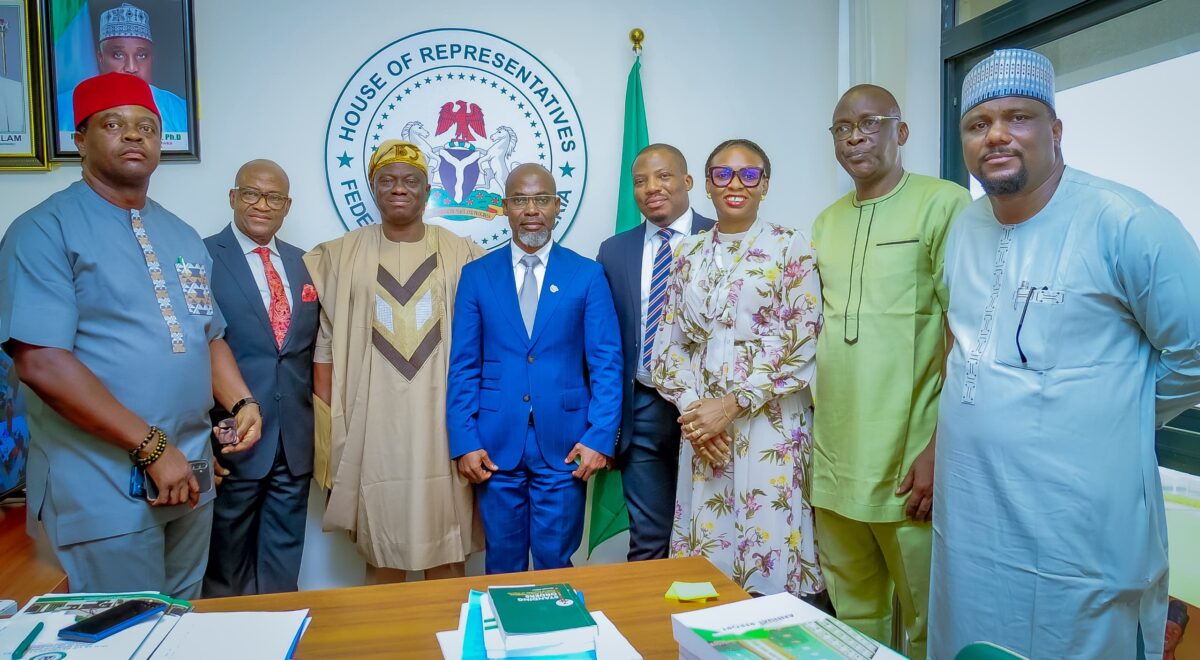
The Institute of Internal Auditors Nigeria has called for stronger legislative backing for internal audit systems across government institutions to improve financial accountability and transparency in the management of public funds.
The call was made during separate engagements with the Public Accounts Committees of the House of Representatives and the Senate at the National Assembly Complex in Abuja.
The meetings formed part of efforts by the institute to strengthen internal control mechanisms within Ministries, Departments and Agencies as lawmakers deliberate on the proposed Federal Audit Service Bill.
Leading the delegation, the Board Chairman of the Institute of Internal Auditors Nigeria, Simon-Jude Mmayie, and the Chief Executive Officer, Don Umeha, stressed the need to institutionalise internal audit structures across government agencies, noting that weak internal oversight often exposes public finances to avoidable risks.
Umeha said a strong internal audit system would help identify financial irregularities before they develop into larger governance challenges.
“A robust internal audit system can identify financial irregularities before they escalate into systemic failures, safeguarding public funds and boosting investor confidence. It’s like having a financial watchdog that barks before the house burns down,” he said.
At the meeting with the House of Representatives Public Accounts Committee, the delegation met with the committee chairman, Hon. Bamidele Salam, and other lawmakers, including Hon. Obetta Mark Chidi.
Discussions focused on strengthening legislative support for internal audit functions as a complementary mechanism to the external audits conducted by the Office of the Auditor-General for the Federation.
The institute noted that the effectiveness of external oversight often depends on the strength of internal control systems within government institutions, adding that poorly structured internal audit units allow financial irregularities to go undetected until after public funds have already been mismanaged.
Mmayie described the engagement as part of efforts by professional auditors and lawmakers to promote stronger fiscal discipline in public institutions.
“The goal is not merely compliance but building a governance system that prevents financial mismanagement before it happens,” he said.
In a similar engagement with the Senate Public Accounts Committee, the institute reiterated the need for closer collaboration between internal auditors and the Office of the Auditor-General for the Federation to strengthen public financial management.
Participants at the Senate meeting included Mmayie; the institute’s Chief Executive Officer, Don Umeha; directors Irene Nwankwo and Ibrahim Alkali; as well as members Moses O. Shodipe and Patrick Okoro.
The institute also presented a position paper outlining reforms it said should be incorporated into the Federal Audit Service Bill to strengthen accountability in government institutions.
Among the proposals were formal recognition of internal audit within Nigeria’s national accountability framework and the establishment of properly staffed audit units in all Ministries, Departments and Agencies.
The institute also called for greater operational independence for internal auditors, including unrestricted access to financial records and operational information, as well as the creation of independent audit committees within government agencies to strengthen oversight.
It further recommended that heads of internal audit units in government institutions should possess recognised professional qualifications and undergo continuous professional development.
According to the institute, strengthening internal audit structures would help reduce corruption risks, improve financial management and enhance public confidence in governance.
We’ve got the edge. Get real-time reports, breaking scoops, and exclusive angles delivered straight to your phone. Don’t settle for stale news. Join LEADERSHIP NEWS on WhatsApp for 24/7 updates →
Join Our WhatsApp Channel