By Kins Ekebuike (Esq); Ph.D
A Strategic reflection on the truth behind the recent FCT Local Government Election.
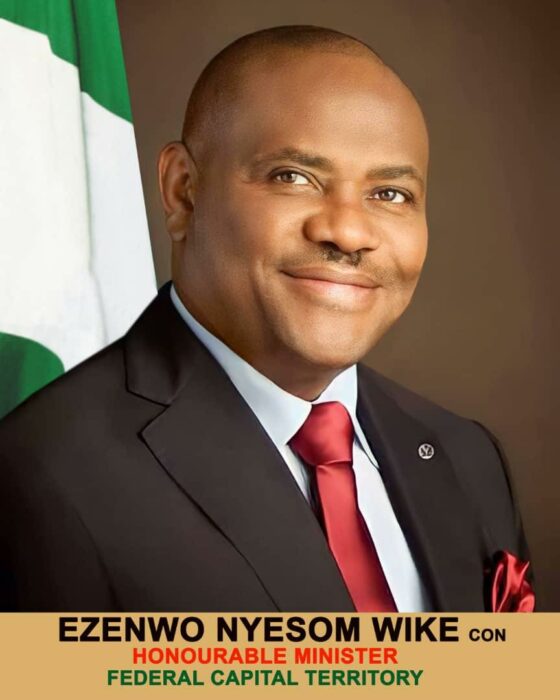
The outcome of the recent Federal Capital Territory Local Government Elections has generated intense political commentary across Nigeria and abroad. For some observers, the results came as a surprise; for others, they simply confirmed what careful students of Nigerian political strategy already understand. At the centre of this development stands Nyesom Wike—a political figure whose methods continue to provoke debate, admiration, and criticism in equal measure. Yet beyond the noise of partisan interpretations lies a deeper question: how did a territory that recently voted differently in national elections produce such decisive and transparent outcomes at the local level? Understanding this question requires examining what many now describe as the enduring phenomenon of “Wike, the Enigma.”
WIKE, THE ENIGMA: WHEN AN EFFICIENT CAPTAIN LEADS A COMPETENT TEAM, OPPONENTS YIELD
In politics, few figures evoke as much admiration and criticism in equal measure as Nyesom Wike. Yet beyond the emotions he provokes lies a reality that is increasingly difficult to ignore: Wike has, over the years, demonstrated a remarkable capacity for political strategy and electoral engineering that continues to shape Nigeria’s contemporary political landscape.
Whether one admires him or not, Wike stands today as one of Nigeria’s most formidable political tacticians. His political career has repeatedly illustrated an ability to mobilize structures, align political actors, and deliver electoral victories in situations many observers initially considered improbable.
This reputation did not emerge overnight. During the governorship contest in Edo State, Wike was widely acknowledged as one of the key political figures who helped secure victory for Godwin Obaseki, despite intense opposition and political turbulence at the time.
Similarly, in Rivers State, during the 2015 presidential election, the political dynamics surrounding the contest involving Muhammadu Buhari reflected the complex strategic environment in which Wike operated and demonstrated his capacity to influence outcomes within highly competitive electoral terrains.
Beyond Edo and Rivers, Wike has also been central to several political realignments and transparent electoral successes across Nigeria’s political landscape. His influence during the 2023 general elections further underscored his reputation as a political operator capable of redefining conventional expectations. In many of these contests, victories associated with his political structures have been massive, decisive and transparently recorded, reinforcing the perception that his strength lies in preparation, organization and disciplined mobilization.
STRATEGIC INFLUENCE WITHIN PARTY POLITICS
Another significant demonstration of Wike’s political reach occurred within the internal leadership dynamics of the Peoples Democratic Party.
At a critical period in the party’s history, Wike played a prominent role in mobilizing support that eventually produced Uche Secondus as the National Chairman of the PDP. His influence in the build-up to the party’s national convention and the coalition of political blocs that emerged around Secondus reflected Wike’s capacity not only to win elections but also to shape leadership outcomes within party structures.
For many political observers, that episode reinforced the perception of Wike as a powerful internal organizer capable of coordinating alliances across different political tendencies within the party. It also illustrated his ability to convert political relationships into decisive institutional outcomes.
Beyond the emergence of Secondus, the party has in recent times witnessed renewed internal tensions involving different blocs struggling over the direction and control of the party’s structures. These disagreements—manifesting in leadership disputes, suspensions, counter-suspensions and competing alignments among influential party leaders—have created a situation many analysts now describe as an ongoing internal battle within the PDP.
Yet those who closely study Nigeria’s political terrain often approach such contests with a certain level of predictability. Many seasoned observers maintain that one consistent feature of Nyesom Wike’s political career is that he rarely enters a political confrontation without carefully preparing the ground for victory. For this reason, those of us who understand his political style can conclude that when Wike becomes deeply invested in a political struggle, the eventual outcome is predictable, Victory.
From this perspective, the current contest within the party is viewed by people like us as a battle whose eventual outcome may already be taking shape. For us, the possibility of the Wike-aligned faction emerging dominant is seen not merely as speculation but a fait accompli.
The broader lesson often drawn is simple: in Nigerian politics, ignoring or sidelining Wike has repeatedly proven to be a risky calculation and fatal to those who did. One only needs to ask Atiku Abubakar and the leadership of the Peoples Democratic Party about the experience of the 2023 presidential election, when Wike rallied several PDP governors to his side in what became widely known as the G-5 movement, dramatically reshaping the party’s internal political balance.
One may also ask Siminalayi Fubara, whose political trajectory in recent times has become another illustration of the consequences of underestimating Wike’s political depth. No doubt, through political miscalculation and sheer thoughtlessness, Fubara turned against the very political structure that brought him to office—figuratively biting the finger that fed him.
The consequences have been politically bruising. At different stages of the Rivers political crisis, he faced serious pressure within the State House of Assembly, including looming threats of impeachment. It was only the intervention of the President, His Excellency, Bola Ahmed Tinubu, whose actions through Emergency Rule and brokering meetings that helped to stabilize the political situation and prevent an institutional breakdown, that provided temporary relief to Fubara.
Beyond this episode, the crisis has produced moments many analysts describe as politically humiliating: prolonged confrontation with the legislature, erosion of political alliances, weakening control of party structures and a visible loss of authority within segments of the political establishment that once stood behind him, with Wike always in control and ahead of any step Fubara took.
Today, the situation has reached a point where people no longer treat his (Fubara’s) pronouncements with the seriousness they once commanded just because he was not wise enough to recognise the structure that delivered him as a governor, claiming service to Rivers people, but forgetting that a political structure and leaderships delivered you first as governor before people saw you as governor. Betraying such a Structure and leadership amounts to betrayal of trust.
Fubara’s travails stem not only from biting the finger that fed him—Nyesom Wike—but also from ingratitude and the mistaken belief that he could match the wit, experience and swiftness with which Wike executes political maneuvers.
WHY WIKE REMAINS AN ENIGMA
Part of what makes Wike such a compelling figure in Nigerian politics is precisely his unpredictability. He is widely regarded as an enigma—a political actor whose strategies are difficult for both allies and opponents to anticipate.
Unlike many politicians who rely on predictable formulae, Wike does not operate within a “one-size-fits-all” framework. Each political contest appears to be approached with a unique strategic design tailored to the specific terrain, personalities and dynamics involved.
Opponents often discover that by the time they believe they understand his approach, the political chessboard has already shifted. In this sense, Wike embodies the old paradox often used to describe complex phenomena: “the more you look, the less you see.”
He is known not only as a general mobilizer but also as a political tactician who is frequently several steps ahead of his opponents. His moves often carry multiple layers—what appears obvious on the surface sometimes conceals deeper strategic calculations.
Indeed, many observers of Nigerian politics describe his style with another familiar expression: “If you know this, do you know the other?”
Several qualities contribute to this aura of political mystery: Strategic adaptability, Control of political structures, Psychological advantage over opponents, Coalition management across diverse political interests, Political timing that maximizes impact, Operational secrecy in the execution of political strategy.
REPLICATING THE MODEL IN THE FEDERAL CAPITAL TERRITORY
Today, as Minister of the Federal Capital Territory under the administration of His Excellency Bola Ahmed Tinubu, Wike has replicated elements of his political model within the FCT.
The Federal Capital Territory presents a unique political environment. Unlike most states in Nigeria, it does not have a governor and historically exhibits a highly competitive political structure. Notably, during the 2023 presidential election, the Labour Party secured victory in the FCT.
Yet recent electoral outcomes in the territory produced massive and transparent victories for candidates aligned with Wike’s political structure despite the presence of a serving senator, Ireti Kingibe. Congratulations to Wike.
This shift reflects the impact of governance delivery combined with political organization.
THE WIKE FORMULA: CHARACTER, WORK ETHIC AND DELIVERY
Three defining attributes appear to distinguish Wike’s political approach.
- Strength of Character
Wike is widely regarded as a relentless political actor. A defining feature of this strength of character is his personal supervision of projects.
In the FCT he has been repeatedly seen conducting early morning inspections, late-night project tours and unscheduled visits to construction sites across Abuja and the satellite towns.
This hands-on governance style has included regular inspections and commissioning of projects such as: The Arterial Road N5 linking Lifecamp to Ring Road, Reconstruction of Abuja Metro Station access roads, The Gishiri–Katampe road corridor, The Wuye district road networks, Rehabilitation of major roads across Kubwa, Gwagwalada and Bwari, Upgrading of several satellite town roads.
- Emphasis on Tangible Development
Infrastructure delivery has been central to his governance philosophy.
Projects widely associated with his administration in the FCT include: Completion of long-abandoned road projects in satellite towns, Reconstruction of Kubwa township roads, Rehabilitation of Gwagwalada township infrastructure, Major road expansion projects in Maitama, Katampe and Jahi districts, Development of drainage infrastructure and urban renewal projects, Revitalization of previously stalled district access roads.
- Strategic Political Organization
Elections in Nigeria are won through hard work, structure, planning and grassroots mobilization.
Wike’s victories—and those of candidates aligned with him—have consistently been transparent, massive and decisive, reflecting the strength of the political structures he builds.
THE WIKE FORMULA OF HUMILITY AND APPRECIATION
Another element of what we describe as the Wike Formula is humility in victory and appreciation of the electorate.
Less than one month after the FCT local government elections, Nyesom Wike has already begun visiting communities across the area councils.
A recent example occurred in Abaji, where he met residents and stakeholders as part of a thank-you tour to appreciate voters who participated in the elections. There, among other things, he promised them the completion of the University in Abaji. We have no doubt he will deliver. This will secure more votes for his structure in 2027. After that the opposition that has done nothing will be crying wolf.
Such engagements demonstrate a political culture that recognizes voters not only during campaigns but even after victory.
It also raises a question: can the opposition replicate such engagement with the electorate?
THE WEAKNESS OF OPPOSITION POLITICS IN FCT LGA ELECTION
Equally important is the contrast with the opposition.
It is a truism that while Wike’s political machinery was working tirelessly, some opposition figures appeared more interested in symbolic gestures than strategic organization.
There were widely circulated images showing that Rotimi Amaechi spent part of the campaign period casually eating roasted corn while interacting with individuals whose electoral value was uncertain.
Winning elections, however, is far more serious than sharing roasted corn with people whose voter registration status may not even be known.
Beyond such optics, other weaknesses attributed to the opposition include: Poor grassroots organization, Late mobilization, Internal divisions, Absence of coordinated ward-level structures, Overreliance on social media narratives rather than field mobilization.
While the opposition struggled with these challenges, Wike’s political structure focused on organization, strategy, and relentless mobilization.
THE FCT PARADOX
A territory that voted differently in national elections suddenly produced overwhelming victories in local elections.
For analysts, the explanation lies in preparation, organization and execution.
Arising from this, we already know what the 2027 Election result will be.
THE FINAL LESSON ON WIKE
Ultimately, the story of Wike’s political influence reinforces a fundamental principle of democratic politics: organization defeats disarray.
Elections are not won by noise, slogans or social media excitement. They are won through hard work, preparation, strategic planning, disciplined structures and relentless mobilization.
When one political camp invests heavily in these elements while the opposition neglects them, the outcome becomes predictable.
The inevitable question therefore remains: how does an opposition that has done none of these expect to defeat candidates backed by such organization and preparation?
In politics, when an efficient captain leads a competent and disciplined team, the opponents find themselves yielding to the force of strategy, structure and execution.
That is the enduring lesson of the phenomenon many now call “Wike, the Enigma”: In the hard mathematics of political power, preparation always defeats improvisation.
KINS EKEBUIKE (Esq); Ph.D
Dr Kins Ekebuike is an Abuja based Political Scientist, Lawyer and Public Affairs Analyst and Founder, Veraamoris Foundation (a foundation committed to promoting/extolling good governance, leadership, accountability, outstanding performance and justice.
We’ve got the edge. Get real-time reports, breaking scoops, and exclusive angles delivered straight to your phone. Don’t settle for stale news. Join LEADERSHIP NEWS on WhatsApp for 24/7 updates →
Join Our WhatsApp Channel