A maritime analyst, Ibrahim Nasiru, has described Nigeria’s port modernisation project as a strategic move aimed at positioning the country to dominate maritime trade in West Africa.
Nasiru stated this in a commentary titled “Port Modernisation: Repairing the Leaking Bucket of Nigeria’s Trade,” following the Federal Government’s recently signed £746 million ($997 million) port modernisation agreement with the United Kingdom government.
According to him, Nigeria had for years watched shipping traffic divert to regional rivals such as Cotonou Port in the Benin Republic and Lomé Port in Togo, largely due to persistent delays and congestion at Lagos ports.
He, however, noted that the modernisation initiative is expected to reverse the trend by reclaiming lost cargo traffic from neighbouring countries and boosting non-oil revenue through increased Customs duties.
Nasiru explained that the integration of a National Single Window (NSW) platform and the digitalisation of cargo tracking would help eliminate what he described as “invisible taxes,” including excessive demurrage and corrupt practices that increase the cost of goods and services in Nigeria.
“The impact of this deal will ripple through every layer of the Nigerian economy, beginning with a drastic reduction in logistics costs.
“Currently, the Lagos bottleneck adds a significant premium to everything from imported medicines to locally manufactured textiles. As automation reduces vessel turnaround time from weeks to mere days, the cost of doing business in Nigeria will begin to align with global standards,” he said.
Beyond improving port efficiency, Nasiru said the project would also stimulate human capital development by creating thousands of skilled jobs in engineering, data management and port operations.
He added that local firms, including Hitech Construction and ITB Nigeria, are expected to play major roles in the project, ensuring that while financing may be international, technical expertise and economic benefits remain largely domestic.
Nasiru, a former General Manager of Public Affairs at the Nigerian Ports Authority (NPA), stressed that if Nigeria hopes to achieve its $1 trillion economy target, the maritime sector must evolve from being a passive gateway for imports into a major engine of wealth creation.
According to him, Nigeria’s maritime potential is enormous and, with the right infrastructure and reforms, the sector could rival the oil industry in its contribution to the country’s Gross Domestic Product (GDP).
To maximise the benefits of the project, he urged the government to align port modernisation with improved transport connectivity.
“A modern port is only as efficient as the roads and rail networks that link it to the hinterland. You cannot mount a jet engine on a wooden cart. Government must synchronise this infrastructure upgrade with improved intermodal connectivity,” he said.
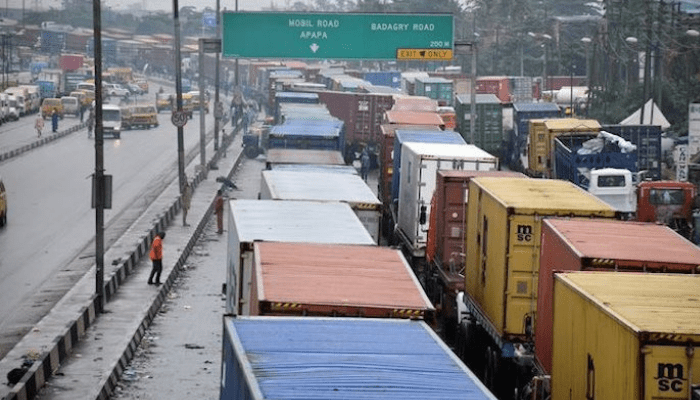
Nasiru therefore called on the Nigerian Railway Corporation (NRC) and the Federal Ministry of Works to ensure seamless movement of cargo from ports to inland destinations, warning that road congestion could undermine the gains of the modernisation programme.
He also stressed that the initiative should not be limited to the Lagos port corridor alone but extended to eastern ports such as Port Harcourt, Warri, and Calabar, noting that decongesting Lagos requires a nationwide strategy.
Furthermore, he emphasised the importance of faithfully implementing the National Policy on Marine and Blue Economy, describing it as the policy “software” required to drive the new infrastructure “hardware” being installed at the ports.
According to him, true success will be achieved when digital systems enable seamless tracking of cargo from overseas ports to inland destinations in Nigeria, free of bureaucratic bottlenecks or corruption.
“If government successfully aligns this financial investment with institutional reforms and policy consistency, Nigeria will not just be clearing containers; it will be clearing the path to a new era of economic prosperity,” he said.
Nasiru added that after decades of slow progress in port development, the modernisation project represents a critical step toward integrating Nigeria more effectively into global trade networks.
We’ve got the edge. Get real-time reports, breaking scoops, and exclusive angles delivered straight to your phone. Don’t settle for stale news. Join LEADERSHIP NEWS on WhatsApp for 24/7 updates →
Join Our WhatsApp Channel