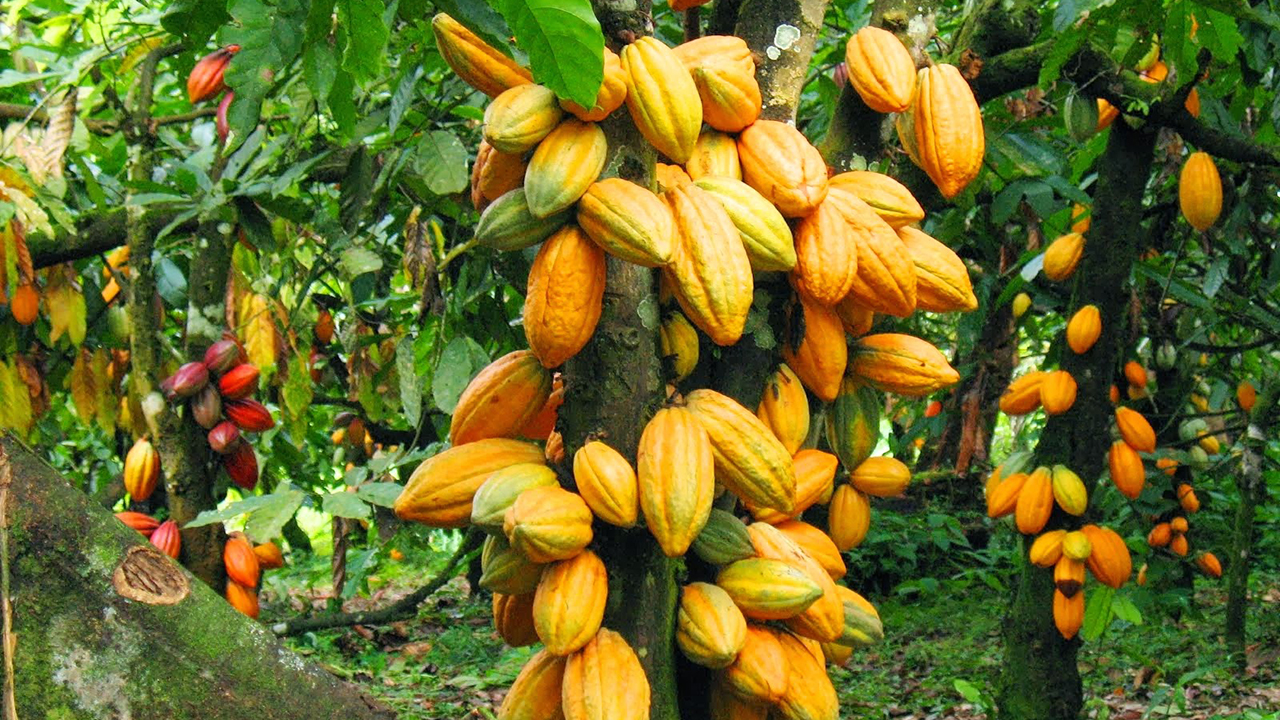
As part of efforts to revive cocoa production and reclaim its rightful position in Nigeria’s cocoa value chain, the Ekiti State government has set the target of raising 10 million cocoa seedlings over the next 10 years.
The state commissioner for Agriculture and Food Security, Mr Ebenezer Boluwade, who made the disclosure in Ado-Ekiti, said the government plans to produce one million cocoa seedlings annually within the period.
He explained that the initiative is aimed at reversing the long decline in cocoa output, which he attributed to ageing plantations that have exceeded their productive lifespan.
Boluwade stressed that the government is collaborating with the TRACE Project, the Cocoa Research Institute of Nigeria (CRIN), and the International Institute of Tropical Agriculture (IITA) to implement the programme.
The partnership with the TRACE programme, according to him, is designed to train and support private cocoa farmers with modern techniques and inputs required to meet production targets.
The Commissioner noted that the TRACE programme focuses on sustainable cocoa sourcing and improving cocoa quality through expert fermentation processes.
He further said the programme promotes traceability, environmental protection and ethical production, stressing that cocoa produced under it must not come from deforested areas or involve child labour.
Boluwade noted that as part of the pilot phase of the cocoa rejuvenation scheme, 28 farmers developing cocoa nurseries have received irrigation pumps worth millions of naira to support year-round production of Cocoa seedlings.
The improved, high-yield seedlings, the Agric commissioner said, are being supplied by the Cocoa Research Institute of Nigeria and other institutions to boost productivity and sustainability.
He added that the state government would provide cocoa seedlings and agrochemicals at a 50 per cent subsidy to reduce production costs and encourage farmers’ participation.
Boluwade said the government is also prioritising quality and global competitiveness, with farmers receiving training in cocoa traceability to meet international export standards.
He disclosed that the state is working on plans to leverage the Special Agro-Industrial Processing Zones (SAPZ) Programme, supported by the African Development Bank, to enhance value addition and create jobs in cocoa processing.
While speaking on weather support, Boluwade said the Nigerian Meteorological Agency would provide timely forecasts to guide planting, adding that full rainfall is expected by mid-April.
He explained that the distribution of subsidised seedlings would be decentralised to ensure access across the state, with farmers to be informed on how to obtain them.
The improved cocoa varieties, he said, are climate-resilient and can mature within three years, offering quicker returns on investment.
Boluwade expressed optimism that the initiative would boost cocoa production, create jobs and strengthen the state’s economy.
We’ve got the edge. Get real-time reports, breaking scoops, and exclusive angles delivered straight to your phone. Don’t settle for stale news. Join LEADERSHIP NEWS on WhatsApp for 24/7 updates →
Join Our WhatsApp Channel