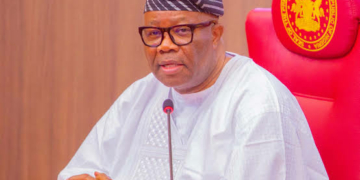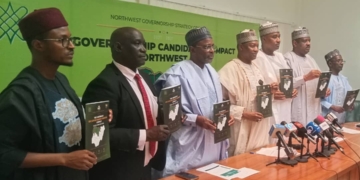
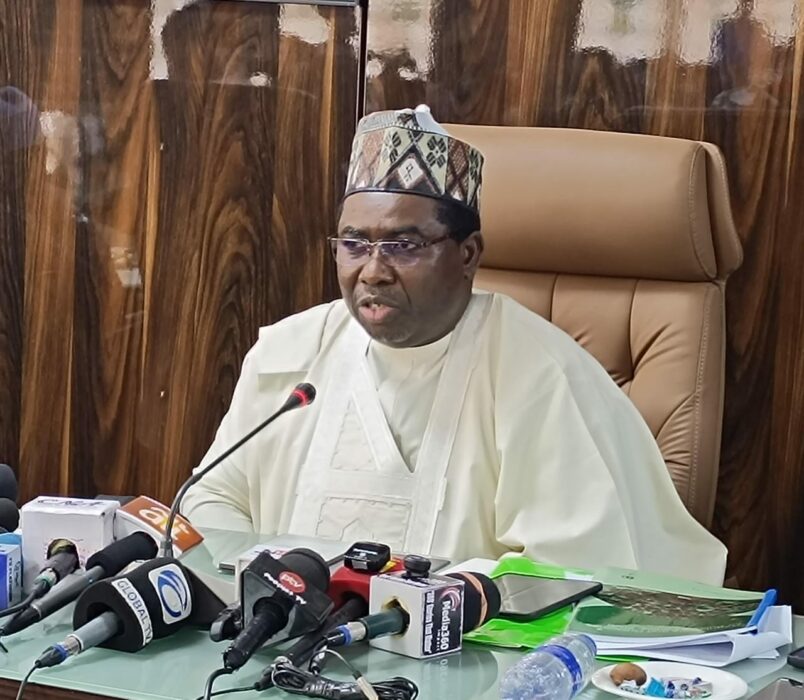
The Chairman of the Independent National Electoral Commission (INEC), Prof. Joash Amupitan, has expressed concern over the growing pressure on the Commission following recent electoral reforms, warning that preparations for the 2027 general elections will require faster and more efficient operations.
Amupitan said amendments to the Electoral Act have significantly compressed key timelines, compelling the Commission to operate with what he described as “unprecedented speed and precision” to meet its constitutional responsibilities.
He explained that the new provisions have shortened critical electoral processes, increasing the urgency for INEC to adapt swiftly in order to avoid lapses that could undermine the credibility of elections.
The INEC chairman spoke on Monday during his welcome address at a three-day capacity-building workshop for National Electoral Commissioners and senior management staff held in Lagos.
The workshop, organised in collaboration with the Konrad-Adenauer-Stiftung, is designed to strengthen the institutional capacity of INEC’s leadership and equip them with the tools needed to address emerging electoral challenges.
Describing the timing of the training as significant, Amupitan noted that it comes 159 days after he assumed office on October 23, 2025, at a critical phase in Nigeria’s democratic development.
“We meet at a watershed moment in our democratic journey. Our primary mandate is to ensure that the electoral architecture of Nigeria is not just robust in theory, but strong in practice,” he said.
He stressed that INEC’s role extends beyond conducting elections, noting that maintaining the integrity, transparency, and credibility of the electoral process remains central to its mandate.
Amupitan highlighted the implications of the Electoral Act 2026, signed into law in February, which introduced major adjustments to the country’s election timetable.
According to him, the reduction of the mandatory election notice period from 360 days to 300 days has created a tighter and more demanding operational environment for the Commission.
He added that the amendment to Clause 28 has narrowed INEC’s planning window, requiring quicker decision-making, stronger coordination, and more efficient deployment of resources.
In response to the new timeline, INEC has released a revised schedule for the 2027 general elections, with Presidential and National Assembly elections slated for January 16, 2027, while governorship and state assembly elections will hold on February 6, 2027.
The INEC boss said the compressed schedule places greater emphasis on efficiency, particularly in key areas such as procurement and logistics, which are central to the workshop discussions.
Participants at the three-day programme are expected to engage experts, share experiences, and explore innovative strategies aimed at strengthening the Commission’s operational readiness and improving coordination in election management.
Amupitan urged participants to maximise the opportunity provided by the training, stressing that adaptability and continuous learning are critical to the Commission’s success.
“The strength of our Commission lies in our willingness to learn and adapt. Together, we can ensure that our elections truly reflect the will of the people,” he stated.
He also commended the Konrad-Adenauer-Stiftung for its sustained technical support, describing the partnership as crucial to INEC’s ongoing reform efforts.
The workshop is expected to produce actionable outcomes that will boost the Commission’s preparedness for the 2027 general elections and strengthen public confidence in Nigeria’s democratic process.
We’ve got the edge. Get real-time reports, breaking scoops, and exclusive angles delivered straight to your phone. Don’t settle for stale news. Join LEADERSHIP NEWS on WhatsApp for 24/7 updates →
Join Our WhatsApp Channel