Prominent Christian leaders in the country have converged on Lagos on the state of the nation and called on the federal government to declare a state of emergency on Nigeria’s deepening security and economic crises.
They also called for the immediate overhaul of the country’s policing structures and for credible elections, warning that the country is “bleeding” and drifting towards instability.
The clerics, including former President of the Pentecostal Fellowship of Nigeria (PFN), Dr. Felix Omobude; founder of The Redeemed Evangelical Mission (TREM), Bishop Mike Okonkwo; former President of the Christian Association of Nigeria (CAN), Pastor Ayo Oritsejafor; and Prophet Isa El-Buba, among others spoke at a news conference on the state of the nation organised by Cross Campaign in Ikeja, Lagos.
They painted a grim picture of a country battling worsening insecurity, rising poverty, electoral malpractice and weak governance, urging urgent, decisive intervention.
Omobude, who spoke on governance and rule of law, called for the independence of the judiciary, warning that democratic institutions must not be undermined.
“We are calling on the judiciary to be allowed to perform its duties without interference. Nobody should be above the law,” he said.
He stressed that the electorate must be enlightened, cautioning Nigerians against vote-buying despite economic hardship.
“We understand that times are hard and that there is hunger, but people must recognise that their vote represents their conscience,” he added.
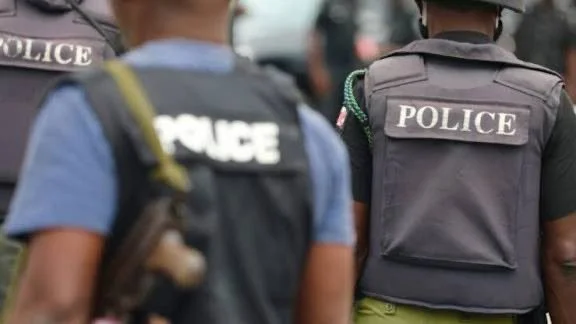
On security, Omobude renewed calls for decentralised policing, arguing that the current structure had failed.
“The need for state policing is long overdue; the centralisation of policing in this country has not helped the nation’s security system,” he said.
He also urged communities, including religious institutions, to take proactive steps to protect themselves within the ambit of the law, noting that “there is no law that prohibits self-defence.”
Okonkwo, in his intervention, described Nigeria’s economic situation as dire, saying hardship had reached alarming levels across the country.
“It is no longer hidden that the economy has worsened significantly, people are struggling, and, painfully, some are resorting to scavenging for food in a country so richly endowed,” he said.
He questioned whether those in authority were truly in touch with grassroots realities, warning that the situation had become an emergency.
“The state of the economy has become an emergency that deserves urgent national attention,” he stated.
Citing the N70,000 minimum wage and fuel prices above ₦1,000 per litre, Okonkwo said many Nigerians could no longer afford basic necessities, including housing, healthcare and transportation.
“With a minimum wage of N70,000, many Nigerians are unable to meet basic needs,” he said, adding that electricity supply remained unreliable while diesel costs had compounded hardship.
On the political process, Oritsejafor criticised what he described as the monetisation of democracy, arguing that elections in Nigeria had been reduced to financial contests rather than leadership based on competence and vision.
“Today, elections seem to be less about competence or vision, and more about how much money one has,” he said.
He warned that candidates who depend on borrowed funds or political sponsorship often prioritise repayment over governance.
“When individuals rely on borrowed funds, they enter office already indebted. The consequence is clear: governance becomes compromised,” he added.
Oritsejafor urged politicians to shun violence and desperation in their quest for power.
“Do not harm lives or destroy the nation in pursuit of power; leadership is a call to serve, not an opportunity for personal gain,” he said.
He also called on the Independent National Electoral Commission to guarantee transparent and credible elections.
Dwelling on the security situation, El-Buba said Nigeria was facing coordinated and escalating violence across multiple regions, insisting the crisis should no longer be downplayed.
“Nigeria today stands at a dangerous crossroads. Our nation is bleeding,” he said.
He cited recent killings in Plateau and mass casualty incidents in other communities, describing them as acts of terrorism rather than communal clashes.
“These are not isolated incidents; these are deliberate acts of terrorism,” he said.
El-Buba disclosed that millions of Nigerians had been displaced, with over 12 million people now living in internally displaced persons camps, while many communities had been overrun by attackers.
He accused authorities of failing to act decisively despite intelligence on the activities and locations of armed groups.
“The government knows where they are, yet what we see is a troubling pattern of inaction,” he said.
Calling for urgent intervention, he said: “The Federal Government must take decisive action, declare a comprehensive state of emergency on security and establish state policing structures.”
We’ve got the edge. Get real-time reports, breaking scoops, and exclusive angles delivered straight to your phone. Don’t settle for stale news. Join LEADERSHIP NEWS on WhatsApp for 24/7 updates →
Join Our WhatsApp Channel