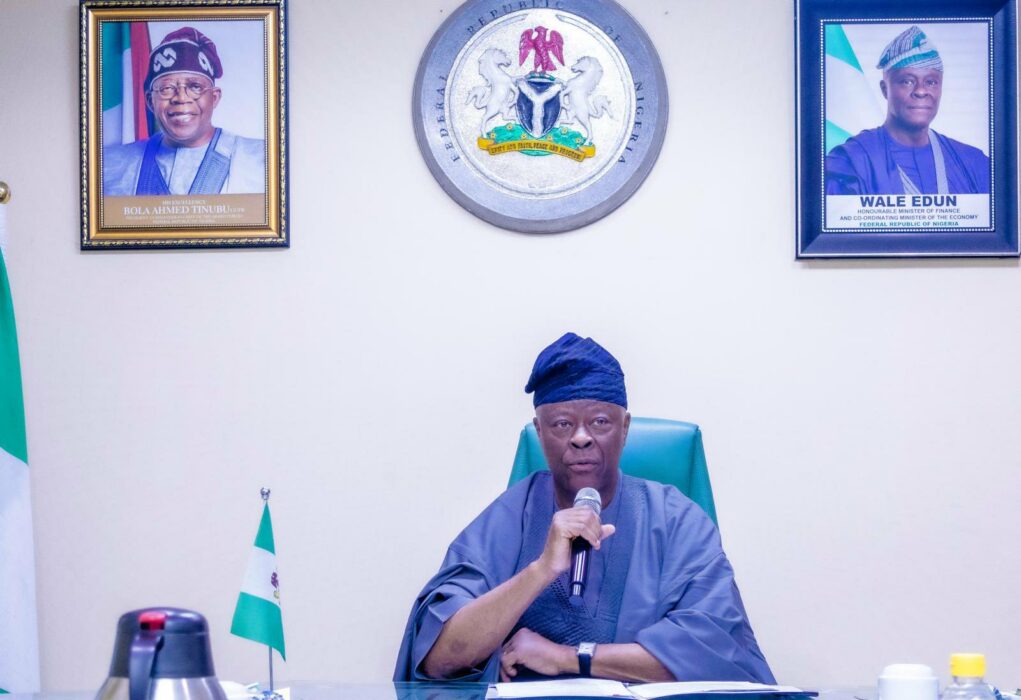
Nigeria’s minister of Finance and coordinating minister of the Economy, Wale Edun, alongside the executive chairman of the Nigeria Revenue Service, Zacch Adedeji, and other African stakeholders, have called for sweeping tax and fiscal reforms to tackle illicit financial flows and strengthen domestic resource mobilisation across the continent.
They made the call in Abuja at the opening of the 5th Session of the African Union Sub-Committee on Tax and Illicit Financial Flows, held under the Specialised Technical Committee on Finance, Monetary Affairs, Economic Planning and Integration.
Speaking at the event, Edun described the current moment as decisive for Africa’s economic future, stressing that the continent must urgently adopt bold and coordinated fiscal reforms to unlock sustainable growth.
Adding to the discussions, the executive director of Tax Justice Network Africa, Chenai Mukumba, stressed the urgency of moving beyond dialogue to concrete implementation in Africa’s fiscal reform agenda.
She noted that while conversations around domestic resource mobilisation and tax reforms have intensified, the real challenge lies in execution, calling for clear timelines, accountability frameworks, and country-specific implementation strategies aligned with continental priorities.
Mukumba emphasised the importance of collaboration among African countries and institutions, noting that no nation can effectively tackle illicit financial flows in isolation. She urged stronger cross-border cooperation, policy harmonisation, and information sharing as critical tools for protecting Africa’s tax base.
Edun stated that while Africa is rich in human and natural resources, its ability to translate this potential into prosperity depends largely on how effectively it mobilises and manages its domestic revenues.
According to him, reliance on external financing such as debt, aid, and foreign investments is no longer sufficient or predictable, urging African countries to prioritise domestic resource mobilisation as the foundation for long-term development.
Edun highlighted that illicit financial flows continue to pose a major threat, draining an estimated $88 billion annually from the continent’s resources that could otherwise be invested in infrastructure, education, healthcare, and productive sectors.
He identified key challenges, including tax evasion, weak institutional capacity, limited economic diversification, and overdependence on external funding, noting that addressing them is critical to Africa’s economic resilience.
The minister outlined priority areas for reform, including broadening the tax base, strengthening public financial management, enhancing transparency and accountability, promoting financial inclusion, and deepening capital markets.
He also emphasised the importance of digital infrastructure, strong institutions, and regional cooperation as enablers of sustainable reform.
Highlighting Nigeria’s experience, Edun said the country has undertaken major fiscal reforms under President Bola Tinubu, including restructuring the tax system, removing fuel subsidies, and unifying the exchange rate to improve transparency and investor confidence.
He added that initiatives such as the National Single Window system are helping to reduce trade-related leakages and enhance revenue generation.
In his welcome address, Adedeji underscored the urgency of confronting illicit financial flows, describing them as a significant drain on Africa’s development.
He noted that billions of dollars are lost annually through illegal transfers, trade mispricing, tax evasion, and aggressive tax avoidance, depriving countries of critical resources needed for development. “These outflows represent lost opportunities—lost investments in infrastructure, healthcare, education, and the future of our people,” he said.
Adedeji stressed that strengthening tax administration systems is central to addressing these challenges, noting that effective and transparent revenue systems not only generate income but also build trust between governments and citizens.
He said revenue authorities across Africa are increasingly adopting digital solutions, expanding tax bases, and improving compliance frameworks to enhance efficiency and accountability.
According to him, Nigeria is pursuing comprehensive reforms to modernise its tax administration and align it with national development objectives, with a focus on building a more responsive and technology-driven system.
Adedeji also emphasised the need for stronger continental collaboration, noting that illicit financial flows are transnational in nature and exploit regulatory gaps between jurisdictions.
He said platforms such as the African Union sub-committee provide critical opportunities for countries to share experiences, coordinate policies, and develop joint strategies to curb financial leakages.
Mukumba said the rise of the digital economy presents both risks and opportunities for African tax systems. She called for stronger frameworks to tax digital activities, while also leveraging technology and data to improve compliance, enforcement, and revenue collection.
She urged African countries to take a coordinated and active role in ongoing global tax negotiations, particularly under the United Nations Framework Convention on International Tax Cooperation, stressing that Africa’s interests must be fully reflected in emerging international tax rules.
We’ve got the edge. Get real-time reports, breaking scoops, and exclusive angles delivered straight to your phone. Don’t settle for stale news. Join LEADERSHIP NEWS on WhatsApp for 24/7 updates →
Join Our WhatsApp Channel