
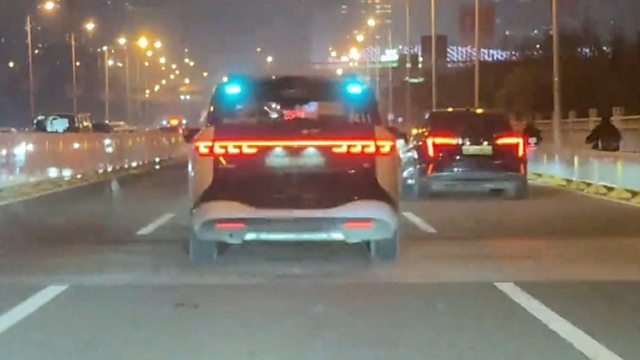
A large-scale outage involving self-driving taxis in the Chinese city of Wuhan has reignited global concerns over the reliability and safety of autonomous vehicle technology.
At least 100 driverless cars reportedly broke down mid-traffic on Tuesday, bringing sections of the city to a standstill and triggering widespread debate about the risks associated with robotaxi systems.
Local authorities confirmed that a preliminary investigation pointed to a “system malfunction” as the cause of the disruption, which left multiple vehicles immobilised in the middle of busy roads. Despite initial fears, police said no injuries were recorded, and passengers were able to exit the affected vehicles safely.
Videos circulating on social media captured the chaotic aftermath of the outage, including one clip that appeared to show a collision on a highway. However, officials were yet to confirm any crash-related casualties.
The robotaxis are operated by Chinese tech giant Baidu under its Apollo Go autonomous ride-hailing service, which runs in several cities across China and beyond. The company has yet to issue an official statement on the incident, as investigations continued.
The disruption added to a growing list of high-profile technical setbacks involving self-driving vehicles. In December 2025, a power outage in San Francisco forced driverless taxis operated by Waymo to shut down, resulting in major traffic congestion. Earlier, in August 2025, an Apollo Go robotaxi in Chongqing reportedly fell into a construction pit while carrying a passenger.
Despite these incidents, interest in autonomous mobility continued to grow globally. In late 2025, ride-hailing platforms Uber and Lyft announced partnerships with Baidu to test Apollo Go vehicles on roads in the United Kingdom, with pilot programmes expected to begin in 2026 pending regulatory approval.
Commenting on the Wuhan incident, Jack Stilgoe of University College London noted that while autonomous vehicles may ultimately prove safer than human-driven cars, they introduce unfamiliar risks.
“Driverless tech may be safer on average,” he said, “but this incident shows it can still go wrong in completely new ways. If we’re going to make good choices about this technology, we need to understand entirely new types of risk.”
We’ve got the edge. Get real-time reports, breaking scoops, and exclusive angles delivered straight to your phone. Don’t settle for stale news. Join LEADERSHIP NEWS on WhatsApp for 24/7 updates →
Join Our WhatsApp Channel