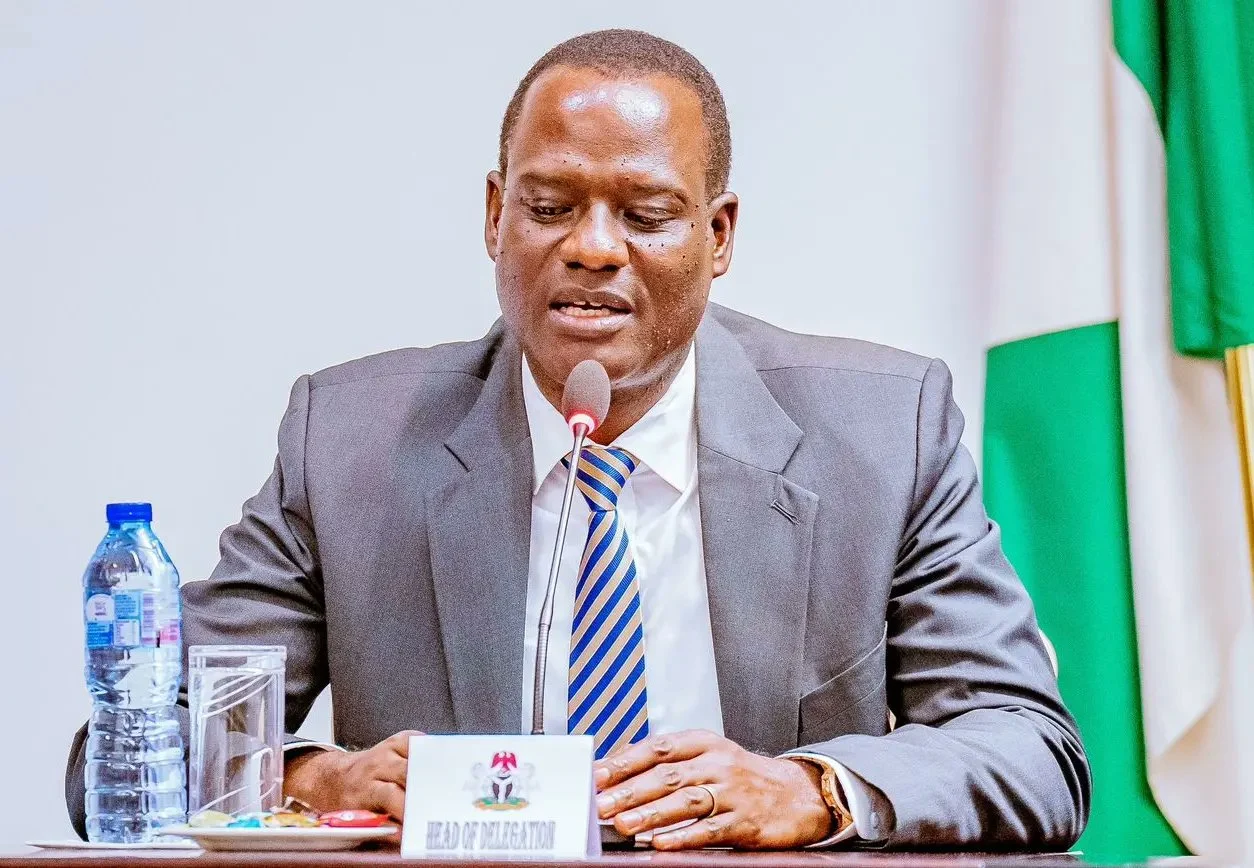
Minister of State for Finance, Taiwo Oyedele, has called on African countries to adopt deliberate strategies to strengthen domestic resource mobilisation as a critical step toward addressing rising fiscal pressures and structural deficits across the continent.
Speaking at the closing ceremony of the 5th session of the Sub-Committee on Tax and Illicit Financial Flows under the Special Technical Committee on Finance, Monetary Affairs, Economic Planning and Integration (STC-FMAEPI) in Abuja on Thursday, Oyedele warned that failure to mobilise local resources poses a significant threat to Africa’s fiscal stability.
He stressed that the challenge of illicit financial flows goes beyond taxation, describing it as a broader governance and development issue that requires coordinated institutional responses.
According to him, African countries must prioritise transparency by strengthening systems such as beneficial ownership registers, while also enhancing cross-border cooperation to track and curb illicit flows.
He further emphasised the need to deploy data more effectively and ensure that enforcement mechanisms are both credible and consistent across jurisdictions.
“Every naira, every shilling, every rand, every dollar lost to illicit financial flow is a school not built, a hospital not equipped, and a job not created,” he said, highlighting the developmental cost of revenue leakages.
Oyedele also urged African governments to assert their taxing rights in the evolving global digital economy, warning that the continent must not remain a passive participant in global value creation.
He called for increased investment in digital tax administration systems and capacity building, alongside strategic engagement in ongoing global tax negotiations, particularly at multilateral platforms.
The minister stressed that greater coordination among African countries is now imperative, noting that fragmentation in tax policies, incentives, treaty negotiations, and enforcement continues to undermine the continent’s fiscal potential.
He pointed to the African Continental Free Trade Area as a key opportunity to align fiscal systems with trade integration goals, cautioning that economic integration without policy coordination would not yield desired outcomes.
Oyedele outlined three key priorities for African countries moving forward.
First, he called for the strengthening of domestic tax systems through investment in administration, digitisation of processes, and capacity development.
Second, he urged deeper collaboration across countries, institutions, and regions to foster a unified approach to tax policy and enforcement.
Third, he emphasised the need for sustained commitment to reform, even in the face of political and economic challenges.
“Reform is not optional. It is the seed for progress,” he said, noting that long-term development depends on consistent policy implementation.
He further underscored the importance of unity among African countries, describing collective action as essential to overcoming shared challenges.
According to him, Africa’s strength lies in its ability to act together, warning that the continent remains vulnerable if individual countries lag behind.
Oyedele concluded that fiscal strength is not only about revenue generation but also about sovereignty, economic stability, and sustainable development.
He believes that by fixing tax systems, closing leakages, and optimising resource mobilisation, African countries can build a more resilient and prosperous future.
We’ve got the edge. Get real-time reports, breaking scoops, and exclusive angles delivered straight to your phone. Don’t settle for stale news. Join LEADERSHIP NEWS on WhatsApp for 24/7 updates →
Join Our WhatsApp Channel