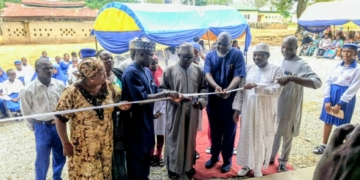

A non-governmental organisation (NGO), Connected Development (CODE), dedicated to improving education in the North-East and Nigeria, has stressed the importance of community involvement in education projects.
According to the organisation, involving community leaders and the local populace in implementing education initiatives is crucial to their success, as this approach ensures projects are tailored to specific needs and challenges, making them more effective.
The NGO noted that community engagement promotes ownership and accountability, thereby improving learning outcomes.
Speaking yesterday at a Joint Action Grant ( JAG ) media parley on State of Transparency and Accountability in Borno State and the Local Education Sector Operational Plans ( LESOPs ), supported by Malala Fund in Maiduguri, the Acting Chief Executive Officer Connected Development, Hyeladzira James Mshelia, said when local communities are involved, they are more likely to contribute resources, expertise, and support to education initiatives.
The CEO CODE noted that LESOPs provide a three-year roadmap for rebuilding education in conflict-affected communities, adding that they are aligned with the State Education Sector Plan (2022-2030), which brings accountability to the grassroots level.
She said the programme, which fosters community ownership, ensures that local leaders and parents drive solutions, adding that its practical impact is focused on the Askira/Uba, Gubio, Damboa, and Mafa local government areas of Borno State.
She noted that these plans matter due to the decade-long Boko Haram insurgency that has caused significant disruption to learning infrastructure, resulting in high numbers of children currently lacking access to classrooms.
While noting the need for billions of naira to address educational challenges in Borno with a lean education budget, Mshelia said shared strategic plans between CODE and partners include rebuilding schools and the reintegration of displaced persons.
She said it also includes recruiting and training teachers, providing modern instructional materials, and supporting girls’ education by offering scholarships and safe learning spaces.
Other priorities, according to her, include strengthening infrastructure by constructing classrooms and solar-powered boreholes, as well as ensuring safety by implementing “safe school” measures such as fencing and psychosocial support.
On challenges faced by partners in hard-to-reach areas due to poor road networks and insurgency, the CEO of CATAI, Abubakar Sadiq, said that for partners to carry out humanitarian services in local government areas like Kala-Balge, they have to travel through the Cameroon Republic before accessing the local government.
The panel session during the media parley, which dwelled on Strengthening Transparency and Accountability in Education Financing and Gender – Response LESOP Implementation, focused on the current state of education financing and transparency in Borno State.
Lessons from LESOP development and implementation in LGAs: Gender-responsive budgeting and equitable resource allocation, and the role of media and civil society in promoting accountability.
We’ve got the edge. Get real-time reports, breaking scoops, and exclusive angles delivered straight to your phone. Don’t settle for stale news. Join LEADERSHIP NEWS on WhatsApp for 24/7 updates →
Join Our WhatsApp Channel